Hacking Human Attachment: The Loneliness Crisis, Cognitive Atrophy and other Personal Dangers of AI | RR 20

Hacking Human Attachment: The Loneliness Crisis, Cognitive Atrophy and other Personal Dangers of AI | RR 20

Mainstream conversations about artificial intelligence tend to center around the technology's economic and large-scale impacts. Yet it's at the individual level where we're seeing AI's most potent effects, and they may not be what you think. Even in the limited time that AI chatbots have been publicly available (like Claude, ChatGPT, Perplexity, etc.), studies show that our increasing reliance on them wears down our ability to think and communicate effectively, and even erodes our capacity to nurture healthy attachments to others. In essence, AI is atrophying the skills that sit at the core of what it means to be human. Can we as a society pause to consider the risks this technology poses to our well-being, or will we keep barreling forward with its development until it's too late?

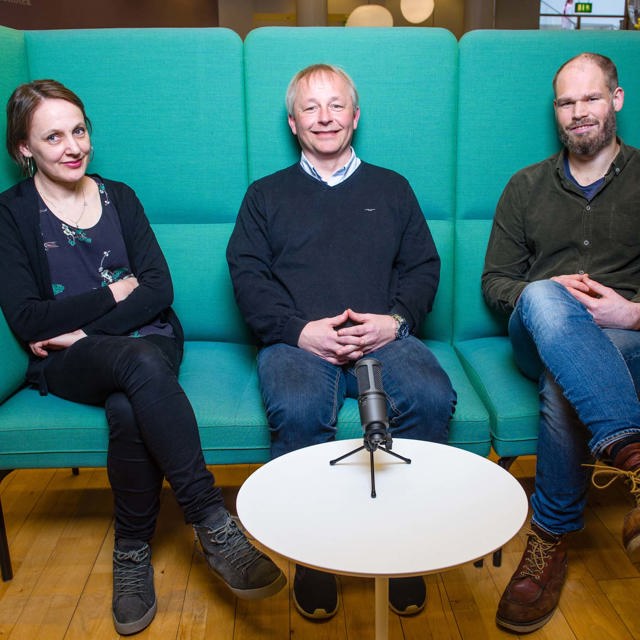
In this episode, Nate is joined by Nora Bateson and Zak Stein to explore the multifaceted ways that AI is designed to exploit our deepest social vulnerabilities, and the risks this poses to human relationships, cognition, and society. They emphasize the need for careful consideration of how technology shapes our lives and what it means for the future of human connection. Ultimately, they advocate for a deeper engagement with the embodied aspects of living alongside other people and nature as a way to counteract our increasingly digital world.

What can we learn from past mass adaptation of technologies such as the invention of the world wide web or GPS when it comes to AI's increasing presence in our lives? How does artificial intelligence expose and intensify the ways our culture is already eroding our mental health and capacity for human connection? And lastly, how might we imagine futures where technology magnifies the best sides of humanity – like creativity, cooperation, and care – rather than accelerating our most destructive instincts?

(Conversation recorded on October 14th, 2025)

About Nora Bateson:

Nora Bateson is an award-winning filmmaker, writer and educator, as well as President of the International Bateson Institute, based in Sweden. Her work asks the question "How can we improve our perception of the complexity we live within, so we may improve our interaction with the world?"

An international lecturer, researcher and writer, Nora wrote, directed and produced the award-winning documentary, An Ecology of Mind, a portrait of her father, Gregory Bateson. Her work brings the fields of biology, cognition, art, anthropology, psychology, and information technology together into a study of the patterns in ecology of living systems. Her book, Small Arcs of Larger Circles, released by Triarchy Press, UK, 2016 is a revolutionary personal approach to the study of systems and complexity.

About Zak Stein:

Dr. Zak Stein is a philosopher of education, as well as a Co-founder of the Center for World Philosophy and Religion. He is also the Co-founder of Civilization Research Institute, the Consilience Project, and Lectica, Inc. He is the author of dozens of published papers and two books, including Education in a Time Between Worlds. Zak received his EdD from Harvard University.

Show Notes and More

Watch this video episode on YouTube

Want to learn the broad overview of The Great Simplification in 30 minutes? Watch our Animated Movie.

---

Support The Institute for the Study of Energy and Our Future

Join our Substack newsletter

Join our Hylo channel and connect with other listeners

Episoder(357)

The Consumption Pyramid

The Consumption Pyramid

This week's Frankly unpacks humans' current identification with the label "consumer." Consumption is something much deeper and more nuanced than shopping or spending. Nate highlights the ways that it ...

6 Feb 22min

How to Read the Signs of Collapse: Economic Stagnation, Resource Scarcity, and Europe's Industrial Decline with Balázs Matics

How to Read the Signs of Collapse: Economic Stagnation, Resource Scarcity, and Europe's Industrial Decline with Balázs Matics

Collapse has long been discussed in the public imagination as something that happens suddenly, immediately turning the world upside down. But history shows that collapse is more often characterized by...

4 Feb 1h 16min

A Country of Geniuses: Anthropic CEO's Warnings, Plus Wide-Boundary Considerations on AI

A Country of Geniuses: Anthropic CEO's Warnings, Plus Wide-Boundary Considerations on AI

Last week there was so much news Nate recorded two Franklies – this is the second of those, which shares his reflections on a recent seminal essay posted by Anthropic CEO Dario Amodei, likening Artifi...

2 Feb 31min

Wide Boundary News: Japan, Silver, Venezuela, and More – the Biophysical Phase Shift Cometh

Wide Boundary News: Japan, Silver, Venezuela, and More – the Biophysical Phase Shift Cometh

This week's Frankly inaugurates a new category for videos on The Great Simplification platform, Wide Boundary News, in which Nate invites listeners to view the constant churn of headlines through a wi...

30 Jan 31min

The New Generation of Environmental Leadership: Stubborn Optimism, Tending Your Inner Fire, and Why Hope Is Not Enough with Xiye Bastida

The New Generation of Environmental Leadership: Stubborn Optimism, Tending Your Inner Fire, and Why Hope Is Not Enough with Xiye Bastida

For many people reading this, the crises we discuss on this podcast – from ecological instability to financial collapse – often feel like a distant problem in the future. But for the youth of today, m...

28 Jan 1h 22min

The Creature in the Machine | Frankly 120

The Creature in the Machine | Frankly 120

In this week's episode, Nate reflects on his experience with knee surgery and being a "creature in the machine" (the Superorganism). He touches on the often-forgotten nature of our physical existence ...

23 Jan 20min

Arms Race or the Human Race? Governance in the Age of AI, Nuclear Threats, and Geopolitical Brinkmanship | RR 21

Arms Race or the Human Race? Governance in the Age of AI, Nuclear Threats, and Geopolitical Brinkmanship | RR 21

Humans have shaped the world more than any other species in existence, largely due to our ability to coordinate and work together as a unit – in other words, to govern ourselves. This means that, whil...

21 Jan 1h 27min

Technology and Wealth: The Straw, the Siphon, and the Sieve | Frankly 119

Technology and Wealth: The Straw, the Siphon, and the Sieve | Frankly 119

In this week's Frankly, Nate explores the relationship between technology and wealth when viewed through a global biophysical lens. He uses the visualization of a straw, siphon, and sieve to describe ...

16 Jan 28min

Populært innen Vitenskap

fastlegen
tingenes-tilstand
rekommandert
jss
rss-rekommandert
forskningno
sinnsyn
villmarksliv
pod-britannia
fjellsportpodden
tomprat-med-gunnar-tjomlid
rss-paradigmepodden
rss-overskuddsliv
tidlose-historier
rss-skogkurs-podden
dekodet-2
rss-nysgjerrige-norge
vett-og-vitenskap-med-gaute-einevoll
hva-er-greia-med
kvinnehelsepodden