
Kevin Franke: Manipulated Victim or Willing Bystander? The Psychology Behind ‘Devil in the Family’ | 2025 True Crime
Was Kevin Franke a victim of psychological manipulation — or a bystander who found it easier not to look too closely? In this gripping Hidden Killers deep dive, Tony Brueski and psychotherapist Shavaun Scott analyze one of the most troubling dynamics explored in Hulu’s Devil in the Family: a father who insists he never recognized the abuse happening under his own roof. The episode begins with the psychology of Kevin’s denial. How does a spouse convince themselves that extreme parenting is “discipline” rather than danger? Shavaun Scott breaks down the mechanisms of thought-reform, coercive influence, and the slow erosion of intuition. And then the most haunting question of all: what makes a father step away from his own children for an entire year because an outside “guru” told him to? But the story doesn’t end with the collapse of the Franke family. Kevin recently announced his engagement, just six months after finalizing his divorce from Ruby — who is now serving a possible 30-year prison sentence for aggravated child abuse. The public reaction has been split: is this healing, deflection, or strategic rebranding? Tony and Shavaun examine the psychology of rapid re-partnering after trauma, the desire to rewrite personal identity, and the fine line between moving forward and bypassing accountability. We also explore Kevin’s recent support of Utah’s new “child influencer” law — a step toward protecting children exploited in monetized online content. His testimony was powerful, but does it reconcile the years he stood behind a camera while harmful parenting was broadcast to millions? This episode asks the hardest questions: Was Kevin controlled — or complicit? Is he rebuilding — or rebranding? And what does accountability look like for the children who had no choice? #KevinFranke #RubyFranke #8Passengers #HiddenKillers #PsychologicalAbuse #DevilInTheFamily #ParentalAccountability #TrueCrimeAnalysis #TonyBrueski #ShavaunScott Want to comment and watch this podcast as a video? Check out our YouTube Channel. https://www.youtube.com/@hiddenkillerspod Instagram https://www.instagram.com/hiddenkillerspod/ Facebook https://www.facebook.com/hiddenkillerspod/ Tik-Tok https://www.tiktok.com/@hiddenkillerspod X Twitter https://x.com/tonybpod Listen Ad-Free On Apple Podcasts Here: https://podcasts.apple.com/us/podcast/true-crime-today-premium-plus-ad-free-advance-episode/id1705422872
4 Jan 29min
Father vs. Predator: The Aaron Spencer Case & the Murder Charge Shaking Arkansas | 2025 True Crime
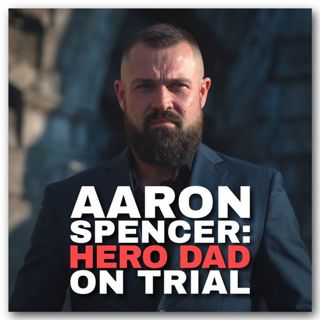
What would YOU do if a man already accused of dozens of crimes against your child came back and took her again? That’s the impossible question at the heart of the Aaron Spencer case — a story that exposes not only a horrific personal nightmare, but a justice system many say failed at every step. In this emotional and legally complex episode of Hidden Killers, Tony Brueski and defense attorney Bob Motta walk through the events leading up to the fatal confrontation. According to reports, 67-year-old Michael Foster — already facing multiple charges involving Spencer’s 14-year-old daughter — was released on a shockingly low bond. Not long after, Foster allegedly abducted her again. Aaron Spencer did what desperate parents imagine in their darkest moments: he got in his truck, tracked them down, and confronted the man he believed was repeatedly harming his child. What unfolded next resulted in Foster’s death — and Spencer now charged with murder. Tony and Bob break down what prosecutors must prove, how self-defense applies, whether “defense of another” could factor in, and why some cases blur the line between vigilantism and survival instinct. But the deeper conversation is about failure: a bond decision that baffled the community, a vulnerable child allegedly left unprotected, and a father now facing prison for acting when institutions didn’t. In the second half, Tony and Bob explore the uncomfortable questions circulating publicly: Is this prosecution a straightforward application of the law, or the system trying to protect itself from liability? Does the case reflect a larger pattern of institutional breakdown? And why does public outrage feel so justified? This isn’t just a true crime case. It’s a national debate about parental instinct, justice, and where the system’s responsibility ends. #AaronSpencer #MichaelFoster #HiddenKillers #TonyBrueski #BobMotta #TrueCrimePodcast #JusticeSystemFailure #SelfDefenseCase #ArkansasCrime #ParentalInstinct Want to comment and watch this podcast as a video? Check out our YouTube Channel. https://www.youtube.com/@hiddenkillerspod Instagram https://www.instagram.com/hiddenkillerspod/ Facebook https://www.facebook.com/hiddenkillerspod/ Tik-Tok https://www.tiktok.com/@hiddenkillerspod X Twitter https://x.com/tonybpod Listen Ad-Free On Apple Podcasts Here: https://podcasts.apple.com/us/podcast/true-crime-today-premium-plus-ad-free-advance-episode/id1705422872
4 Jan 35min
Epstein Fallout EXPLODES: DOJ Silence, Institutional Psychology — and Congress Targets Prince Andrew | 2025 True Crime
What happens when a system designed to uncover truth suddenly shuts its own lights off? In this gripping dual-segment episode of Hidden Killers, Tony Brueski and former FBI Special Agent Robin Dreeke dig deep into the psychology of institutional protection — and the escalating political pressure surrounding the Epstein network. In the first half, Robin Dreeke breaks down how organizations drift from accountability into silence. Drawing from decades in counterintelligence, he explains how fear, ambition, and self-preservation turn institutions into shields for the powerful. Using the DOJ’s shutdown of the Epstein co-conspirator probe as a case study — based on concerns raised by Rep. Jamie Raskin in his congressional letter — Robin unpacks how “strategic ignorance,” internal pressure, and denial can override the pursuit of truth. This is not about partisanship; it’s about psychology, and what happens when mission gives way to reputation. Then the story widens. In an unprecedented development, the U.S. House Oversight Committee has formally requested testimony from Prince Andrew regarding his historical association with Jeffrey Epstein. This request, signed by sixteen members of Congress, cites flight logs, financial entries, and survivor allegations — all of which Andrew has consistently denied. Tony breaks down what the congressional letter asks, why lawmakers say new information has emerged, and what cooperation or refusal could mean for Andrew and the monarchy’s already fragile public standing. We analyze the survivor accounts, the alleged documents now in congressional hands, and how political bodies pursue answers when other institutions stand still. No conclusions — just the claims, the context, and the psychology behind why powerful systems protect themselves. If you’ve ever wondered why accountability stops at certain doorways, this episode lays bare the patterns. #HiddenKillers #EpsteinCase #InstitutionalPsychology #RobinDreeke #TonyBrueski #PrinceAndrew #CongressionalInquiry #DOJ #FBI #TrueCrimePodcast Want to comment and watch this podcast as a video? Check out our YouTube Channel. https://www.youtube.com/@hiddenkillerspod Instagram https://www.instagram.com/hiddenkillerspod/ Facebook https://www.facebook.com/hiddenkillerspod/ Tik-Tok https://www.tiktok.com/@hiddenkillerspod X Twitter https://x.com/tonybpod Listen Ad-Free On Apple Podcasts Here: https://podcasts.apple.com/us/podcast/true-crime-today-premium-plus-ad-free-advance-episode/id1705422872
4 Jan 44min
Hulu’s Murdaugh Series vs. Reality: What They Got Right — And What They Didn’t Dare Show
Hulu’s Murdaugh: Death in the Family promised to deliver the full story of South Carolina’s most infamous crime dynasty — but how close does it come to the truth? In this explosive Hidden Killers breakdown, Tony Brueski pulls apart the dramatization and compares it to the real events that toppled a century-old legal empire. From the iconic 911 call and Paul’s kennel video to the financial fraud that stretched across generations, the series captures the chaos — but not the full horror. Tony examines what the show nails, what it glosses over, and, most importantly, what it omits entirely: the cover-ups, the privilege, the quiet manipulation, and the systemic protection that allowed Alex Murdaugh to operate unchecked for decades. Because the real story is bigger than murder — it’s about a family shielded by power until the façade cracked wide open. Then we turn to the tragedy that set the collapse in motion: the death of 19-year-old Mallory Beach. Long before Moselle became a crime scene, the Murdaugh myth began unraveling on a moonlit river. This episode revisits the boat crash, the ER intimidation campaign, and the deputies who allegedly bent procedure to protect Paul Murdaugh. It wasn’t just a cover-up — it was the moment the Lowcountry finally saw the dynasty’s shadow for what it was. Hulu captures the spectacle. But the truth? The truth is darker, sharper, and far more deliberate. And if you think the series told you everything… it didn’t even scratch the surface. Watch this before you mistake Hollywood for history. Because what the cameras didn’t show is where the real story lives — and where the Murdaugh legacy truly died. #MurdaughMurders #HuluSeries #DeathInTheFamily #TrueCrimeBreakdown #MalloryBeach #AlexMurdaugh #FactVsFiction #HiddenKillers #SouthernCorruption #TonyBrueski Want to comment and watch this podcast as a video? Check out our YouTube Channel. https://www.youtube.com/@hiddenkillerspod Instagram https://www.instagram.com/hiddenkillerspod/ Facebook https://www.facebook.com/hiddenkillerspod/ Tik-Tok https://www.tiktok.com/@hiddenkillerspod X Twitter https://x.com/tonybpod Listen Ad-Free On Apple Podcasts Here: https://podcasts.apple.com/us/podcast/true-crime-today-premium-plus-ad-free-advance-episode/id1705422872
4 Jan 33min

Kohberger’s Secret Stashes — What FBI Profilers Just Revealed | 2025 True Crime
In this chilling Hidden Killers deep dive, we confront two disturbing revelations about Bryan Kohberger — the kind that point to hidden behavior far beyond what happened on King Road. Retired FBI Behavioral Analysis Program Chief Robin Dreeke joins Tony Brueski to break down the unsettling possibility that Kohberger maintained secret stashes of weapons, stolen items, and trophies — and that investigators may have only scratched the surface. First, we explore the “hidey hole” theory: a private cache where Kohberger may have stored the missing KA-BAR knife, clothing, stolen items, or other evidence he didn’t want to destroy. Dreeke draws direct parallels to BTK, Israel Keyes, and Robert Hansen — offenders who built entire systems of hidden drop sites to revisit, relive, and maintain control over their crimes. Kohberger’s shovel with tested soil, his repeated trips to remote parks, and a long pattern of break-ins and petty theft suggest this behavior may have been developing for years. But the story gets darker. We also examine the two mystery ID cards found in Kohberger’s possession — IDs belonging to women who were not his victims and who may not even know he ever had them. These weren’t discovered in plain sight. They were tucked away, hidden in a glove box inside a box. Dreeke explains why offenders sometimes keep items like this: not as accidents, but as trophies, leverage, fantasies, or souvenirs of earlier intrusions. Why would a man who meticulously cleaned his car miss two IDs? He probably didn’t. He simply didn’t believe they were important to the crime he was trying to erase — a psychological compartmentalization common among escalating offenders. Together, these findings raise chilling questions: • Did Kohberger have a cache? • How many items were hidden? • How many women were surveilled, targeted, or intruded upon? • And how much evidence — or truth — is still buried? This is the behavioral blueprint investigators fear the most: escalation, souvenirs, and secrets carefully tucked away. #BryanKohberger #HiddenKillers #Idaho4 #FBIProfiler #EvidenceStash #TrophyBehavior #TrueCrimePodcast #CriminalPsychology #KnifeCache #RobinDreeke Want to comment and watch this podcast as a video? Check out our YouTube Channel. https://www.youtube.com/@hiddenkillerspod Instagram https://www.instagram.com/hiddenkillerspod/ Facebook https://www.facebook.com/hiddenkillerspod/ Tik-Tok https://www.tiktok.com/@hiddenkillerspod X Twitter https://x.com/tonybpod Listen Ad-Free On Apple Podcasts Here: https://podcasts.apple.com/us/podcast/true-crime-today-premium-plus-ad-free-advance-episode/id1705422872
4 Jan 36min
Scott Peterson Case BOMBSHELL: Destroyed Evidence & Recanted Science—Is the Conviction About to Collapse? | 2025 True Crime
The Scott Peterson case has never been short on controversy, but the newest filings from the Los Angeles Innocence Project may be the most explosive revelations yet. In this Hidden Killers investigation, Tony Brueski breaks down two seismic developments that could shake the foundation of one of America’s most famous murder convictions. First: the alleged destruction of key evidence. According to internal Modesto Police logs cited in the LA Innocence Project’s 600-page petition, detectives met behind closed doors on May 6, 2003, to discuss discovery decisions. By the next day, two major items were reportedly marked for destruction: • The videotaped interrogations of Medina-burglary suspects Steven Todd and Glenn Pierce • The safe stolen from the Medina home, just yards from the Peterson residence Within weeks, the petition claims, both were gone — no copies, no transcripts, no forensic testing. California law is clear: under Trombetta and Youngblood, intentional destruction of potentially exculpatory evidence can constitute a constitutional violation. If these allegations are accurate, the petition argues, this wasn’t a mistake. It was a turning point. Then comes the second bombshell: the recantation of the very expert whose testimony jurors described as “the nail in the coffin.” Dr. Terry D’Vor now states that updated NIH and WHO fetal-growth data contradict his 2004 conclusions, showing baby Connor’s measurements were consistent with a January death — when Scott Peterson was already under round-the-clock surveillance. If modern science shifts the timeline, the prosecution’s central theory may not survive. This episode unpacks the evidence, the science, and the law — and asks whether the case against Scott Peterson is structurally sound… or structurally broken. #ScottPeterson #LaciPeterson #LAInnocenceProject #HiddenKillers #WrongfulConviction #ForensicScience #EvidenceDestruction #TonyBrueski #TrueCrimeAnalysis #JusticeForLaci Want to comment and watch this podcast as a video? Check out our YouTube Channel. https://www.youtube.com/@hiddenkillerspod Instagram https://www.instagram.com/hiddenkillerspod/ Facebook https://www.facebook.com/hiddenkillerspod/ Tik-Tok https://www.tiktok.com/@hiddenkillerspod X Twitter https://x.com/tonybpod Listen Ad-Free On Apple Podcasts Here: https://podcasts.apple.com/us/podcast/true-crime-today-premium-plus-ad-free-advance-episode/id1705422872
3 Jan 1h 10min
Jamie Raskin’s BOMBSHELL Letter: Why He Says the Epstein Probe Was Suddenly Shut Down | 2025 True Crime
Tonight on Hidden Killers, Tony Brueski reads — in full — the November 3, 2025 letter sent by Congressman Jamie Raskin to Attorney General Pam Bondi, demanding answers about what he calls a “gigantic cover-up” surrounding the shutdown of the Epstein co-conspirator investigation. The claims laid out in this letter are extraordinary, and they raise questions that cut to the heart of how justice works in America. According to Raskin’s letter, until early 2025 the U.S. Attorney’s Office for the Southern District of New York was still pursuing leads involving Jeffrey Epstein and Ghislaine Maxwell’s alleged co-conspirators. Nearly fifty survivors had reportedly provided testimony naming individuals connected to the trafficking network. Raskin alleges the investigation was active, growing, and producing evidence — until it was suddenly transferred from SDNY to DOJ headquarters in Washington, D.C. Six months later, the case was closed. In his letter, Raskin asks the DOJ to explain: • Why a federal trafficking probe was halted mid-investigation • Why banks reportedly flagged over $1.5 billion in Epstein-linked transactions without follow-up • Why survivors whose testimony helped convict Ghislaine Maxwell were later assessed as “not credible” • And whether the closure protected certain individuals from scrutiny Tony Brueski reads the entire letter unedited and uninterrupted, allowing listeners to hear Raskin’s concerns exactly as written. This episode does not claim the allegations are proven — it presents the congressional questions now publicly on the record. If these claims are accurate, the implications are enormous. If they’re not, why were they raised at all? Tonight, you hear the letter — and decide for yourself. #JamieRaskin #EpsteinInvestigation #JeffreyEpstein #GhislaineMaxwell #HiddenKillers #TonyBrueski #DOJ #FBI #TrueCrimePodcast #JusticeForSurvivors Want to comment and watch this podcast as a video? Check out our YouTube Channel. https://www.youtube.com/@hiddenkillerspod Instagram https://www.instagram.com/hiddenkillerspod/ Facebook https://www.facebook.com/hiddenkillerspod/ Tik-Tok https://www.tiktok.com/@hiddenkillerspod X Twitter https://x.com/tonybpod Listen Ad-Free On Apple Podcasts Here: https://podcasts.apple.com/us/podcast/true-crime-today-premium-plus-ad-free-advance-episode/id1705422872
3 Jan 37min
The Banker Behind Murdaugh: Russell Laffitte Sentenced — The Money Trail That Enabled a Killer | 2025 True Crime
Alex Murdaugh didn’t commit his crimes alone — and today, one of his most essential enablers is finally facing real consequences. In this explosive Hidden Killers breakdown, Tony Brueski unpacks the downfall of Russell Laffitte, the former CEO of Palmetto State Bank and heir to a century-old Lowcountry dynasty, who has now been sentenced in both state and federal court for bank fraud, wire fraud, and conspiracy. For years, Laffitte wasn’t just a banker — he was the engine behind Murdaugh’s schemes. This episode goes inside the financial machinery of the Murdaugh empire. Laffitte approved illegal loans, drained conservatorship accounts, and siphoned money from some of the most vulnerable victims imaginable: grieving families, injured clients, and people who trusted the justice system. He didn’t pull a trigger at Moselle — but he kept the money flowing long enough for Murdaugh to destroy countless lives. We examine how the fraud worked, why it continued for so long, and how small-town privilege and legacy allowed Laffitte to operate unchecked. Was he manipulated by Murdaugh’s charm and pressure, or was he a fully willing architect of the deceit? His courtroom shift from defiant innocence to sudden guilty plea raises its own questions — and reveals how quickly loyalty evaporates when prison becomes real. Tony breaks down the biggest victims in the financial web, including the stolen settlements of Hakeem Pinckney, the Badger family, and others whose tragedies were exploited for profit. And we explore what Laffitte’s sentencing means for the broader Murdaugh universe: Who else knew? Who else helped? And who might be next? If you thought the Murdaugh case was just about murder, this episode exposes the darker truth — that behind every monster is the person who keeps the machine running. #Murdaugh #RussellLaffitte #MurdaughMurders #TrueCrimePodcast #FinancialCrime #BankFraud #HiddenKillers #SouthCarolinaCrime #WhiteCollarCrime #PalmettoStateBank Want to comment and watch this podcast as a video? Check out our YouTube Channel. https://www.youtube.com/@hiddenkillerspod Instagram https://www.instagram.com/hiddenkillerspod/ Facebook https://www.facebook.com/hiddenkillerspod/ Tik-Tok https://www.tiktok.com/@hiddenkillerspod X Twitter https://x.com/tonybpod Listen Ad-Free On Apple Podcasts Here: https://podcasts.apple.com/us/podcast/true-crime-today-premium-plus-ad-free-advance-episode/id1705422872
3 Jan 28min