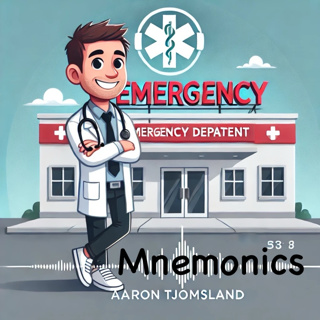
EKG Basic Basic Basic Framework for EM Docs: Ischemia, Arrhythmias, Intervals, Anomalies

EKG Basic Basic Basic Framework for EM Docs: Ischemia, Arrhythmias, Intervals, Anomalies

This is the most basic, essential framework for EKG interpretation — built for emergency medicine clinicians who need clarity, speed, and confidence in the heat of the moment.


Our brains are wired for movement and story. Just like remembering your morning routine — wake up, brush teeth, grab caffeine — we naturally recall sequences that follow a simple, visual narrative. In this episode, we harness that power by turning EKG interpretation into Evel Knievel’s most daring stunt ride. It’s not just a fun story — it’s a high-yield, easy-to-remember mental checklist that sticks, even under pressure.


🏥 Why it works in the ED:

In emergency medicine, chaos is the norm. We don’t have time to think academically when a STEMI or arrhythmia is staring us in the face. That’s why we built this vivid, memorable sequence — rooted in the high-performance principle Michael Phelps used to win 23 Olympic gold medals: a set routine. You don’t rise to the occasion. You fall back on your training.


🏁 What you’ll hear in this episode:

  • ​ 🏍️ Evel Knievel enters the EKG stadium: First, he scans for the big stuff — STEMI and reciprocal changes.
  • ​ 🛠️ Check engine light: T-wave inversions on his digital monitor.
  • ​ 📈 RPMs climbing: Smooth R-wave progression across the precordial leads.
  • ​ 🔍 Arrhythmia check: Is there a P for every QRS?
  • ​ 📏 The perfect ramp: PR interval = Evel’s takeoff — 120–200 ms.
  • ​ 🛵 Mobitz moped warning: PR lengthens before crashing (Wenckebach).
  • ​ ❌ Sudden moped disappearance: Mobitz II.
  • ​ ⚫ Unicycle of doom: Third-degree block — P and QRS totally disconnected.
  • ​ 🧠 Anomalies & Final Scan: Brugada, hyperkalemia (peaked Ts), Osborn waves, and when to order a posterior EKG.


🚨 Key Takeaways to Remember:

  • ​ This story is your reliable sequence: scan for ischemia → check for arrhythmia → assess intervals.
  • ​ STEMI? Look for elevation + reciprocal depression — including the often-missed posterior wall (V7–V9).
  • ​ Rhythm? Ask: Is there a P for every QRS?
  • ​ PR = takeoff ramp. QT = safe landing zone.
  • ​ Mobitz I = gradual PR lengthening → dropped beat.
  • ​ Mobitz II = PR stays the same → sudden drop.
  • ​ Third-degree block = P and QRS divorced — high risk of instability.
  • ​ Brugada = beware of the “grave cross” in V1–V2. Ask about family history of sudden cardiac death.
  • ​ Prolonged QT = risk of torsades, syncope, or V-fib — know when to shock.


🎧 This is your EKG blueprint. Your Michael Phelps routine. Your Evel Knievel ride to interpretation mastery.

Let’s ride.

Episoder(63)

Sick-Tachy or Tachy-sick: S.T.O.P. Secondary Compensations (Must-consider Differentials)

Sick-Tachy or Tachy-sick: S.T.O.P. Secondary Compensations (Must-consider Differentials)

When the heart rate blasts past 150, our reflex is often to grab a syringe—diltiazem, metoprolol, something to slow things down. But here’s the hard truth: if the patient is in sick-tachy—tachycardia ...

11 Sep 202540min

6 S’s & 6 H’s Heart Score: Chest Pain & Diamond Classification Risk Stratification

6 S’s & 6 H’s Heart Score: Chest Pain & Diamond Classification Risk Stratification

Chest pain is one of the most common—and highest risk—complaints in the ED. Missing acute coronary syndrome can be catastrophic, but keeping every patient in the hospital isn’t realistic either. That’...

11 Sep 202539min

STEMI ischemic and reciprocal change patterns

STEMI ischemic and reciprocal change patterns

In a cardiac emergency, pattern recognition saves lives. The ability to rapidly identify ST-elevation myocardial infarctions (STEMIs) — and recognize their reciprocal changes — is one of the most high...

5 Sep 202554min

LBBB Sgarbossa Criteria: 1 Excessive Disc, 2 Concordance Contact Lenses

LBBB Sgarbossa Criteria: 1 Excessive Disc, 2 Concordance Contact Lenses

When a left bundle branch block (LBBB) throws a wrench into your ECG interpretation, how do you know if it’s a STEMI… or just baseline noise?In this unforgettable episode, we ride full throttle into t...

3 Sep 202541min

Macrocytic Anemia in the ED: My Liver Bleeds a Lot (part 3)

Macrocytic Anemia in the ED: My Liver Bleeds a Lot (part 3)

Step into the macrocytic anemia caboose and remember the non-megaloblastic causes with the mnemonic My Liver Bleeds a Lot: • My → Multiple Myeloma (CRAB: Hypercalcemia, Renal failure, Anemia, Bone les...

11 Aug 202551min

Sickle Cell Crisis: 4 R’s Mnemonic — Recognize, Reverse, Radiology, Refer

Sickle Cell Crisis: 4 R’s Mnemonic — Recognize, Reverse, Radiology, Refer

In the fast-paced, high-stakes world of emergency medicine, every second matters—especially when it comes to sickle cell crisis. This podcast takes you straight to the heart of what matters most for E...

8 Aug 202522min

Hemolytic Anemias: TAG My Suitcase mnemonic

Hemolytic Anemias: TAG My Suitcase mnemonic

Hemolytic Anemias Mnemonic for the ED: TAG MY SUITCASEIn this high‑impact episode of Emergency Medicine Mind Palace, we break down hemolytic anemias into a memorable 5‑suitcase system that will stick ...

2 Aug 202519min

Populært innen Helse

lydartikler-fra-aftenposten
fastlegen
hvordan-har-du-det-mann
rss-gukild-johaug
psykodrama
leger-om-livet
rss-garne-damer
relasjonspodden-med-dora-thorhallsdottir-kjersti-idem
foreldreradet
bak-fasaden-en-reise-i-livet-med-sykepleier-ine
morten-ramm-lar-kakla-ga-til-du-sovner
rss-lopedrommen
klimaks
hjernesterk
hormonelle-frida
rss-sunn-okonomi
sinnsyn
g-punktet
helsetipspodden
hverdagspsyken