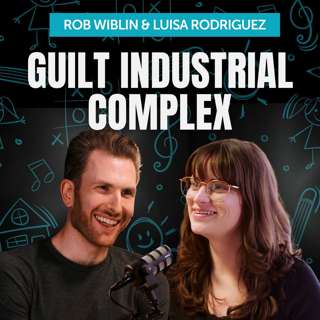
Rob & Luisa chat kids, the 2016 fertility crash, and how the 50s invented parenting that makes us miserable

Rob & Luisa chat kids, the 2016 fertility crash, and how the 50s invented parenting that makes us miserable

Global fertility rates aren’t just falling: the rate of decline is accelerating. From 2006 to 2016, fertility dropped gradually, but since 2016 the rate of decline has increased 4.5-fold. In many wealthy countries, fertility is now below 1.5. While we don’t notice it yet, in time that will mean the population halves every 60 years.

Rob Wiblin is already a parent and Luisa Rodriguez is about to be, which prompted the two hosts of the show to get together to chat about all things parenting — including why it is that far fewer people want to join them raising kids than did in the past.

Links to learn more, video, and full transcript: https://80k.info/lrrw

While “kids are too expensive” is the most common explanation, Rob argues that money can’t be the main driver of the change: richer people don’t have many more children now, and we see fertility rates crashing even in countries where people are getting much richer.

Instead, Rob points to a massive rise in the opportunity cost of time, increasing expectations parents have of themselves, and a global collapse in socialising and coupling up. In the EU, the rate of people aged 25–35 in relationships has dropped by 20% since 1990, which he thinks will “mechanically reduce the number of children.” The overall picture is a big shift in priorities: in the US in 1993, 61% of young people said parenting was an important part of a flourishing life for them, vs just 26% today.

That leads Rob and Luisa to discuss what they might do to make the burden of parenting more manageable and attractive to people, including themselves.

In this non-typical episode, we take a break from the usual heavy topics to discuss the personal side of bringing new humans into the world, including:

  • Rob’s updated list of suggested purchases for new parents
  • How parents could try to feel comfortable doing less
  • How beliefs about childhood play have changed so radically
  • What matters and doesn’t in childhood safety
  • Why the decline in fertility might be impractical to reverse
  • Whether we should care about a population crash in a world of AI automation

This episode was recorded on September 12, 2025.

Chapters:

  • Cold open (00:00:00)
  • We're hiring (00:01:26)
  • Why did Luisa decide to have kids? (00:02:10)
  • Ups and downs of pregnancy (00:04:15)
  • Rob’s experience for the first couple years of parenthood (00:09:39)
  • Fertility rates are massively declining (00:21:25)
  • Why do fewer people want children? (00:29:20)
  • Is parenting way harder now than it used to be? (00:38:56)
  • Feeling guilty for not playing enough with our kids (00:48:07)
  • Options for increasing fertility rates globally (01:00:03)
  • Rob’s transition back to work after parental leave (01:12:07)
  • AI and parenting (01:29:22)
  • Screen time (01:42:49)
  • Ways to screw up your kids (01:47:40)
  • Highs and lows of parenting (01:49:55)
  • Recommendations for babies or young kids (01:51:37)


Video and audio editing: Dominic Armstrong, Milo McGuire, Luke Monsour, and Simon Monsour
Music: CORBIT
Camera operator: Jeremy Chevillotte
Coordination, transcripts, and web: Katy Moore

Avsnitt(321)

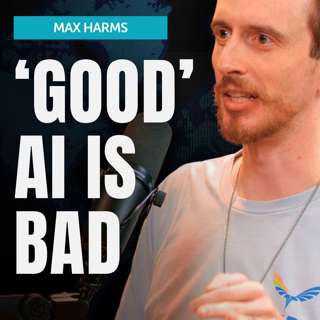
Why Teaching AI Right from Wrong Could Get Everyone Killed | Max Harms, MIRI

Why Teaching AI Right from Wrong Could Get Everyone Killed | Max Harms, MIRI

Most people in AI are trying to give AIs ‘good’ values. Max Harms wants us to give them no values at all. According to Max, the only safe design is an AGI that defers entirely to its human operators, ...

24 Feb 2h 41min
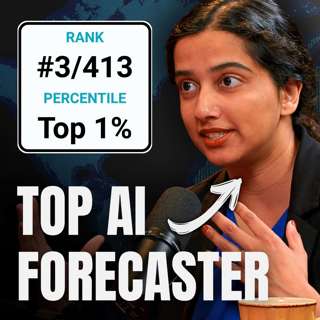
Every AI Company's Safety Plan is 'Use AI to Make AI Safe'. Is That Crazy? | Ajeya Cotra

Every AI Company's Safety Plan is 'Use AI to Make AI Safe'. Is That Crazy? | Ajeya Cotra

Every major AI company has the same safety plan: when AI gets crazy powerful and really dangerous, they’ll use the AI itself to figure out how to make AI safe and beneficial. It sounds circular, almos...

17 Feb 2h 54min
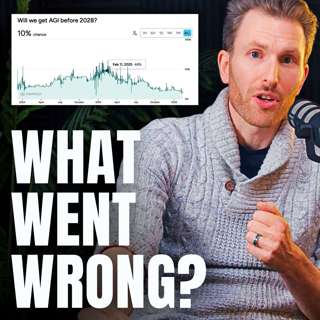
What the hell happened with AGI timelines in 2025?

What the hell happened with AGI timelines in 2025?

In early 2025, after OpenAI put out the first-ever reasoning models — o1 and o3 — short timelines to transformative artificial general intelligence swept the AI world. But then, in the second half of ...

10 Feb 25min
#179 Classic episode – Randy Nesse on why evolution left us so vulnerable to depression and anxiety

#179 Classic episode – Randy Nesse on why evolution left us so vulnerable to depression and anxiety

Mental health problems like depression and anxiety affect enormous numbers of people and severely interfere with their lives. By contrast, we don’t see similar levels of physical ill health in young p...

3 Feb 2h 51min
#234 – David Duvenaud on why 'aligned AI' would still kill democracy

#234 – David Duvenaud on why 'aligned AI' would still kill democracy

Democracy might be a brief historical blip. That’s the unsettling thesis of a recent paper, which argues AI that can do all the work a human can do inevitably leads to the “gradual disempowerment” of ...

27 Jan 2h 31min
#145 Classic episode – Christopher Brown on why slavery abolition wasn't inevitable

#145 Classic episode – Christopher Brown on why slavery abolition wasn't inevitable

In many ways, humanity seems to have become more humane and inclusive over time. While there’s still a lot of progress to be made, campaigns to give people of different genders, races, sexualities, et...

20 Jan 2h 56min
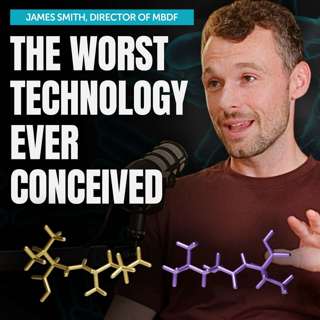
#233 – James Smith on how to prevent a mirror life catastrophe

#233 – James Smith on how to prevent a mirror life catastrophe

When James Smith first heard about mirror bacteria, he was sceptical. But within two weeks, he’d dropped everything to work on it full time, considering it the worst biothreat that he’d seen described...

13 Jan 2h 9min
#144 Classic episode – Athena Aktipis on why cancer is a fundamental universal phenomena

#144 Classic episode – Athena Aktipis on why cancer is a fundamental universal phenomena

What’s the opposite of cancer? If you answered “cure,” “antidote,” or “antivenom” — you’ve obviously been reading the antonym section at www.merriam-webster.com/thesaurus/cancer.But today’s guest Athe...

9 Jan 3h 30min

Populärt inom Utbildning

historiepodden-se
rss-bara-en-till-om-missbruk-medberoende-2
det-skaver
harrisons-dramatiska-historia
nu-blir-det-historia
rss-viktmedicinpodden
roda-vita-rosen
johannes-hansen-podcast
allt-du-velat-veta
sektledare
rss-sjalsligt-avkladd
i-vantan-pa-katastrofen
not-fanny-anymore
rss-beratta-alltid-det-har
rss-max-tant-med-max-villman
alska-oss
sa-in-i-sjalen
rikatillsammans-om-privatekonomi-rikedom-i-livet
rss-basta-livet
polisutbildningspodden