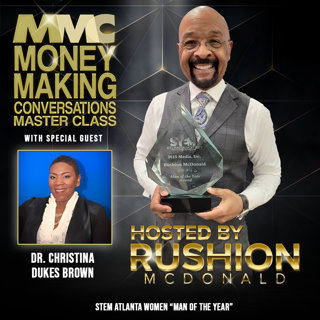

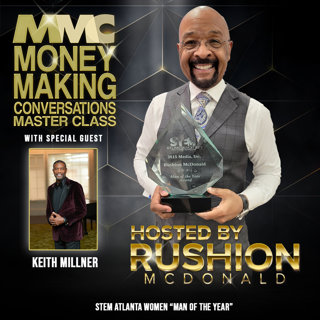
Money Tips: He emphasizes discipline, leadership, risk-taking, and strategies for building generational wealth.
Two-time Emmy and Three-time NAACP Image Award-winning, television Executive Producer Rushion McDonald interviewed Keith Milner. Purpose of the Interview The interview aims to inspire aspiring entrepreneurs by sharing Keith Milner’s journey from corporate America to entrepreneurship. It emphasizes discipline, leadership, risk-taking, and strategies for building generational wealth, particularly for underrepresented communities. Key Takeaways Foundational Lessons from Childhood Growing up in a disciplined, hardworking family taught Keith accountability, integrity, and the principle of choices and consequences. Education was highly valued in his household, shaping his drive for success. Corporate vs. Entrepreneurial Mindset Corporate careers can feel secure but are often riskier because you lack control over your destiny. Entrepreneurship offers greater control and potential for generational wealth. Leadership and Teamwork Lessons from sports—teamwork, discipline, and leadership—translate directly into business success. Establishing a common goal and coaching employees is crucial, but underperformers must eventually be let go. Risk and Value Many African-Americans view entrepreneurship as risky, but Keith argues it’s less risky than employment in an at-will state. Success depends on creating value that customers are willing to pay for. Franchising Journey Relationships opened doors to Jersey Mike’s franchise ownership. Entrepreneurship requires hands-on involvement—Keith still works in his stores when needed. Advice for Aspiring Entrepreneurs Adopt a growth mindset and positive attitude. Follow the Five P’s: Plan, Prepare, Produce, Pivot, Persevere. Understand that entrepreneurship is a daily grind—“Every morning in the jungle, the lion wakes up running.” Notable Quotes On discipline and accountability:“If you said you were going to do something, you did it. If you were told to do something, you got it done.” On choices:“We make choices every day, and if you don’t make the right choice, there are consequences.” On entrepreneurship vs. employment:“Entrepreneurship and small business ownership is the best way to create generational wealth.” On leadership:“There are very few things in life you can do alone. You need people, you need a team.” On success formula:“You control the inputs, and therefore you can charge what you want—as long as you generate enough value.” On entrepreneurial mindset:“Plan, Prepare, Produce, Pivot, Persevere.” Swahili proverb:“Every morning in the jungle, the lion wakes up running… The question becomes, who’s going to run the fastest?” #SHMS #STRAW #BESTSupport the show: https://www.steveharveyfm.com/See omnystudio.com/listener for privacy information.
12 Jan 22min
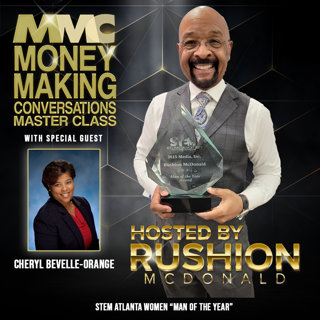
Uplift: She explains the need for the three pillars of success; Mentors, Advocacy and Sponsors.
Two-time Emmy and Three-time NAACP Image Award-winning, television Executive Producer Rushion McDonald interviewed Cheryl Bevelle-Orange. Retired Chief Information Officer (CIO) of FedEx Custom Critical and author of The Courage to Continue: Navigating Your Corporate Journey, shares her inspiring story of rising from humble beginnings in Bessemer, Alabama, to becoming a high-ranking executive in a Fortune 500 company. The conversation centers on her book’s core themes: mentorship, advocacy, and sponsorship. 🔑 Key Themes & Highlights Why She Wrote the Book Cheryl is a first-generation corporate American whose parents were a coal miner and a teacher. Initially written as a guide for her children, the book evolved into a broader resource for anyone navigating corporate life, especially first-generation professionals. The pandemic inspired her to add a section for leaders managing first-gen employees. Career at FedEx Spent 26 years at FedEx, culminating in her role as CIO of FedEx Custom Critical. FedEx Custom Critical handles specialized logistics, such as transporting refrigerated COVID-19 vaccines. Her role involved overseeing IT infrastructure, data, and systems—a rare position for African-American women in tech. Mentorship, Advocacy, and Sponsorship Cheryl breaks down the differences: Mentors help build skills and confidence (like background singers preparing the lead). Sponsors are like PR agents who open doors and promote you. Advocates speak up for you in rooms where you’re not present. These three pillars were essential to her success and are critical for young professionals, especially minorities. Overcoming Barriers Cheryl shares how racism and gender bias in tech were real challenges. Her first mentor was a white male who saw her potential and helped her navigate corporate culture. She emphasizes the importance of resilience, perspective, and turning frustration into action. Personal Motivation A pivotal childhood moment: seeing her grandfather sign an “X” at the bank because he couldn’t write. That experience ignited her drive for education and excellence. She wanted to see the world beyond Bessemer and use her knowledge to help others do the same. Diversity & Inclusion at FedEx Cheryl co-founded the FedEx African-American Committee, now a Business Resource Group (BRG). Initiatives included: Resume building and interview prep Black History Month events with speakers like Donna Brazile and Ben Hooks Creating safe spaces for Black employees to grow and connect 📘 About the Book Title: The Courage to Continue: Navigating Your Corporate Journey Available at: CherylBevelleOrange.com, Amazon, Barnes & Noble #AMI #BEST #STRAW #SHMSSupport the show: https://www.steveharveyfm.com/See omnystudio.com/listener for privacy information.
12 Jan 27min

Uplift: He encourages parents to let student-athletes make their own college decisions.
Two-time Emmy and Three-time NAACP Image Award-winning, television Executive Producer Rushion McDonald interviewed Coach Gregory Green. Head men’s and women’s tennis coach and REACH advisor at Tuskegee University. Here's a summary of the key themes and highlights: 🎙️ Guest: Coach Gregory Green Former college football player and coach at schools like Alabama State, Kentucky State, Savannah State, and UAB. Currently coaching tennis at Tuskegee University and mentoring student-athletes. 🧠 Key Topics Discussed 🏈 NIL (Name, Image, Likeness) and College Athletics NIL has transformed college sports, allowing athletes to earn money through endorsements and sponsorships. Power Five schools (like Ohio State and Michigan) have massive NIL collectives, sometimes offering millions to high school recruits. HBCUs and smaller programs are participating but on a smaller financial scale. NIL deals are often driven by alumni and corporate partnerships. 🔁 Transfer Portal Explained as a tool for athletes to transfer schools without sitting out a year. While it offers flexibility, it also raises concerns about commitment, development, and long-term planning. Athletes risk losing scholarships if they enter the portal without securing a new opportunity. 🎾 Tuskegee Tennis Program Coach Green leads a successful program with high academic and athletic performance. His teams have won championships and maintained top GPAs in the region. Emphasizes holistic development—athletics, academics, and career readiness. 👨👩👧👦 Mentorship & Parental Advice Encourages parents to let student-athletes make their own college decisions. Stresses the importance of attitude and effort as the only two things athletes can control. Advocates for intrinsic motivation and resilience in the face of adversity. #SHMS #STRAW #BESTSupport the show: https://www.steveharveyfm.com/See omnystudio.com/listener for privacy information.
12 Jan 25min
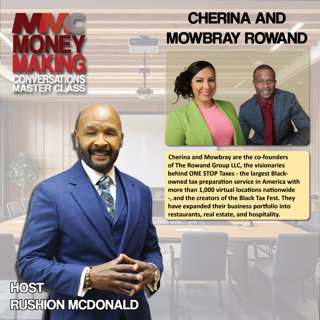
Brand Building: They own 1K virtual tax franchises, restaurants in Memphis, and the Dominican Republic.
Two-time Emmy and Three-time NAACP Image Award-winning, television Executive Producer Rushion McDonald interviewed Mowbray and Cherina Rowand. 🎙️ Interview Summary: Mowbray & Cherina Rowand Purpose of the Interview To showcase the entrepreneurial journey of Mowbray and Cherina Rowand, co-founders of The Rowand Group and One Stop Taxes, the largest Black-owned virtual tax preparation service in America. The interview highlights their business evolution, scaling strategies, community impact, and the creation of the Black Tax Festival. 🧭 Interview Outline 1. Background & Origins Both from Memphis, Tennessee; met in high school. Started tax preparation in 2010 as a mom-and-pop operation. Transitioned from brick-and-mortar to virtual model by 2015. 2. Business Philosophy Entrepreneurship is defined as service to others. Mowbray is the visionary; Cherina is the implementer. Emphasis on scaling with structure: legal, accounting, HR. 3. One Stop Taxes Grew from a single office to over 1,000 virtual franchise locations. Offers free training, no startup costs, and shared revenue model. Built a platform allowing clients to submit documents and sign remotely. 4. Virtual Tax Model Designed for convenience and accessibility. Clients and tax preparers never need to meet in person. Platform includes document upload, e-signature, and cloud storage. 5. Franchise & Training Learning Management System (LMS) for onboarding. Training includes tax prep, customer acquisition, and platform use. Strategic partnerships with local businesses (e.g., dealerships, daycares). 6. Black Tax Festival Combines networking, education, and recognition. Includes IRS updates, business workshops, and the Titan Awards. Open to all entrepreneurs, not just tax professionals. 7. Expansion & Diversification Own restaurants in Memphis and the Dominican Republic. Franchised Fat Tuesday and Esco Restaurant (did \$1M in first 6 weeks). Own a yacht for rental experiences in the DR. Plans to develop a restaurant strip near FedExForum in Memphis. 💡 Key Takeaways Vision + Execution = Growth: Their complementary roles fuel business success. Virtual is Scalable: Transitioning to virtual allowed exponential growth. Community Impact Matters: Black Tax Festival fosters education and recognition. Diversification is Strategic: Restaurants and real estate expand their brand. Mentorship & Learning: They study successful entrepreneurs like Tilman Fertitta. Faith & Family Drive: Their journey is rooted in love, planning, and purpose. 🗣️ Notable Quotes “Entrepreneurship means being a servant to other people.” “The same thing that works at \$1M doesn’t work at \$15M.” “We had to fire ourselves from some jobs and hire professionals.” “We built a platform where you can do taxes from your couch.” “We started before social media—we know belly-to-belly marketing.” “Recognition matters—people don’t get it at home or work.” “We’re trying to bridge the wealth gap through proper paperwork.” “We bought a yacht in the Dominican Republic to rent for experiences.” #SHMS #STRAW #BESTSupport the show: https://www.steveharveyfm.com/See omnystudio.com/listener for privacy information.
11 Jan 33min
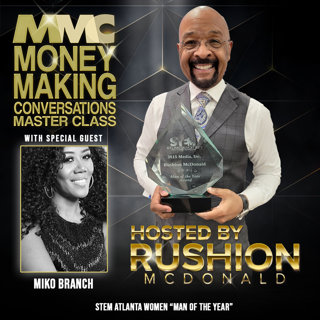
Brand Building: She created her hair care product at her kitchen and now it's a national brand.
Two-time Emmy and Three-time NAACP Image Award-winning, television Executive Producer Rushion McDonald interviewed Miko Branch. 📝 Summary of the Interview Miko Branch shares the inspiring journey of building Miss Jessie’s, a premium hair care brand for curly hair, alongside her late sister Titi Branch. The brand was born at their kitchen table in Brooklyn and named after their paternal grandmother, Jessie Mae Branch. Miko discusses the importance of authenticity, education, and innovation in product development, and how Miss Jessie’s became a trusted name in the textured hair care industry. The conversation highlights the brand’s commitment to empowering individuals to embrace their natural hair and the evolving trends in beauty and self-expression. 🎯 Purpose of the Interview To showcase the entrepreneurial journey behind Miss Jessie’s. To highlight the importance of authenticity, education, and innovation in building a brand. To discuss the impact of natural hair acceptance and evolving beauty standards. To inspire listeners with a story of resilience, creativity, and cultural pride. 🔑 Key Takeaways 1. Authentic Beginnings Miss Jessie’s was founded in a Brooklyn brownstone at the kitchen table. Inspired by their grandmother Jessie Mae Branch, who was the first female CEO they ever saw. Quote: “She ran her family from her kitchen table.” 2. Product Innovation First product: Curly Pudding—a game-changer for curly hair. Products are designed for all textured hair types: wavy, curly, kinky, transitional, and multicultural. Quote: “We just try to come up with a solution to be helpful.” 3. Education is Key Miss Jessie’s provides detailed information on hair types and how to use products. The website includes guides for identifying hair texture and selecting the right products. Quote: “Information and communication is key to success.” 4. Social Media & Word of Mouth Early growth came from chat forums and word-of-mouth before social media existed. Social media is now an additional platform to connect and educate customers. Quote: “Way before social media, women were chatting and spreading the word.” 5. Inclusivity & Representation Products are for everyone—men, women, children, and all ethnicities. Focus on embracing natural beauty and rejecting outdated beauty ideals. Quote: “Hair has no color… we’re all looking for solutions.” 6. Salon as R&D Hub Their salon served as a testing ground for product development and customer feedback. Quote: “We built our business in the salon… it became our R&D and testing ground.” 7. Natural Hair Movement Natural hair is no longer a trend—it’s a cultural shift. Seen on public figures like Oprah and Michelle Obama. Quote: “Natural hair is preferred… it’s how people want to express themselves.” 💬 Notable Quotes “We started our business in our brownstone at our kitchen table.” “We didn’t go to business school—we went to Jessie Mae Branch’s kitchen.” “Curly Pudding did everything it said it was going to do.” “We realized our work was not finished—we had to educate.” “Natural hair is not a trend—it’s here to stay.” #SHMS #STRAW #BESTSupport the show: https://www.steveharveyfm.com/See omnystudio.com/listener for privacy information.
11 Jan 20min
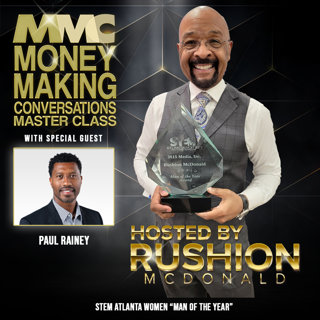
Uplift: Born in a small town, now Executive VP over SXSW, Billboard, Rolling Stones, Variety and Dick Clark.
Two-time Emmy and Three-time NAACP Image Award-winning, television Executive Producer Rushion McDonald interviewed Paul Rainey. He holds a powerful executive role in the media world, shaping the future of iconic brands like Billboard, Rolling Stone, and SXSW. 🏆 Paul Rainey’s Executive Career at Penske Media Corporation (PMC) Current Role Executive Vice President of Operations and Finance at Penske Media Corporation (PMC). Oversees operations and financial strategy for Rolling Stone, Billboard, Variety, The Hollywood Reporter, Vibe, SXSW, and more. Provides strategic input across PMC’s global media brands and live events, including the Billboard Music Awards, SXSW, and American Music Awards. Key Responsibilities Leads financial decision-making, acquisitions, and operational procedures across PMC’s portfolio. Serves on several boards, including as Audit Committee Chair of Redaptive, Inc. and a Director at SXSW. Background & Education Holds a Master of Science in Accountancy and a BBA in Finance and Computer Applications from the University of Notre Dame. Formerly held leadership roles at General Electric, Global Eagle, and Harris CapRock Communications, managing billion-dollar operations across five continents. 📘 About PMC & Cultural InfluencePMC is a global media powerhouse, reaching over 350 million people monthly. Its brands shape culture through journalism, entertainment, and live events, including SXSW Paul Rainey is a rare blend of creative storyteller and corporate strategist, bridging the worlds of graphic novels and global media leadership. Whether he’s crafting a sci-fi twist in a comic or guiding the future of Billboard and SXSW, his influence is both wide-reaching and deeply personal. Let me know if you’d like a visual timeline of his career or a deeper dive into one of his roles. 🎬📈✨ #STRAW #BEST #SHMSSupport the show: https://www.steveharveyfm.com/See omnystudio.com/listener for privacy information.
11 Jan 23min
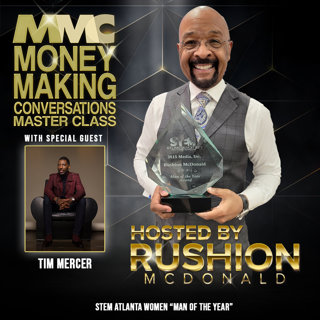
Financial Tip: He discusses the benefits of government contracts and how to apply.
Two-time Emmy and Three-time NAACP Image Award-winning, television Executive Producer Rushion McDonald interviewed Tim Mercer. Author of Bootstrap Millionaire and CFO of Cadence Ventures, Inc.: 🎯 Purpose of the Interview To inspire and educate aspiring entrepreneurs and professionals by sharing Tim Mercer’s journey from humble beginnings to financial success, emphasizing the importance of hard work, faith, planning, and leveraging government contracts and nontraditional financing. 🗝️ Key Takeaways Background & Journey Tim Mercer grew up in Mullins, South Carolina, in modest circumstances. His path to success began with military service, which broadened his worldview and led him to entrepreneurship. Bootstrap Millionaire Philosophy The term “bootstrap” symbolizes hard work, sacrifice, and perseverance. Mercer emphasizes that success doesn’t come overnight—it requires grinding, planning, and faith. Importance of a Business Plan A solid business plan is essential for securing funding and guiding business growth. Mercer shares real-life examples of people failing to secure support due to lack of planning. Cadence Ventures, Inc. A boutique private equity firm offering nontraditional financing for real estate investors. Focuses on investment properties and uses the property itself as collateral. Government Contracting Mercer began in government contracting in 2012 and credits it with helping him scale his business. He stresses that while it’s complex and paperwork-heavy, it’s a valuable opportunity for minority-owned businesses. Free resources like SAM.gov and Georgia Tech’s GT PAC can help entrepreneurs navigate the process. Success Requires Sacrifice Mercer highlights that every successful person has a story of struggle and sacrifice. His book’s first chapter, “See the Glory, Don’t Know the Story,” encapsulates this message. 💬 Notable Quotes “If you want to have the things tomorrow that other people won’t have, then you got to be willing to do the things today that other people won’t do.” — Tim Mercer quoting Les Brown “There’s no success without sacrifice.” — Tim Mercer “You can only make as much as the customer that you have.” — Tim Mercer on scaling through government contracts “See the glory, don’t know the story.” — Chapter title from Bootstrap Millionaire #SHMS #STRAW #BESTSupport the show: https://www.steveharveyfm.com/See omnystudio.com/listener for privacy information.
11 Jan 25min