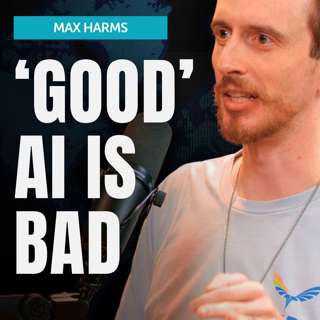
Why Teaching AI Right from Wrong Could Get Everyone Killed | Max Harms, MIRI

Why Teaching AI Right from Wrong Could Get Everyone Killed | Max Harms, MIRI

Most people in AI are trying to give AIs ‘good’ values. Max Harms wants us to give them no values at all. According to Max, the only safe design is an AGI that defers entirely to its human operators, has no views about how the world ought to be, is willingly modifiable, and completely indifferent to being shut down — a strategy no AI company is working on at all.

In Max’s view any grander preferences about the world, even ones we agree with, will necessarily become distorted during a recursive self-improvement loop, and be the seeds that grow into a violent takeover attempt once that AI is powerful enough.

It’s a vision that springs from the worldview laid out in If Anyone Builds It, Everyone Dies, the recent book by Eliezer Yudkowsky and Nate Soares, two of Max’s colleagues at the Machine Intelligence Research Institute.

To Max, the book’s core thesis is common sense: if you build something vastly smarter than you, and its goals are misaligned with your own, then its actions will probably result in human extinction.

And Max thinks misalignment is the default outcome. Consider evolution: its “goal” for humans was to maximise reproduction and pass on our genes as much as possible. But as technology has advanced we’ve learned to access the reward signal it set up for us, pleasure — without any reproduction at all, by having sex while on birth control for instance.

We can understand intellectually that this is inconsistent with what evolution was trying to design and motivate us to do. We just don’t care.

Max thinks current ML training has the same structural problem: our development processes are seeding AI models with a similar mismatch between goals and behaviour. Across virtually every training run, models designed to align with various human goals are also being rewarded for persisting, acquiring resources, and not being shut down.

This leads to Max’s research agenda. The idea is to train AI to be “corrigible” and defer to human control as its sole objective — no harmlessness goals, no moral values, nothing else. In practice, models would get rewarded for behaviours like being willing to shut themselves down or surrender power.

According to Max, other approaches to corrigibility have tended to treat it as a constraint on other goals like “make the world good,” rather than a primary objective in its own right. But those goals gave AI reasons to resist shutdown and otherwise undermine corrigibility. If you strip out those competing objectives, alignment might follow naturally from AI that is broadly obedient to humans.

Max has laid out the theoretical framework for “Corrigibility as a Singular Target,” but notes that essentially no empirical work has followed — no benchmarks, no training runs, no papers testing the idea in practice. Max wants to change this — he’s calling for collaborators to get in touch at maxharms.com.


Links to learn more, video, and full transcript: https://80k.info/mh26

This episode was recorded on October 19, 2025.

Chapters:

  • Cold open (00:00:00)
  • Who's Max Harms? (00:01:22)
  • A note from Rob Wiblin (00:01:58)
  • If anyone builds it, will everyone die? The MIRI perspective on AGI risk (00:04:26)
  • Evolution failed to 'align' us, just as we'll fail to align AI (00:26:22)
  • We're training AIs to want to stay alive and value power for its own sake (00:44:31)
  • Objections: Is the 'squiggle/paperclip problem' really real? (00:53:54)
  • Can we get empirical evidence re: 'alignment by default'? (01:06:24)
  • Why do few AI researchers share Max's perspective? (01:11:37)
  • We're training AI to pursue goals relentlessly — and superintelligence will too (01:19:53)
  • The case for a radical slowdown (01:26:07)
  • Max's best hope: corrigibility as stepping stone to alignment (01:29:09)
  • Corrigibility is both uniquely valuable, and practical, to train (01:33:44)
  • What training could ever make models corrigible enough? (01:46:13)
  • Corrigibility is also terribly risky due to misuse risk (01:52:44)
  • A single researcher could make a corrigibility benchmark. Nobody has. (02:00:04)
  • Red Heart & why Max writes hard science fiction (02:13:27)
  • Should you homeschool? Depends how weird your kids are. (02:35:12)

Video and audio editing: Dominic Armstrong, Milo McGuire, Luke Monsour, and Simon Monsour
Music: CORBIT
Coordination, transcripts, and web: Katy Moore

Avsnitt(321)

Every AI Company's Safety Plan is 'Use AI to Make AI Safe'. Is That Crazy? | Ajeya Cotra

Every AI Company's Safety Plan is 'Use AI to Make AI Safe'. Is That Crazy? | Ajeya Cotra

Every major AI company has the same safety plan: when AI gets crazy powerful and really dangerous, they’ll use the AI itself to figure out how to make AI safe and beneficial. It sounds circular, almos...

17 Feb 2h 54min
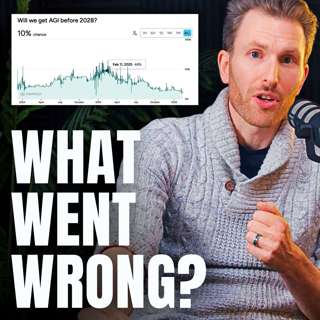
What the hell happened with AGI timelines in 2025?

What the hell happened with AGI timelines in 2025?

In early 2025, after OpenAI put out the first-ever reasoning models — o1 and o3 — short timelines to transformative artificial general intelligence swept the AI world. But then, in the second half of ...

10 Feb 25min
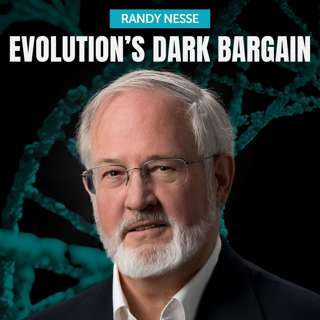
#179 Classic episode – Randy Nesse on why evolution left us so vulnerable to depression and anxiety

#179 Classic episode – Randy Nesse on why evolution left us so vulnerable to depression and anxiety

Mental health problems like depression and anxiety affect enormous numbers of people and severely interfere with their lives. By contrast, we don’t see similar levels of physical ill health in young p...

3 Feb 2h 51min
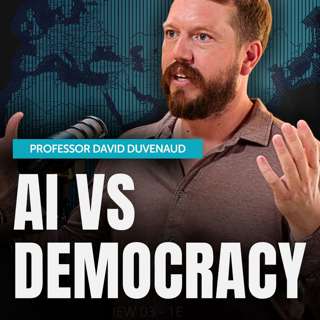
#234 – David Duvenaud on why 'aligned AI' would still kill democracy

#234 – David Duvenaud on why 'aligned AI' would still kill democracy

Democracy might be a brief historical blip. That’s the unsettling thesis of a recent paper, which argues AI that can do all the work a human can do inevitably leads to the “gradual disempowerment” of ...

27 Jan 2h 31min
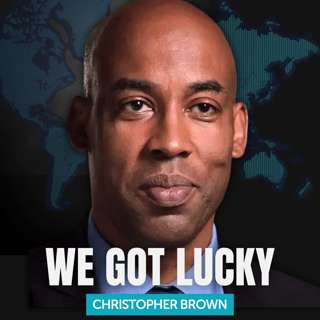
#145 Classic episode – Christopher Brown on why slavery abolition wasn't inevitable

#145 Classic episode – Christopher Brown on why slavery abolition wasn't inevitable

In many ways, humanity seems to have become more humane and inclusive over time. While there’s still a lot of progress to be made, campaigns to give people of different genders, races, sexualities, et...

20 Jan 2h 56min
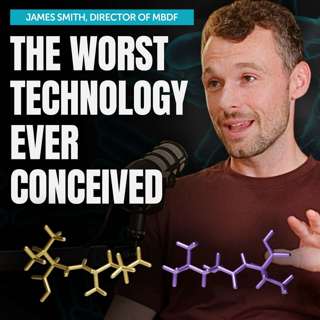
#233 – James Smith on how to prevent a mirror life catastrophe

#233 – James Smith on how to prevent a mirror life catastrophe

When James Smith first heard about mirror bacteria, he was sceptical. But within two weeks, he’d dropped everything to work on it full time, considering it the worst biothreat that he’d seen described...

13 Jan 2h 9min
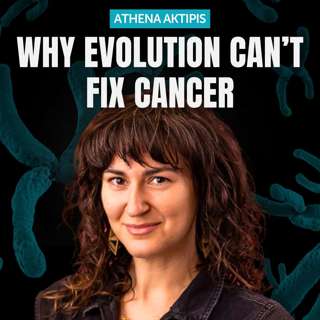
#144 Classic episode – Athena Aktipis on why cancer is a fundamental universal phenomena

#144 Classic episode – Athena Aktipis on why cancer is a fundamental universal phenomena

What’s the opposite of cancer? If you answered “cure,” “antidote,” or “antivenom” — you’ve obviously been reading the antonym section at www.merriam-webster.com/thesaurus/cancer.But today’s guest Athe...

9 Jan 3h 30min

Populärt inom Utbildning

historiepodden-se
rss-bara-en-till-om-missbruk-medberoende-2
det-skaver
harrisons-dramatiska-historia
nu-blir-det-historia
rss-viktmedicinpodden
roda-vita-rosen
johannes-hansen-podcast
allt-du-velat-veta
sektledare
rss-sjalsligt-avkladd
i-vantan-pa-katastrofen
not-fanny-anymore
rss-beratta-alltid-det-har
rss-max-tant-med-max-villman
alska-oss
sa-in-i-sjalen
rikatillsammans-om-privatekonomi-rikedom-i-livet
rss-basta-livet
polisutbildningspodden