

Do Patients Want “Diversity” or Competence? | Dr. Stephen Kershnar (E188)
El Podcast3 Mars

Do Patients Want “Diversity” or Competence? | Dr. Stephen Kershnar (E188)

A philosophy professor/lawyer argues that med-school “holistic” + diversity-weighted admissions are less predictive than a numbers-based algorithm—and that the stakes show up downstream in physician quality, access, and patient outcomes.

Guest bio:

Dr. Steven Kirschner (as stated in your intro) is a distinguished teaching professor of Philosophy at SUNY Fredonia and also an attorney; he authored the 2024 paper “The Diversity Argument for Affirmative Action in Medical School: A Critique” (Journal of Controversial Ideas).

Topics discussed:
  • Holistic admissions vs. algorithmic/metrics-based selection
  • The “15% top GPA+MCAT rejected” claim (2019–2022)
  • Medical error estimates and why measurement is messy
  • Predictive validity: MCAT, GPA, boards, and what doesn’t predict
  • Specialty selection, pass/fail exams, and ranking problems
  • DEI/affirmative action post–Supreme Court and “relabeling” effects
  • Workforce shortages, incentives, and productivity (incl. part-time work)
  • Disability accommodations, testing integrity, and gaming incentives
  • Diversity-of-thought vs demographic diversity; “underserved communities” argument
  • The uncomfortable “should patients use demographics as signals?” question
Main points:
  • Admissions should prioritize statistically validated predictors (MCAT + GPA, etc.), not interviews/essays/“compelling stories.”
  • Holistic admissions is inconsistent and unvalidated, often functioning like an opaque quota-by-proxy system.
  • Medical error and accountability make physician quality a high-stakes selection problem (even if exact death counts are disputed).
  • If underserved-service is the goal, subsidize it directly (pay, loan forgiveness, tuition incentives) rather than indirectly via admissions preferences.
  • Credential changes (e.g., pass/fail) can make it harder to sort candidates for competitive specialties.
  • Workforce shortages strengthen the case for optimizing for long-run productivity and retention, not symbolic criteria.
  • The taboo question: whether individuals should use group-level stats as a decision heuristic when individual-level info is limited.
Top 3 quotes:
  • The number one error is that we're waiting, giving diversity, um a large amount of weight.
  • Medical school admissions are done through… a holistic means… and they weight things that have not been statistically validated.
  • The awkward but correct approach is to say, yes, you should.” (re: whether people should use demographics as predictors)

🎙 The Pod is hosted by Jesse Wright
💬 For guest suggestions, questions, or media inquiries, reach out at https://elpodcast.media/
📬 Never miss an episode – subscribe and follow wherever you get your podcasts.
⭐️ If you enjoyed this episode, please rate and review the show. It helps others find us.

Thanks for listening!

Avsnitt(187)

1 in 20 Deaths: Inside Canada’s Assisted Dying System - Dr. Ramona Coelho

1 in 20 Deaths: Inside Canada’s Assisted Dying System - Dr. Ramona Coelho

Canada’s MAiD program has expanded rapidly—Dr. Ramona Coelho argues the system increasingly serves vulnerable people, with uneven safeguards and serious ethical, legal, and social risks. Guest bio: Dr...

24 Feb 1h
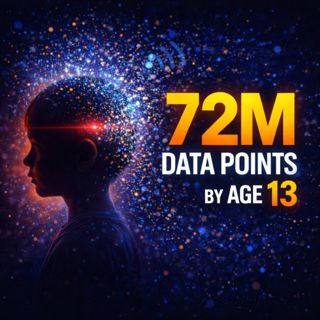
The Eavesdropper Economy: How Surveillance Built AI (E186)

The Eavesdropper Economy: How Surveillance Built AI (E186)

A lively tour from Cold War “The Thing” to today’s surveillance capitalism—showing how audio capture, too much data, and automation pressures helped turn listening into AI.Guest bios:Dr. Toby Heys — P...

18 Feb 1h
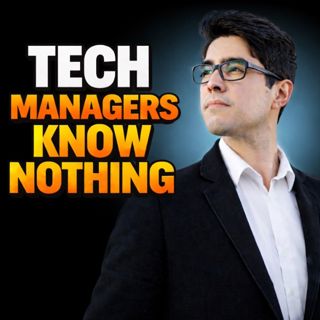
Managerial Class Ruined Tech (E185) - Darryl Campbell

Managerial Class Ruined Tech (E185) - Darryl Campbell

A former Silicon Valley insider explains how MBA-style “spreadsheet management” is breaking software—and why it’s making tech, AI, and everyday products worse.Guest bio:Darryl Campbell is a former tec...

10 Feb 1h 13min

55% of MIT Faculty Self-Censor — Here’s Why (E184)

55% of MIT Faculty Self-Censor — Here’s Why (E184)

MIT Free Speech Alliance president Wayne Stargardt explains how a few high-profile cancellations can drive widespread faculty self-censorship—even at a STEM powerhouse like MIT.Guest bio:Wayne Stargar...

5 Feb 52min

E183: Why Corporate America Will Never De-Woke | Law Prof Explains

E183: Why Corporate America Will Never De-Woke | Law Prof Explains

In this episode, Jesse talks with Fordham University School of Law corporate-law professor Sean J. Griffith about why “go woke, go broke” hasn’t really played out—and why big, publicly traded firms ca...

3 Feb 59min
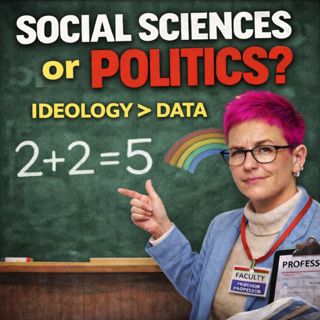
E181: Politics Is the Best Predictor of Academic Research — Prof Mark Horowitz

E181: Politics Is the Best Predictor of Academic Research — Prof Mark Horowitz

Political beliefs often matter more than data or methods in shaping how social scientists think about controversial issues. In this episode, sociologist Dr. Mark Horowitz explains why many professors ...

27 Jan 1h 8min
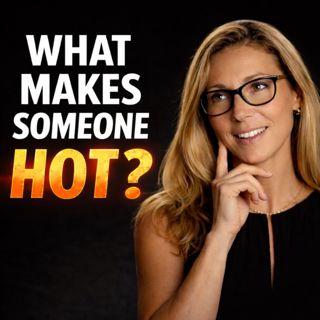
E180: Attraction & Disgust: Evolutionary Psychology Explained (Dr. Deb Lieberman)

E180: Attraction & Disgust: Evolutionary Psychology Explained (Dr. Deb Lieberman)

Evolutionary psychologist Debra Lieberman explains how “disgust” and other built-in mental programs shape attraction, kinship, morality, and even law—while modern technology and social media scramble ...

20 Jan 1h 3min

Populärt inom Business & ekonomi

badfluence
framgangspodden
varvet
rss-jossan-nina
rss-borsens-finest
uppgang-och-fall
rss-svart-marknad
svd-tech-brief
avanzapodden
rss-dagen-med-di
dynastin
borsmorgon
lastbilspodden
fill-or-kill
24fragor
rss-den-nya-ekonomin
rss-kort-lang-analyspodden-fran-di
ekonomiekot-extra
rss-inga-dumma-fragor-om-pengar
bathina-en-podcast