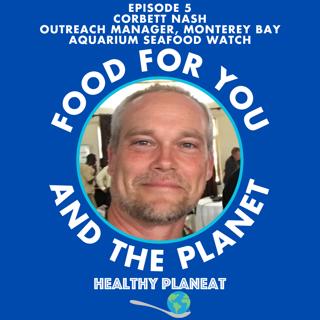
Episode 5: Monterey Bay Aquarium Seafood Watch Corbett Nash - Which Seafood Is Most Sustainable

Episode 5: Monterey Bay Aquarium Seafood Watch Corbett Nash - Which Seafood Is Most Sustainable

Corbett Nash is the Seafood Watch Outreach Manager at Monterey Bay Aquarium.

The Monterey Bay Aquarium launched Seafood Watch in 1999 as a special exhibit about the impacts of seafood. People found the information useful, so it was made a permanent conservation program. The original mission was to help people navigate purchasing sustainable seafood through the seafood ratings and tools like the pocket guides. The program and its scope have grown over the past 25 years. Today, Seafood Watch's science-based assessments are a primary resource for understanding sustainable seafood around the world. As a ratings program, Seafood Watch assess how fisheries and aquaculture operations perform against science-based standards for environmental sustainability. These ratings are used to create sustainability recommendations for wild-caught and farmed seafood. Seafood Watch also works to transform how seafood is fished and farmed through partnerships with businesses, governments, other NGOs, and producer groups so that people and the planet can thrive now and in the future.

Corbett Nash is a science communicator who aims to connect science and knowledge with understanding and action. He advocates for sustainable fisheries and aquaculture with the Monterey Bay Aquarium Seafood Watch program.

TOPICS EXPLORED

0:00 – 0:54 – Introduction

0:54 – 1:25 – What is Seafood Watch and how does it fit into the overarching aims of the Monterey Bay Aquarium?

1:25 – 5:39 – When was the first Seafood Guide created and how frequently is it updated?

5:39 – 12:08 – Can you explain the criteria that make a type of seafood fall into the "best choice," "certified," "good alternative," or "avoid" categories for wild caught and aquaculture?

12:08 – 13:35 – What types of academic research are you looking at to inform the criteria you are using?

13:35 – 14:39 – What are some of the benefits of wild-caught vs seafood that has been cultivated via aquaculture systems, and vice versa? Are some species better wild-caught and others farmed?

14:39 – 17:46 – Are there some examples of wild caught and aquaculture species that are the best to consume?

17:46 – 19:35 What are some of the most common issues related to transparency and traceability in the seafood industry?

19:35 – 21:04 – What are some of the most sustainable seafood options, and things people should look for as they shop for seafood?

21:04 – 22:18 – Things to share and wrap up

SEAFOOD WATCH INFORMATION

Seafood Watch: https://www.seafoodwatch.org/

Seafood Watch: @seafoodwatch

RESOURCES

25 Years of Seafood Watch: https://www.seafoodwatch.org/stories/25-years-seafood-watch

Seafood Watch Consumer Guides: https://www.seafoodwatch.org/recommendations/download-consumer-guides

FOOD FOR YOU AND THE PLANET PODCAST INFORMATION

Apple Podcasts:

Spotify: https://open.spotify.com/show/7pkAIuXxl9dzD48b7qMOL1

RSS: https://feeds.libsyn.com/506343/rss

Podcast Instagram: @foodforyouandtheplanet

TAGS

Food

Environment

Health

Seafood

Seafood Watch

Sustainable Seafood

Wild Caught

Wild Caught Seafood

Aquaculture

Sustainable Aquaculture

Populärt inom Vetenskap

p3-dystopia
dumma-manniskor
svd-nyhetsartiklar
allt-du-velat-veta
kapitalet-en-podd-om-ekonomi
ufo-sverige
det-morka-psyket
sexet
rss-vetenskapsradion
bildningspodden
rss-vetenskapsradion-2
rss-vetenskapspodden
naturmorgon
medicinvetarna
dumforklarat
rss-i-hjarnan-pa-louise-epstein
rss-arkeologi-historia-podden-som-graver-i-vart-kulturlandskap
barnpsykologerna
rss-broccolipodden-en-podcast-som-inte-handlar-om-broccoli
halsorevolutionen