#76 – Tara Kirk Sell on misinformation, who's done well and badly, & what to reopen first

#76 – Tara Kirk Sell on misinformation, who's done well and badly, & what to reopen first

Amid a rising COVID-19 death toll, and looming economic disaster, we’ve been looking for good news — and one thing we're especially thankful for is the Johns Hopkins Center for Health Security (CHS).

CHS focuses on protecting us from major biological, chemical or nuclear disasters, through research that informs governments around the world. While this pandemic surprised many, just last October the Center ran a simulation of a 'new coronavirus' scenario to identify weaknesses in our ability to quickly respond. Their expertise has given them a key role in figuring out how to fight COVID-19.

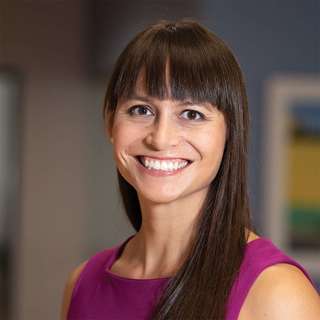
Today’s guest, Dr Tara Kirk Sell, did her PhD in policy and communication during disease outbreaks, and has worked at CHS for 11 years on a range of important projects.

Links to learn more, summary and full transcript.

Last year she was a leader on Collective Intelligence for Disease Prediction, designed to sound the alarm about upcoming pandemics before others are paying attention.

Incredibly, the project almost closed in December, with COVID-19 just starting to spread around the world — but received new funding that allowed the project to respond quickly to the emerging disease.

She also contributed to a recent report attempting to explain the risks of specific types of activities resuming when COVID-19 lockdowns end.

We can't achieve zero risk — so differentiating activities on a spectrum is crucial. Choosing wisely can help us lead more normal lives without reviving the pandemic.

Dance clubs will have to stay closed, but hairdressers can adapt to minimise transmission, and Tara, who happens to be an Olympic silver-medalist in swimming, suggests outdoor non-contact sports could resume soon without much risk.

Her latest project deals with the challenge of misinformation during disease outbreaks.

Analysing the Ebola communication crisis of 2014, they found that even trained coders with public health expertise sometimes needed help to distinguish between true and misleading tweets — showing the danger of a continued lack of definitive information surrounding a virus and how it’s transmitted.

The challenge for governments is not simple. If they acknowledge how much they don't know, people may look elsewhere for guidance. But if they pretend to know things they don't, the result can be a huge loss of trust.

Despite their intense focus on COVID-19, researchers at CHS know that this is no one-off event. Many aspects of our collective response this time around have been alarmingly poor, and it won’t be long before Tara and her colleagues need to turn their mind to next time.

You can now donate to CHS through Effective Altruism Funds. Donations made through EA Funds are tax-deductible in the US, the UK, and the Netherlands.

Tara and Rob also discuss:

• Who has overperformed and underperformed expectations during COVID-19?
• Whe are people right to mistrust authorities?
• The media’s responsibility to be right
• What policy changes should be prioritised for next time
• Should we prepare for future pandemic while the COVID-19 is still going?
• The importance of keeping non-COVID health problems in mind
• The psychological difference between staying home voluntarily and being forced to
• Mistakes that we in the general public might be making
• Emerging technologies with the potential to reduce global catastrophic biological risks

Chapters:

  • Rob’s intro (00:00:00)
  • The interview begins (00:01:43)
  • Misinformation (00:05:07)
  • Who has done well during COVID-19? (00:22:19)
  • Guidance for governors on reopening (00:34:05)
  • Collective Intelligence for Disease Prediction project (00:45:35)
  • What else is CHS trying to do to address the pandemic? (00:59:51)
  • Deaths are not the only health impact of importance (01:05:33)
  • Policy change for future pandemics (01:10:57)
  • Emerging technologies with potential to reduce global catastrophic biological risks (01:22:37)
  • Careers (01:38:52)
  • Good news about COVID-19 (01:44:23)

Producer: Keiran Harris.
Audio mastering: Ben Cordell.
Transcriptions: Zakee Ulhaq.

Avsnitt(321)

Why Teaching AI Right from Wrong Could Get Everyone Killed | Max Harms, MIRI

Why Teaching AI Right from Wrong Could Get Everyone Killed | Max Harms, MIRI

Most people in AI are trying to give AIs ‘good’ values. Max Harms wants us to give them no values at all. According to Max, the only safe design is an AGI that defers entirely to its human operators, ...

24 Feb 2h 41min

Every AI Company's Safety Plan is 'Use AI to Make AI Safe'. Is That Crazy? | Ajeya Cotra

Every AI Company's Safety Plan is 'Use AI to Make AI Safe'. Is That Crazy? | Ajeya Cotra

Every major AI company has the same safety plan: when AI gets crazy powerful and really dangerous, they’ll use the AI itself to figure out how to make AI safe and beneficial. It sounds circular, almos...

17 Feb 2h 54min

What the hell happened with AGI timelines in 2025?

What the hell happened with AGI timelines in 2025?

In early 2025, after OpenAI put out the first-ever reasoning models — o1 and o3 — short timelines to transformative artificial general intelligence swept the AI world. But then, in the second half of ...

10 Feb 25min

#179 Classic episode – Randy Nesse on why evolution left us so vulnerable to depression and anxiety

#179 Classic episode – Randy Nesse on why evolution left us so vulnerable to depression and anxiety

Mental health problems like depression and anxiety affect enormous numbers of people and severely interfere with their lives. By contrast, we don’t see similar levels of physical ill health in young p...

3 Feb 2h 51min

#234 – David Duvenaud on why 'aligned AI' would still kill democracy

#234 – David Duvenaud on why 'aligned AI' would still kill democracy

Democracy might be a brief historical blip. That’s the unsettling thesis of a recent paper, which argues AI that can do all the work a human can do inevitably leads to the “gradual disempowerment” of ...

27 Jan 2h 31min

#145 Classic episode – Christopher Brown on why slavery abolition wasn't inevitable

#145 Classic episode – Christopher Brown on why slavery abolition wasn't inevitable

In many ways, humanity seems to have become more humane and inclusive over time. While there’s still a lot of progress to be made, campaigns to give people of different genders, races, sexualities, et...

20 Jan 2h 56min

#233 – James Smith on how to prevent a mirror life catastrophe

#233 – James Smith on how to prevent a mirror life catastrophe

When James Smith first heard about mirror bacteria, he was sceptical. But within two weeks, he’d dropped everything to work on it full time, considering it the worst biothreat that he’d seen described...

13 Jan 2h 9min

#144 Classic episode – Athena Aktipis on why cancer is a fundamental universal phenomena

#144 Classic episode – Athena Aktipis on why cancer is a fundamental universal phenomena

What’s the opposite of cancer? If you answered “cure,” “antidote,” or “antivenom” — you’ve obviously been reading the antonym section at www.merriam-webster.com/thesaurus/cancer.But today’s guest Athe...

9 Jan 3h 30min

Populärt inom Utbildning

historiepodden-se
rss-bara-en-till-om-missbruk-medberoende-2
det-skaver
nu-blir-det-historia
harrisons-dramatiska-historia
rss-viktmedicinpodden
johannes-hansen-podcast
sektledare
not-fanny-anymore
roda-vita-rosen
rss-sjalsligt-avkladd
i-vantan-pa-katastrofen
allt-du-velat-veta
sa-in-i-sjalen
rss-beratta-alltid-det-har
alska-oss
rss-max-tant-med-max-villman
rikatillsammans-om-privatekonomi-rikedom-i-livet
sektpodden
dumforklarat