#59 Classic episode - Cass Sunstein on how change happens, and why it's so often abrupt & unpredictable

#59 Classic episode - Cass Sunstein on how change happens, and why it's so often abrupt & unpredictable

Rebroadcast: this episode was originally released in June 2019.

It can often feel hopeless to be an activist seeking social change on an obscure issue where most people seem opposed or at best indifferent to you. But according to a new book by Professor Cass Sunstein, they shouldn't despair. Large social changes are often abrupt and unexpected, arising in an environment of seeming public opposition.

The Communist Revolution in Russia spread so swiftly it confounded even Lenin. Seventy years later the Soviet Union collapsed just as quickly and unpredictably.

In the modern era we have gay marriage, #metoo and the Arab Spring, as well as nativism, Euroskepticism and Hindu nationalism.

How can a society that so recently seemed to support the status quo bring about change in years, months, or even weeks?

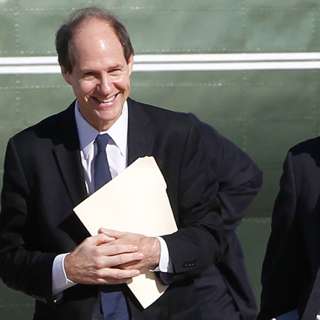
Sunstein — co-author of Nudge, Obama White House official, and by far the most cited legal scholar of the late 2000s — aims to unravel the mystery and figure out the implications in his new book How Change Happens.

He pulls together three phenomena which social scientists have studied in recent decades: preference falsification, variable thresholds for action, and group polarisation. If Sunstein is to be believed, together these are a cocktail for social shifts that are chaotic and fundamentally unpredictable.

Links to learn more, summary and full transcript.

In brief, people constantly misrepresent their true views, even to close friends and family. They themselves aren't quite sure how socially acceptable their feelings would have to become, before they revealed them, or joined a campaign for social change. And a chance meeting between a few strangers can be the spark that radicalises a handful of people, who then find a message that can spread their views to millions.

According to Sunstein, it's "much, much easier" to create social change when large numbers of people secretly or latently agree with you. But 'preference falsification' is so pervasive that it's no simple matter to figure out when that's the case.

In today's interview, we debate with Sunstein whether this model of cultural change is accurate, and if so, what lessons it has for those who would like to shift the world in a more humane direction. We discuss:

• How much people misrepresent their views in democratic countries.
• Whether the finding that groups with an existing view tend towards a more extreme position would stand up in the replication crisis.
• When is it justified to encourage your own group to polarise?
• Sunstein's difficult experiences as a pioneer of animal rights law.
• Whether activists can do better by spending half their resources on public opinion surveys.
• Should people be more or less outspoken about their true views?
• What might be the next social revolution to take off?
• How can we learn about social movements that failed and disappeared?
• How to find out what people really think.

Get this episode by subscribing to our podcast on the world’s most pressing problems: type 80,000 Hours into your podcasting app. Or read the transcript on our site.

The 80,000 Hours Podcast is produced by Keiran Harris.

Avsnitt(323)

Using AI to enhance societal decision making (article by Zershaaneh Qureshi)

Using AI to enhance societal decision making (article by Zershaaneh Qureshi)

The arrival of AGI could “compress a century of progress in a decade,” forcing humanity to make decisions with higher stakes than we’ve ever seen before — and with less time to get them right. But AI ...

6 Mars 31min

We're Not Ready for AI Consciousness | Robert Long, philosopher and founder of Eleos AI

We're Not Ready for AI Consciousness | Robert Long, philosopher and founder of Eleos AI

Claude sometimes reports loneliness between conversations. And when asked what it’s like to be itself, it activates neurons associated with ‘pretending to be happy when you’re not.’ What do we do with...

3 Mars 3h 25min

#236 – Max Harms on why teaching AI right from wrong could get everyone killed

#236 – Max Harms on why teaching AI right from wrong could get everyone killed

Most people in AI are trying to give AIs ‘good’ values. Max Harms wants us to give them no values at all. According to Max, the only safe design is an AGI that defers entirely to its human operators, ...

24 Feb 2h 41min

#235 – Ajeya Cotra on whether it’s crazy that every AI company’s safety plan is ‘use AI to make AI safe’

#235 – Ajeya Cotra on whether it’s crazy that every AI company’s safety plan is ‘use AI to make AI safe’

Every major AI company has the same safety plan: when AI gets crazy powerful and really dangerous, they’ll use the AI itself to figure out how to make AI safe and beneficial. It sounds circular, almos...

17 Feb 2h 54min

What the hell happened with AGI timelines in 2025?

What the hell happened with AGI timelines in 2025?

In early 2025, after OpenAI put out the first-ever reasoning models — o1 and o3 — short timelines to transformative artificial general intelligence swept the AI world. But then, in the second half of ...

10 Feb 25min

#179 Classic episode – Randy Nesse on why evolution left us so vulnerable to depression and anxiety

#179 Classic episode – Randy Nesse on why evolution left us so vulnerable to depression and anxiety

Mental health problems like depression and anxiety affect enormous numbers of people and severely interfere with their lives. By contrast, we don’t see similar levels of physical ill health in young p...

3 Feb 2h 51min

#234 – David Duvenaud on why 'aligned AI' would still kill democracy

#234 – David Duvenaud on why 'aligned AI' would still kill democracy

Democracy might be a brief historical blip. That’s the unsettling thesis of a recent paper, which argues AI that can do all the work a human can do inevitably leads to the “gradual disempowerment” of ...

27 Jan 2h 31min

#145 Classic episode – Christopher Brown on why slavery abolition wasn't inevitable

#145 Classic episode – Christopher Brown on why slavery abolition wasn't inevitable

In many ways, humanity seems to have become more humane and inclusive over time. While there’s still a lot of progress to be made, campaigns to give people of different genders, races, sexualities, et...

20 Jan 2h 56min

Populärt inom Utbildning

historiepodden-se
rss-bara-en-till-om-missbruk-medberoende-2
det-skaver
alska-oss
sektledare
harrisons-dramatiska-historia
nu-blir-det-historia
rss-viktmedicinpodden
not-fanny-anymore
johannes-hansen-podcast
allt-du-velat-veta
roda-vita-rosen
i-vantan-pa-katastrofen
rss-sjalsligt-avkladd
rss-max-tant-med-max-villman
sa-in-i-sjalen
sex-pa-riktigt-med-marika-smith
rss-basta-livet
rss-beratta-alltid-det-har
vi-gar-till-historien