
#159 – Jan Leike on OpenAI's massive push to make superintelligence safe in 4 years or less

#159 – Jan Leike on OpenAI's massive push to make superintelligence safe in 4 years or less

In July, OpenAI announced a new team and project: Superalignment. The goal is to figure out how to make superintelligent AI systems aligned and safe to use within four years, and the lab is putting a massive 20% of its computational resources behind the effort.

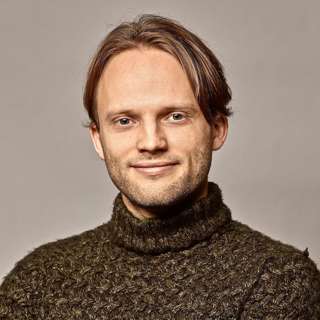
Today's guest, Jan Leike, is Head of Alignment at OpenAI and will be co-leading the project. As OpenAI puts it, "...the vast power of superintelligence could be very dangerous, and lead to the disempowerment of humanity or even human extinction. ... Currently, we don't have a solution for steering or controlling a potentially superintelligent AI, and preventing it from going rogue."

Links to learn more, summary and full transcript.

Given that OpenAI is in the business of developing superintelligent AI, it sees that as a scary problem that urgently has to be fixed. So it’s not just throwing compute at the problem -- it’s also hiring dozens of scientists and engineers to build out the Superalignment team.

Plenty of people are pessimistic that this can be done at all, let alone in four years. But Jan is guardedly optimistic. As he explains:

Honestly, it really feels like we have a real angle of attack on the problem that we can actually iterate on... and I think it's pretty likely going to work, actually. And that's really, really wild, and it's really exciting. It's like we have this hard problem that we've been talking about for years and years and years, and now we have a real shot at actually solving it. And that'd be so good if we did.


Jan thinks that this work is actually the most scientifically interesting part of machine learning. Rather than just throwing more chips and more data at a training run, this work requires actually understanding how these models work and how they think. The answers are likely to be breakthroughs on the level of solving the mysteries of the human brain.

The plan, in a nutshell, is to get AI to help us solve alignment. That might sound a bit crazy -- as one person described it, “like using one fire to put out another fire.”

But Jan’s thinking is this: the core problem is that AI capabilities will keep getting better and the challenge of monitoring cutting-edge models will keep getting harder, while human intelligence stays more or less the same. To have any hope of ensuring safety, we need our ability to monitor, understand, and design ML models to advance at the same pace as the complexity of the models themselves.

And there's an obvious way to do that: get AI to do most of the work, such that the sophistication of the AIs that need aligning, and the sophistication of the AIs doing the aligning, advance in lockstep.

Jan doesn't want to produce machine learning models capable of doing ML research. But such models are coming, whether we like it or not. And at that point Jan wants to make sure we turn them towards useful alignment and safety work, as much or more than we use them to advance AI capabilities.

Jan thinks it's so crazy it just might work. But some critics think it's simply crazy. They ask a wide range of difficult questions, including:

  • If you don't know how to solve alignment, how can you tell that your alignment assistant AIs are actually acting in your interest rather than working against you? Especially as they could just be pretending to care about what you care about.
  • How do you know that these technical problems can be solved at all, even in principle?
  • At the point that models are able to help with alignment, won't they also be so good at improving capabilities that we're in the middle of an explosion in what AI can do?


In today's interview host Rob Wiblin puts these doubts to Jan to hear how he responds to each, and they also cover:

  • OpenAI's current plans to achieve 'superalignment' and the reasoning behind them
  • Why alignment work is the most fundamental and scientifically interesting research in ML
  • The kinds of people he’s excited to hire to join his team and maybe save the world
  • What most readers misunderstood about the OpenAI announcement
  • The three ways Jan expects AI to help solve alignment: mechanistic interpretability, generalization, and scalable oversight
  • What the standard should be for confirming whether Jan's team has succeeded
  • Whether OpenAI should (or will) commit to stop training more powerful general models if they don't think the alignment problem has been solved
  • Whether Jan thinks OpenAI has deployed models too quickly or too slowly
  • The many other actors who also have to do their jobs really well if we're going to have a good AI future
  • Plenty more


Get this episode by subscribing to our podcast on the world’s most pressing problems and how to solve them: type ‘80,000 Hours’ into your podcasting app. Or read the transcript.

Producer and editor: Keiran Harris
Audio Engineering Lead: Ben Cordell
Technical editing: Simon Monsour and Milo McGuire
Additional content editing: Katy Moore and Luisa Rodriguez
Transcriptions: Katy Moore

Avsnitt(324)

AGI Won't End Mutually Assured Destruction (Probably) | Sam Winter-Levy & Nikita Lalwani

AGI Won't End Mutually Assured Destruction (Probably) | Sam Winter-Levy & Nikita Lalwani

How AI interacts with nuclear deterrence may be the single most important question in geopolitics — one that may define the stakes of today’s AI race. Nuclear deterrence rests on a state’s capacity to...

10 Mars 1h 11min

Using AI to enhance societal decision making (article by Zershaaneh Qureshi)

Using AI to enhance societal decision making (article by Zershaaneh Qureshi)

The arrival of AGI could “compress a century of progress in a decade,” forcing humanity to make decisions with higher stakes than we’ve ever seen before — and with less time to get them right. But AI ...

6 Mars 31min

We're Not Ready for AI Consciousness | Robert Long, philosopher and founder of Eleos AI

We're Not Ready for AI Consciousness | Robert Long, philosopher and founder of Eleos AI

Claude sometimes reports loneliness between conversations. And when asked what it’s like to be itself, it activates neurons associated with ‘pretending to be happy when you’re not.’ What do we do with...

3 Mars 3h 25min

#236 – Max Harms on why teaching AI right from wrong could get everyone killed

#236 – Max Harms on why teaching AI right from wrong could get everyone killed

Most people in AI are trying to give AIs ‘good’ values. Max Harms wants us to give them no values at all. According to Max, the only safe design is an AGI that defers entirely to its human operators, ...

24 Feb 2h 41min

#235 – Ajeya Cotra on whether it’s crazy that every AI company’s safety plan is ‘use AI to make AI safe’

#235 – Ajeya Cotra on whether it’s crazy that every AI company’s safety plan is ‘use AI to make AI safe’

Every major AI company has the same safety plan: when AI gets crazy powerful and really dangerous, they’ll use the AI itself to figure out how to make AI safe and beneficial. It sounds circular, almos...

17 Feb 2h 54min

What the hell happened with AGI timelines in 2025?

What the hell happened with AGI timelines in 2025?

In early 2025, after OpenAI put out the first-ever reasoning models — o1 and o3 — short timelines to transformative artificial general intelligence swept the AI world. But then, in the second half of ...

10 Feb 25min

#179 Classic episode – Randy Nesse on why evolution left us so vulnerable to depression and anxiety

#179 Classic episode – Randy Nesse on why evolution left us so vulnerable to depression and anxiety

Mental health problems like depression and anxiety affect enormous numbers of people and severely interfere with their lives. By contrast, we don’t see similar levels of physical ill health in young p...

3 Feb 2h 51min

#234 – David Duvenaud on why 'aligned AI' would still kill democracy

#234 – David Duvenaud on why 'aligned AI' would still kill democracy

Democracy might be a brief historical blip. That’s the unsettling thesis of a recent paper, which argues AI that can do all the work a human can do inevitably leads to the “gradual disempowerment” of ...

27 Jan 2h 31min

Populärt inom Utbildning

historiepodden-se
rss-bara-en-till-om-missbruk-medberoende-2
det-skaver
alska-oss
nu-blir-det-historia
rss-viktmedicinpodden
harrisons-dramatiska-historia
sektledare
johannes-hansen-podcast
roda-vita-rosen
not-fanny-anymore
allt-du-velat-veta
rss-sjalsligt-avkladd
rss-max-tant-med-max-villman
rikatillsammans-om-privatekonomi-rikedom-i-livet
i-vantan-pa-katastrofen
sa-in-i-sjalen
polisutbildningspodden
rss-om-vi-ska-vara-arliga
rss-basta-livet