
#189 – Rachel Glennerster on why we still don’t have vaccines that could save millions

#189 – Rachel Glennerster on why we still don’t have vaccines that could save millions

"You can’t charge what something is worth during a pandemic. So we estimated that the value of one course of COVID vaccine in January 2021 was over $5,000. They were selling for between $6 and $40. So nothing like their social value. Now, don’t get me wrong. I don’t think that they should have charged $5,000 or $6,000. That’s not ethical. It’s also not economically efficient, because they didn’t cost $5,000 at the marginal cost. So you actually want low price, getting out to lots of people.

"But it shows you that the market is not going to reward people who do the investment in preparation for a pandemic — because when a pandemic hits, they’re not going to get the reward in line with the social value. They may even have to charge less than they would in a non-pandemic time. So prepping for a pandemic is not an efficient market strategy if I’m a firm, but it’s a very efficient strategy for society, and so we’ve got to bridge that gap." —Rachel Glennerster

In today’s episode, host Luisa Rodriguez speaks to Rachel Glennerster — associate professor of economics at the University of Chicago and a pioneer in the field of development economics — about how her team’s new Market Shaping Accelerator aims to leverage market forces to drive innovations that can solve pressing world problems.

Links to learn more, highlights, and full transcript.

They cover:

  • How market failures and misaligned incentives stifle critical innovations for social goods like pandemic preparedness, climate change interventions, and vaccine development.
  • How “pull mechanisms” like advance market commitments (AMCs) can help overcome these challenges — including concrete examples like how one AMC led to speeding up the development of three vaccines which saved around 700,000 lives in low-income countries.
  • The challenges in designing effective pull mechanisms, from design to implementation.
  • Why it’s important to tie innovation incentives to real-world impact and uptake, not just the invention of a new technology.
  • The massive benefits of accelerating vaccine development, in some cases, even if it’s only by a few days or weeks.
  • The case for a $6 billion advance market commitment to spur work on a universal COVID-19 vaccine.
  • The shortlist of ideas from the Market Shaping Accelerator’s recent Innovation Challenge that use pull mechanisms to address market failures around improving indoor air quality, repurposing generic drugs for alternative uses, and developing eco-friendly air conditioners for a warming planet.
  • “Best Buys” and “Bad Buys” for improving education systems in low- and middle-income countries, based on evidence from over 400 studies.
  • Lessons from Rachel’s career at the forefront of global development, and how insights from economics can drive transformative change.
  • And much more.

Chapters:

  • The Market Shaping Accelerator (00:03:33)
  • Pull mechanisms for innovation (00:13:10)
  • Accelerating the pneumococcal and COVID vaccines (00:19:05)
  • Advance market commitments (00:41:46)
  • Is this uncertainty hard for funders to plan around? (00:49:17)
  • The story of the malaria vaccine that wasn’t (00:57:15)
  • Challenges with designing and implementing AMCs and other pull mechanisms (01:01:40)
  • Universal COVID vaccine (01:18:14)
  • Climate-resilient crops (01:34:09)
  • The Market Shaping Accelerator’s Innovation Challenge (01:45:40)
  • Indoor air quality to reduce respiratory infections (01:49:09)
  • Repurposing generic drugs (01:55:50)
  • Clean air conditioning units (02:02:41)
  • Broad-spectrum antivirals for pandemic prevention (02:09:11)
  • Improving education in low- and middle-income countries (02:15:53)
  • What’s still weird for Rachel about living in the US? (02:45:06)

Producer and editor: Keiran Harris
Audio Engineering Lead: Ben Cordell
Technical editing: Simon Monsour, Milo McGuire, and Dominic Armstrong
Additional content editing: Katy Moore and Luisa Rodriguez
Transcriptions: Katy Moore

Avsnitt(325)

Why automating human labour will break our political system | Rose Hadshar, Forethought

Why automating human labour will break our political system | Rose Hadshar, Forethought

The most important political question in the age of advanced AI might not be who wins elections. It might be whether elections continue to matter at all.That’s the view of Rose Hadshar, researcher at ...

17 Mars 2h 14min
#238 – Sam Winter-Levy and Nikita Lalwani on how AGI won't end mutually assured destruction (probably)

#238 – Sam Winter-Levy and Nikita Lalwani on how AGI won't end mutually assured destruction (probably)

How AI interacts with nuclear deterrence may be the single most important question in geopolitics — one that may define the stakes of today’s AI race. Nuclear deterrence rests on a state’s capacity to...

10 Mars 1h 11min
Using AI to enhance societal decision making (article by Zershaaneh Qureshi)

Using AI to enhance societal decision making (article by Zershaaneh Qureshi)

The arrival of AGI could “compress a century of progress in a decade,” forcing humanity to make decisions with higher stakes than we’ve ever seen before — and with less time to get them right. But AI ...

6 Mars 31min
#237 – Robert Long on how we're not ready for AI consciousness

#237 – Robert Long on how we're not ready for AI consciousness

Claude sometimes reports loneliness between conversations. And when asked what it’s like to be itself, it activates neurons associated with ‘pretending to be happy when you’re not.’ What do we do with...

3 Mars 3h 25min
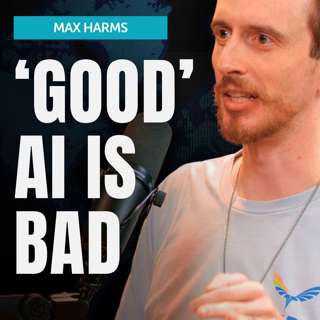
#236 – Max Harms on why teaching AI right from wrong could get everyone killed

#236 – Max Harms on why teaching AI right from wrong could get everyone killed

Most people in AI are trying to give AIs ‘good’ values. Max Harms wants us to give them no values at all. According to Max, the only safe design is an AGI that defers entirely to its human operators, ...

24 Feb 2h 41min
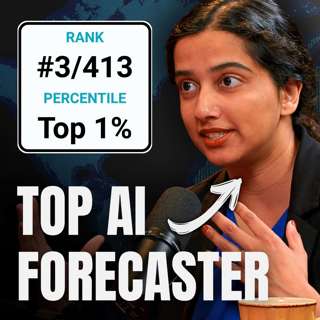
#235 – Ajeya Cotra on whether it’s crazy that every AI company’s safety plan is ‘use AI to make AI safe’

#235 – Ajeya Cotra on whether it’s crazy that every AI company’s safety plan is ‘use AI to make AI safe’

Every major AI company has the same safety plan: when AI gets crazy powerful and really dangerous, they’ll use the AI itself to figure out how to make AI safe and beneficial. It sounds circular, almos...

17 Feb 2h 54min

What the hell happened with AGI timelines in 2025?

What the hell happened with AGI timelines in 2025?

In early 2025, after OpenAI put out the first-ever reasoning models — o1 and o3 — short timelines to transformative artificial general intelligence swept the AI world. But then, in the second half of ...

10 Feb 25min

#179 Classic episode – Randy Nesse on why evolution left us so vulnerable to depression and anxiety

#179 Classic episode – Randy Nesse on why evolution left us so vulnerable to depression and anxiety

Mental health problems like depression and anxiety affect enormous numbers of people and severely interfere with their lives. By contrast, we don’t see similar levels of physical ill health in young p...

3 Feb 2h 51min

Populärt inom Utbildning

rss-bara-en-till-om-missbruk-medberoende-2
historiepodden-se
det-skaver
alska-oss
nu-blir-det-historia
sektledare
harrisons-dramatiska-historia
not-fanny-anymore
roda-vita-rosen
johannes-hansen-podcast
allt-du-velat-veta
rss-viktmedicinpodden
sa-in-i-sjalen
i-vantan-pa-katastrofen
rss-sjalsligt-avkladd
rss-basta-livet
rikatillsammans-om-privatekonomi-rikedom-i-livet
rss-om-vi-ska-vara-arliga
rss-max-tant-med-max-villman
vi-gar-till-historien