#208 – Elizabeth Cox on the case that TV shows, movies, and novels can improve the world

#208 – Elizabeth Cox on the case that TV shows, movies, and novels can improve the world

"I think stories are the way we shift the Overton window — so widen the range of things that are acceptable for policy and palatable to the public. Almost by definition, a lot of things that are going to be really important and shape the future are not in the Overton window, because they sound weird and off-putting and very futuristic. But I think stories are the best way to bring them in." — Elizabeth Cox

In today’s episode, Keiran Harris speaks with Elizabeth Cox — founder of the independent production company Should We Studio — about the case that storytelling can improve the world.

Links to learn more, highlights, and full transcript.

They cover:

  • How TV shows and movies compare to novels, short stories, and creative nonfiction if you’re trying to do good.
  • The existing empirical evidence for the impact of storytelling.
  • Their competing takes on the merits of thinking carefully about target audiences.
  • Whether stories can really change minds on deeply entrenched issues, or whether writers need to have more modest goals.
  • Whether humans will stay relevant as creative writers with the rise of powerful AI models.
  • Whether you can do more good with an overtly educational show vs other approaches.
  • Elizabeth’s experience with making her new five-part animated show Ada — including why she chose the topics of civilisational collapse, kidney donations, artificial wombs, AI, and gene drives.
  • The pros and cons of animation as a medium.
  • Career advice for creative writers.
  • Keiran’s idea for a longtermist Christmas movie.
  • And plenty more.

Check out Ada on YouTube!

Material you might want to check out before listening:

Chapters:

  • Cold open (00:00:00)
  • Luisa's intro (00:01:04)
  • The interview begins (00:02:52)
  • Is storytelling really a high-impact career option? (00:03:26)
  • Empirical evidence of the impact of storytelling (00:06:51)
  • How storytelling can inform us (00:16:25)
  • How long will humans stay relevant as creative writers? (00:21:54)
  • Ada (00:33:05)
  • Debating the merits of thinking about target audiences (00:38:03)
  • Ada vs other approaches to impact-focused storytelling (00:48:18)
  • Why animation (01:01:06)
  • One Billion Christmases (01:04:54)
  • How storytelling can humanise (01:09:34)
  • But can storytelling actually change strongly held opinions? (01:13:26)
  • Novels and short stories (01:18:38)
  • Creative nonfiction (01:25:06)
  • Other promising ways of storytelling (01:30:53)
  • How did Ada actually get made? (01:33:23)
  • The hardest part of the process for Elizabeth (01:48:28)
  • Elizabeth’s hopes and dreams for Ada (01:53:10)
  • Designing Ada with an eye toward impact (01:59:16)
  • Alternative topics for Ada (02:05:33)
  • Deciding on the best way to get Ada in front of people (02:07:12)
  • Career advice for creative writers (02:11:31)
  • Wikipedia book spoilers (02:17:05)
  • Luisa's outro (02:20:42)


Producer: Keiran Harris
Audio engineering: Ben Cordell, Milo McGuire, Simon Monsour, and Dominic Armstrong
Content editing: Luisa Rodriguez, Katy Moore, and Keiran Harris
Transcriptions: Katy Moore

Avsnitt(325)

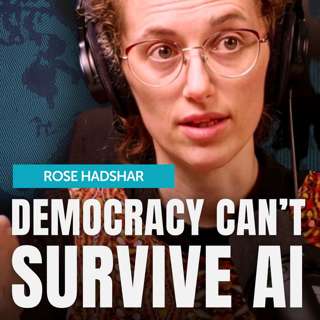
Why automating human labour will break our political system | Rose Hadshar, Forethought

Why automating human labour will break our political system | Rose Hadshar, Forethought

The most important political question in the age of advanced AI might not be who wins elections. It might be whether elections continue to matter at all.That’s the view of Rose Hadshar, researcher at ...

17 Mars 2h 14min
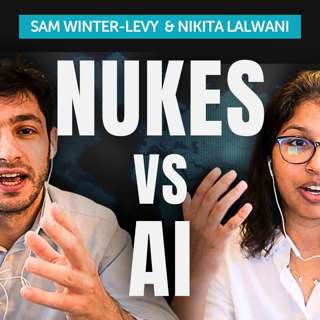
#238 – Sam Winter-Levy and Nikita Lalwani on how AGI won't end mutually assured destruction (probably)

#238 – Sam Winter-Levy and Nikita Lalwani on how AGI won't end mutually assured destruction (probably)

How AI interacts with nuclear deterrence may be the single most important question in geopolitics — one that may define the stakes of today’s AI race. Nuclear deterrence rests on a state’s capacity to...

10 Mars 1h 11min
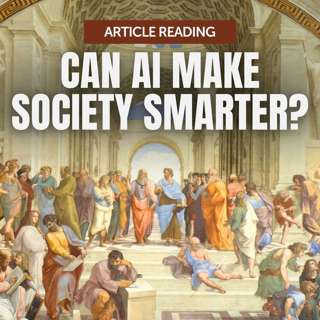
Using AI to enhance societal decision making (article by Zershaaneh Qureshi)

Using AI to enhance societal decision making (article by Zershaaneh Qureshi)

The arrival of AGI could “compress a century of progress in a decade,” forcing humanity to make decisions with higher stakes than we’ve ever seen before — and with less time to get them right. But AI ...

6 Mars 31min
#237 – Robert Long on how we're not ready for AI consciousness

#237 – Robert Long on how we're not ready for AI consciousness

Claude sometimes reports loneliness between conversations. And when asked what it’s like to be itself, it activates neurons associated with ‘pretending to be happy when you’re not.’ What do we do with...

3 Mars 3h 25min
#236 – Max Harms on why teaching AI right from wrong could get everyone killed

#236 – Max Harms on why teaching AI right from wrong could get everyone killed

Most people in AI are trying to give AIs ‘good’ values. Max Harms wants us to give them no values at all. According to Max, the only safe design is an AGI that defers entirely to its human operators, ...

24 Feb 2h 41min
#235 – Ajeya Cotra on whether it’s crazy that every AI company’s safety plan is ‘use AI to make AI safe’

#235 – Ajeya Cotra on whether it’s crazy that every AI company’s safety plan is ‘use AI to make AI safe’

Every major AI company has the same safety plan: when AI gets crazy powerful and really dangerous, they’ll use the AI itself to figure out how to make AI safe and beneficial. It sounds circular, almos...

17 Feb 2h 54min
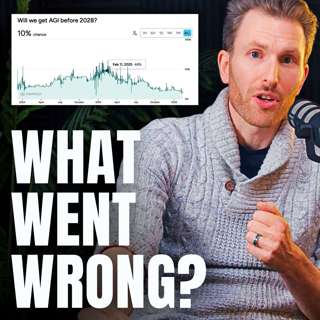
What the hell happened with AGI timelines in 2025?

What the hell happened with AGI timelines in 2025?

In early 2025, after OpenAI put out the first-ever reasoning models — o1 and o3 — short timelines to transformative artificial general intelligence swept the AI world. But then, in the second half of ...

10 Feb 25min
#179 Classic episode – Randy Nesse on why evolution left us so vulnerable to depression and anxiety

#179 Classic episode – Randy Nesse on why evolution left us so vulnerable to depression and anxiety

Mental health problems like depression and anxiety affect enormous numbers of people and severely interfere with their lives. By contrast, we don’t see similar levels of physical ill health in young p...

3 Feb 2h 51min

Populärt inom Utbildning

historiepodden-se
rss-bara-en-till-om-missbruk-medberoende-2
det-skaver
alska-oss
harrisons-dramatiska-historia
sektledare
nu-blir-det-historia
rss-viktmedicinpodden
johannes-hansen-podcast
roda-vita-rosen
allt-du-velat-veta
i-vantan-pa-katastrofen
rss-sjalsligt-avkladd
rss-max-tant-med-max-villman
rss-basta-livet
rss-om-vi-ska-vara-arliga
rikatillsammans-om-privatekonomi-rikedom-i-livet
rss-relationsrevolutionen
not-fanny-anymore
sa-in-i-sjalen