COVID's impact on displaced people, with UN High Commissioner for Refugees Filippo Grandi
Radio Davos20 Juni 2021

COVID's impact on displaced people, with UN High Commissioner for Refugees Filippo Grandi

There are more forcibly displaced people than ever - 82 million - despite the pandemic making it harder to flee across borders. On World Refugee Day, Radio Davos speaks to UN High Commissioner for Refugees Filippo Grandi, and to Victor Ochen, who grew up in a conflict zone in northern Uganda and has used his experience as a displaced person to help others.

Key quotes:

Filippo Grandi:

"Most of these 80-plus million people we're talking about, refugees, displaced people, are in poor countries…[which have] fewer resources to deal with these massive problems."

"I think the problem [of vaccine inequality] is not inequality in respect of refugees, it is inequality between countries. And I think that I am actually surprised that there is not even more outcry about what a scandal it is."

"The risk of backfiring globally is very, very high. The slogan … that we will not be safe until everybody is safe ... is actually the most true slogan of the many that have been coined around the pandemic."

"The slogan of the [United Nations] Sustainable Development Goals is: 'No one should be left behind'. The risk of that ... is much higher now than it was a year and a half ago. And this is where we need to focus in the next few years."

"If you look at the type of money that has been mobilized to respond to COVID and you look at the aid budgets, the proportion is staggering. One is huge and one is very small, comparatively speaking. So I do hope that governments will have a better judgement than that and will not take it [from] aid budgets to compensate for the large expenditure."

Victor Ochen:

"I was born into war. I was born in the community affected by war and a society where nothing was happening except the struggle for power."

"It was the most dangerous venture, most dangerous move, to talk about peace in an environment where there is no peace, to talk against war in an environment clouded by conflict."

"War destroys one key institution: not the government, not the United Nations, not international organizations, not politics – war destroys the family. Families are split apart, families lose members, families become so helpless, separated for life. They live in that endless sense of not knowing what will happen. It's very difficult to see something good come out of a community where families are destroyed."

"Suffering in northern Uganda, suffering in Africa, is no different from suffering anywhere in the world. With COVID came a lot of understanding that we are all human, we are all powerless, we are all fragile. We shouldn't wait for suffering to knock on our doors before we act to care for those who are already suffering."

Mentioned in this episode:

COVAX - the global effort to get COVID vaccines to all.

The UK's plan to cut its overseas aid budget.

COP26 - the climate summit due to happen in November.

Lord's Resistance Army - the militia that caused Victor Ochen's family to become displaced people.

Find all our podcasts here.

Subscribe: Radio Davos; Meet the Leader.

Join the World Economic Forum Podcast Club on Facebook.

Avsnitt(304)

Your 'first time' can shape democracy: the psychology of voting

Your 'first time' can shape democracy: the psychology of voting

Our first experiences of voting can colour our participation in democracy for life, according to political science Professor Michael Bruter. The director of the Electoral Psychology Observatory at the...

2 Apr 34min
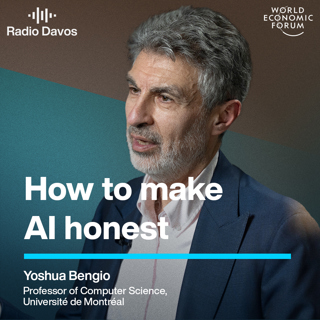
AI can lie, hack and blackmail: Yoshua Bengio on how to tame the "baby tiger" of tech

AI can lie, hack and blackmail: Yoshua Bengio on how to tame the "baby tiger" of tech

If AIs can think for themselves, what is to stop them doing bad - perhaps really bad - things? Yoshua Bengio, one of a handful of people considered a "godfather of AI", says AIs are already displaying...

26 Mars 27min
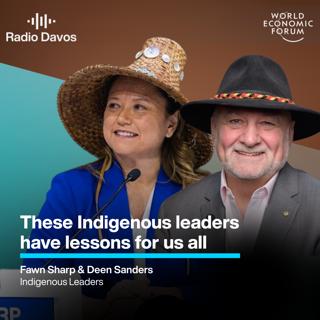
"We've lived through 3 ice ages - here's what we learned" - how Indigenous wisdom can help us all

"We've lived through 3 ice ages - here's what we learned" - how Indigenous wisdom can help us all

Indigenous peoples have lived on their lands for countless generations.  But who are they, and what lessons might they have for the rest of us? We speak to two Indigenous leaders from opposite sides o...

19 Mars 28min
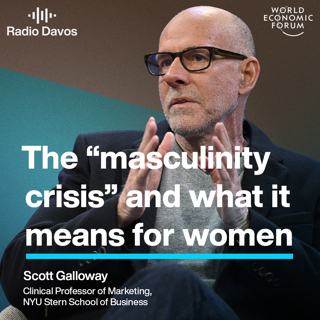
Scott Galloway: how tackling the 'crisis of masculinity' would also help close the gender gap

Scott Galloway: how tackling the 'crisis of masculinity' would also help close the gender gap

In his book Notes on Being a Man, entrepreneur Scott Galloway examines the "crisis of masculinity" and the threat it poses to gender equality. He spoke to Radio Davos at the World Economic Forum's Ann...

12 Mars 26min
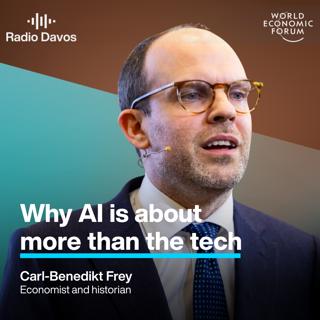
AI may spark a new era of progress, but that depends on more than just the tech

AI may spark a new era of progress, but that depends on more than just the tech

Artificial intelligence is set to have huge impacts on economies and our lives, but exactly how it will change the world will depend on much more than just the tech. Historian and economist Carl-Bened...

5 Mars 30min
'Rare' diseases:  1 billion reasons to care

'Rare' diseases: 1 billion reasons to care

Rare diseases are not that rare. More than 300 million people have one of the 7,000 rare diseases around the world, and many more people are affected by the impact on their families. On this podcast w...

26 Feb 1h 9min

Welcome to Cold War Two: historian Niall Ferguson on geopolitics in 2026

Welcome to Cold War Two: historian Niall Ferguson on geopolitics in 2026

Are we living in the Second Cold War? And if so, what can we learn from the last one that might help us through it? Historian and author Niall Ferguson sets out his view of global affairs right now an...

19 Feb 29min
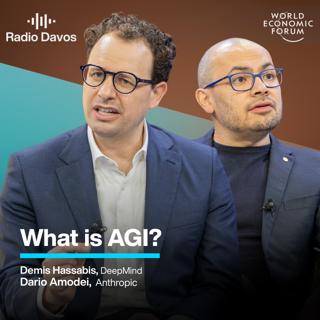
The day after AGI: Two 'rock stars' of AI on what it will mean for humanity

The day after AGI: Two 'rock stars' of AI on what it will mean for humanity

Artificial general intelligence (AGI) is that point in the future when the machines can do pretty much everything better than humans. When will it happen, what will it look like, and what will be the ...

12 Feb 50min

Populärt inom Politik & nyheter

aftonbladet-krim
p3-krim
svenska-fall
rss-krimstad
spar
flashback-forever
rss-sanning-konsekvens
rss-vad-fan-hande
aftonbladet-daily
motiv
rss-aftonbladet-krim
rss-flodet
politiken
rss-klubbland-en-podd-mest-om-frolunda
rss-frandfors-horna
rss-krimreportrarna
grans
krimmagasinet
dagens-eko
olyckan-inifran