Quantum-Classical Fusion: Adaptive Hybrid Computing Unleashes AI Breakthroughs

Quantum-Classical Fusion: Adaptive Hybrid Computing Unleashes AI Breakthroughs

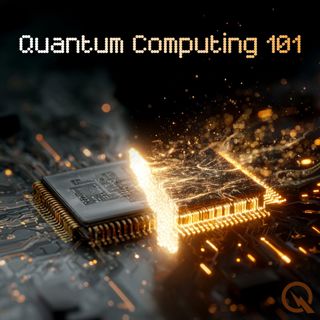
This is your Quantum Computing 101 podcast.

Quantum-classical hybrid computing just took another leap forward. Today’s most intriguing development comes from a collaboration between IBM and Quantinuum, combining superconducting qubits with high-performance classical processors in a novel feedback loop. The result? An adaptive approach that dynamically switches workloads between quantum and classical systems, significantly improving optimization problems, drug discovery simulations, and even financial modeling.

Classical computers excel at structured data processing—think massive matrix operations, deterministic calculations, and logical decision trees. Quantum computers, built on the principles of superposition and entanglement, shine when tackling vast, probabilistic solution spaces that classical systems struggle with. The trick has always been determining when and how to hand off tasks between these two worlds. This latest hybrid model does it in real time, leveraging AI-driven orchestration to decide which computations should be executed where.

Here’s how it works: Imagine a combinatorial optimization problem, such as portfolio optimization for stock markets. The classical system starts by processing historical data and structuring possible scenarios. When it encounters an exponentially complex optimization bottleneck, the system detects the need for quantum-enhanced processing. It then offloads that portion to a superconducting quantum processor, executing specialized quantum algorithms—like QAOA or VQE—to explore possible solutions faster than any purely classical approach.

One breakthrough is the use of tensor networks, merging classical machine learning architecture with quantum circuits to reduce the need for fully error-corrected quantum systems. This technique bypasses some of the error-prone challenges of today’s noisy quantum hardware while still extracting meaningful quantum acceleration. Google’s latest research in this area, published just days ago, shows that their tensor-network-infused quantum-classical solver improves energy efficiency over traditional Monte Carlo methods by nearly 40%.

What’s particularly exciting is that companies are no longer treating quantum computing as an isolated experiment but as an integrated tool within existing computational stacks. Microsoft’s Azure Quantum Elements platform is already leveraging hybrid models to simulate new materials for battery technology, while financial institutions are testing these methods to fine-tune risk models in ways classical simulations simply can’t match.

For developers and researchers, this shift means rethinking how computational workflows are structured. Rather than viewing quantum as a futuristic add-on, the industry is now embedding it as a dynamic component in live systems. Open-source frameworks like PennyLane and Qiskit now include hybrid execution capabilities, enabling real-world application development.

This momentum signals that practical quantum advantage is no longer decades away—it’s unfolding now, powered by smarter, seamless integration with classical computing.

For more http://www.quietplease.ai


Get the best deals https://amzn.to/3ODvOta

This content was created in partnership and with the help of Artificial Intelligence AI

Avsnitt(275)

Quantum-Classical Hybrids: How Genesis Mission Fuses AI, Supercomputing and Qubits to Double US Research Power

Quantum-Classical Hybrids: How Genesis Mission Fuses AI, Supercomputing and Qubits to Double US Research Power

This is your Quantum Computing 101 podcast.Imagine this: just days ago, on April 2nd, King's College London spotlighted Professor Roger Colbeck's breakthrough in device-independent quantum cryptograph...

3 Apr 3min

Quantum Leap Forward: How Classiq and Nvidia CUDA-Q Hybrid Computing Could Crack RSA Encryption by 2030

Quantum Leap Forward: How Classiq and Nvidia CUDA-Q Hybrid Computing Could Crack RSA Encryption by 2030

This is your Quantum Computing 101 podcast.Imagine this: just days ago, on March 31st, Classiq unveiled their integration with Nvidia's CUDA-Q at GTC, a hybrid quantum-classical powerhouse that lets d...

1 Apr 3min

Quantum-Classical Hybrid Computing: The 303-Atom Protein That Changed Everything

Quantum-Classical Hybrid Computing: The 303-Atom Protein That Changed Everything

This is your Quantum Computing 101 podcast.# Quantum Computing 101: The Hybrid RevolutionGood afternoon, and welcome back to Quantum Computing 101. I'm Leo, and today we're talking about something tha...

30 Mars 3min

Quantum Hybrid Revolution: How IBM and NVIDIA Merged Qubits with GPUs to Crack Impossible Chemistry Problems in 2026

Quantum Hybrid Revolution: How IBM and NVIDIA Merged Qubits with GPUs to Crack Impossible Chemistry Problems in 2026

This is your Quantum Computing 101 podcast.Imagine this: just days ago, on March 26, 2026, IBM's quantum team at Yorktown Heights stunned the world by simulating the magnetic crystal KCuF3 on their He...

29 Mars 3min

Hybrid Quantum Revolution: How NVIDIA and ORCA Fused Light Speed Qubits With GPU Power at GTC 2026

Hybrid Quantum Revolution: How NVIDIA and ORCA Fused Light Speed Qubits With GPU Power at GTC 2026

This is your Quantum Computing 101 podcast.Imagine this: just days ago at NVIDIA's GTC 2026, ORCA Computing's photonic quantum systems fused with NVIDIA's cuTensorNet software right there at Imperial ...

27 Mars 4min

QIAPO Hybrid Revolution: How German Quantum-Classical Fusion Solves Real Logistics and Chip Manufacturing Nightmares

QIAPO Hybrid Revolution: How German Quantum-Classical Fusion Solves Real Logistics and Chip Manufacturing Nightmares

This is your Quantum Computing 101 podcast.Imagine you're deep in a Saarland University lab, the hum of cryostats vibrating like a cosmic heartbeat, lasers slicing through the chill as neutral atoms d...

25 Mars 3min

Quantum Meets GPU: How Hybrid Computing Just Cracked the Drug Discovery Code at GTC 2026

Quantum Meets GPU: How Hybrid Computing Just Cracked the Drug Discovery Code at GTC 2026

This is your Quantum Computing 101 podcast.Imagine this: just days ago, at NVIDIA's GTC 2026 in San Jose, UCL researchers, partnering with NVIDIA, Technical University of Munich, LMU, and IQM Quantum ...

23 Mars 3min

Classiq CUDA-Q Fusion: How 31 Qubits Slashed Options Pricing From 67 Minutes to 2.5 on NVIDIA GPUs

Classiq CUDA-Q Fusion: How 31 Qubits Slashed Options Pricing From 67 Minutes to 2.5 on NVIDIA GPUs

This is your Quantum Computing 101 podcast.Imagine this: just days ago, on March 16th, Classiq unveiled their game-changing integration with NVIDIA's CUDA-Q, slashing a 31-qubit financial options-pric...

22 Mars 4min

Populärt inom Politik & nyheter

aftonbladet-krim
p3-krim
svenska-fall
rss-krimstad
spar
flashback-forever
rss-sanning-konsekvens
rss-vad-fan-hande
aftonbladet-daily
motiv
rss-aftonbladet-krim
rss-flodet
politiken
rss-klubbland-en-podd-mest-om-frolunda
rss-frandfors-horna
rss-krimreportrarna
grans
krimmagasinet
dagens-eko
olyckan-inifran