Kaori Wada - How Grief Became a Disorder and What This Means About Us

Kaori Wada - How Grief Became a Disorder and What This Means About Us

In March 2022, a new grief-related disorder was officially adopted into mainstream mental health diagnosis nomenclature. Prolonged Grief Disorder (PGD) is a recent addition to the Diagnostic and Statistical Manual fifth edition text revision (DSM-5-TR). A PGD diagnosis is to be used when a person is grieving too long and too intensely.

In this interview, Kaori Wada, Psychologist, grief researcher, and Associate Professor and Director of Training at the University of Calgary, builds upon her recent paper on the Medicalization of Grief in conversation with MIA Science News Writer and Psychologist Zenobia Morrill. Wada articulates a history of institutional tensions and financial conflicts behind the creation of this new PGD diagnosis. She also discusses the ways PGD could shape how we collectively understand and respond to those grieving.

Wada's work demonstrates that the creation of PGD was not based on scientific findings but appears to be entangled in long-standing arguments between camps of mental health professionals with different stakes in whether the diagnosis became legitimized. Further, PGD, as with other diagnoses, represents elements of mainstream psychological theory that tend to render deviations from Western cultural norms as "unhealthy." Is diagnosis needed to provide support and care? If so, those most likely to experience marginalization, violence, and unjust loss are also most likely to be classified as having PGD, a mental illness.

At a time when the world is fraught with tragic loss—owing to causes ranging from political failures, state violence, and the COVID-19 pandemic—grieving has been transformed into a mental health disorder. But the complicated question of what a mental disorder is continues to be glossed over. The opportunity for psychiatric professionals to embrace humility seems to have reverted to the familiar "diagnose-and-treat" response. Will pharmacological intervention become the dominant "treat" response to a diagnosis of PGD?

A new grief disorder is a clear departure, however, from the way grief used to be described in the field as an example of something that is clearly not a mental health disorder, Wada shared. She exclaims: "To me, the medicalization of grief is controversial because it may fundamentally shake up the concept of a mental disorder, [how it has] been defined and understood."

Wada and Morrill explore what this new PGD diagnosis may mean, reflecting on the ways the "diagnose-and-treat" logic seems to of experiences formerly considered part of the territory of being human. The need to pathologize experiences in order to address them represents a paradox. A new ethical and moral quandary befalls professionals tasked with determining when grief is an illness and when expressions of grief are inappropriate.

Will the public embrace this new disorder? Will the medicalization of grief be resisted? Will a pandemic of PGD diagnoses follow a global pandemic? Wada speaks to the personal and professional influences that shaped these curiosities and her approach to researching how grief is being construed in the mental health field.

Avsnitt(290)

Examining Psychiatric Medication Tapering and Withdrawal: The Evolving Role of Pharmacists — A Conversation with Agnes Higgins and Cathal Cadogan

Examining Psychiatric Medication Tapering and Withdrawal: The Evolving Role of Pharmacists — A Conversation with Agnes Higgins and Cathal Cadogan

Welcome to the Mad in America podcast, my name is James. Today, we are discussing the experiences of people who have attempted to stop taking psychiatric drugs. These experiences are captured in a sur...

1 Apr 32min
Spiritual Emergency and the Collective Work of Staying Alive: An Interview with Nisha Gupta

Spiritual Emergency and the Collective Work of Staying Alive: An Interview with Nisha Gupta

Nisha Gupta is an existential phenomenologist, a depth psychotherapist, a creativity scholar, and an artist. She's an Associate Professor of Psychology at the University of West Georgia and earned her...

25 Mars 48min

The Political Systems Driving Abuse in Psychiatry: An Interview with Human Rights Lawyer Alicia Ely Yamin

The Political Systems Driving Abuse in Psychiatry: An Interview with Human Rights Lawyer Alicia Ely Yamin

Alicia Ely Yamin is the Director of the Global Health and Rights Project and a lecturer at Harvard Law School. She's also an adjunct senior lecturer on health policy and management at the Harvard T.H....

18 Mars 45min
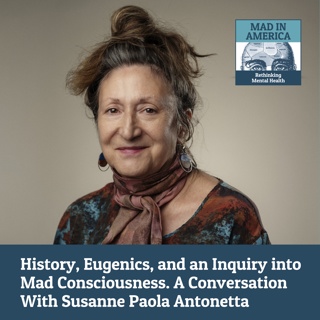
History, Eugenics, and an Inquiry into Mad Consciousness: A Conversation With Susanne Paola Antonetta

History, Eugenics, and an Inquiry into Mad Consciousness: A Conversation With Susanne Paola Antonetta

Susanne Paola Antonetta is an accomplished writer and poet, the author of numerous books, and in 2001 her book Body Toxic: An Environmental Memoir, won a prestigious American Book Award. Her latest bo...

11 Mars 49min
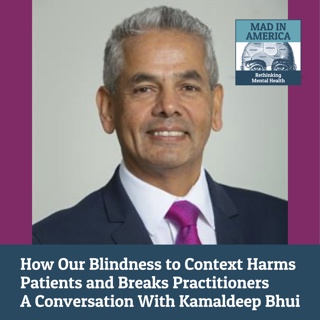
How Our Blindness to Context Harms Patients and Breaks Practitioners: A Conversation With Kamaldeep Bhui

How Our Blindness to Context Harms Patients and Breaks Practitioners: A Conversation With Kamaldeep Bhui

Kamaldeep Bhui is Professor of Psychiatry at the University of Oxford and Honorary Professor at Queen Mary University of London. He is internationally recognized for his groundbreaking work on cultura...

4 Mars 51min
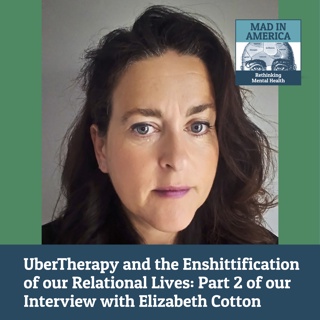
UberTherapy and the Enshittification of our Relational Lives: Part 2 of our Interview with Elizabeth Cotton

UberTherapy and the Enshittification of our Relational Lives: Part 2 of our Interview with Elizabeth Cotton

Elizabeth Cotton is Associate Professor of Responsible Business at the University of Leicester and the founder of Surviving Work, which carries out socially engaged research on mental health and work....

18 Feb 39min
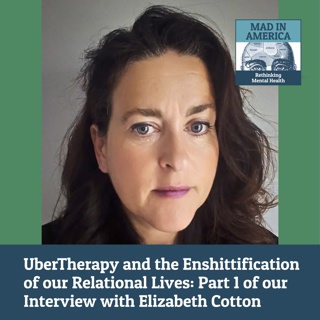
UberTherapy and the Enshittification of our Relational Lives: Part 1 of our Interview with Elizabeth Cotton

UberTherapy and the Enshittification of our Relational Lives: Part 1 of our Interview with Elizabeth Cotton

Elizabeth Cotton is Associate Professor of Responsible Business at the University of Leicester and the founder of Surviving Work, which carries out socially engaged research on mental health and work....

11 Feb 46min
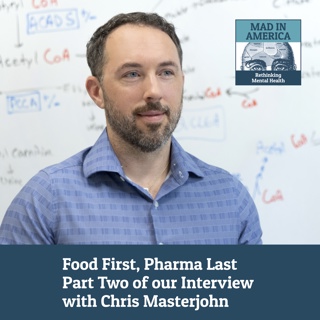
Food First, Pharma Last - Part Two of our Interview with Chris Masterjohn

Food First, Pharma Last - Part Two of our Interview with Chris Masterjohn

This week, we are joined by Chris Masterjohn, PhD. Chris is a nutritional scientist, a former professor, and the founder of Mitome. With a PhD in nutritional science and years of research in mitochond...

28 Jan 44min

Populärt inom Hälsa

somna-med-henrik
inga-beiga-morsor
rss-bara-en-till-om-missbruk-medberoende-2
rss-jossan-nina
alska-oss
not-fanny-anymore
rss-vuxna-pa-latsas
sexnoveller-deluxe
johannes-hansen-podcast
giggles-med-wiggles
angestpodden
sova-med-dan-horning
rss-viktmedicinpodden
rss-sjalsligt-avkladd
vinterpasset
sa-in-i-sjalen
brottarbroder
rss-the-house-podcast-3
sag-det-bara
rss-beratta-alltid-det-har