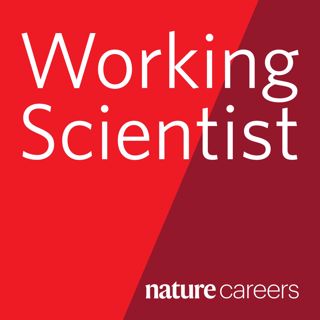
How films and festivals can showcase your science
Working Scientist11 Juni 2020

How films and festivals can showcase your science

In the fourth episiode of this six-part Working Scientist series about science communication, Pakinam Amer examines how festivals, film, comedy clubs and virtual space camps can be ideal vehicles to explain your research to young people.


In 2018, propulsion development engineer Diana Alsindy launched Arabian Stargazer, a bilingual Instagram page that promotes rocket science and STEM careers to young people in Arabic-speaking countries.


Alsindy, who moved to the US from Iraq aged 14, tells Amer she developed the platform after realising that online resources in Arabic for young people seeking information about space science were thin on the ground.


“I'm passionate about science and I want to make other people passionate about it," she says. "My vision and my dream is to create space clubs, but virtually, engaging young people in techical conversations, using games, riddles, and Q&As with astronauts.”


Typically Alsindy runs one-hour presentations in both Arabic and English. “I’ve done it for five-year-olds and high school students. All I need is a latop and a screen, a Skype call or Google Hangout. If we want to open space science to everyone don’t open it for only English speaking populations.”


Helen Pilcher transitioned from UK stem cell researcher to writing and stand-up comedy, and is now science advisor at The Beano a children’s comic. A gig at one of the first Cheltenham Science Festivals with scientist friend Timandra Harkness marked a turning point.

“We called ourselves The Comedy Research Project and the aim was to prove scientifically that science can be funny.”


Alexis Gambis, assistant professor of biology at New York University Abu Dhabi, United Arab Emirates, founded labocine.com, a science film platform and magazine. “Whenever I talk about my films I always say in some ways I consider it to be research. I don’t consider it to be science communication. I’m really interested in how to bring microscopy into film for a general audience.”


Urmila Chadayammuri, a pre-doctoral fellow and a PhD student Yale University in New Haven, Connecticut, worked with three colleagues she met at a two-day hackathon in 2019 to launch Cosmos VR, an app that offers a simulation including colliding galaxies, black holes and exploding stars. She tells Amer how the science communication project came about.

Hosted on Acast. See acast.com/privacy for more information.

Avsnitt(221)

Why labs need a napping room to help you work, rest and play

Why labs need a napping room to help you work, rest and play

Joseph Jebelli believes burnout and overwork has reached pandemic levels, telling Holly Newson that it kills 750,000 people annually, with three out of five workers struggling to maintain a healthy wo...

26 Mars 39min

‘Be a problem-solver, not a job-seeker:’ how to pivot from academia to industry

‘Be a problem-solver, not a job-seeker:’ how to pivot from academia to industry

Gertrude Nonterah helps researchers step off the academic hamster wheel and seek opportunities beyond their specialty. She does this by tapping into her personal experiences of losing a postdoctoral p...

19 Mars 39min

Nervous networker or conference presenter? Care less, says speech coach Susie Ashfield

Nervous networker or conference presenter? Care less, says speech coach Susie Ashfield

Learning to care less about how you come across in a conference talk, funding pitch or networking event frees you to communicate more naturally and confidently, says Susie Ashfield.In the second episo...

12 Mars 38min

Women in science are not a ‘problem to be fixed’

Women in science are not a ‘problem to be fixed’

In the first episode of a podcast series focused on six books about the scientific workplace, Cordelia Fine tells Holly Newson why she wrote Patriarchy, Inc: What we Get Wrong About Gender Equality an...

5 Mars 39min

Why an industry career move is a taboo topic in academia

Why an industry career move is a taboo topic in academia

In his role as research director at NielsenIQ, a consumer intelligence company based in London, Josh Balsters helps global brands drive product innovation.Balsters relies on expertise he gained in ps...

26 Feb 27min

Academia’s parent trap: the struggles faced by researcher mothers

Academia’s parent trap: the struggles faced by researcher mothers

Alison Behie was approaching 40 when she underwent multiple rounds of IVF, enduring the mental and physical turmoil of miscarriage and uncertainty along the way. How good is the academic workplace at ...

19 Feb 30min

When a colleague dies: exploring academia's "death-denying culture"

When a colleague dies: exploring academia's "death-denying culture"

In the sixth episode of Off Limits, a podcast series exploring topics that are often perceived as taboo in the academic workplace, three researchers describe their personal experiences of loss and how...

13 Feb 36min

‘We need to dismantle the stigma of alcohol dependence in academia’

‘We need to dismantle the stigma of alcohol dependence in academia’

Wendy Dossett tells Adam Levy why the stigma of having an alcohol dependence in academia can be a huge barrier to seeking help. “We’re supposed to be the brightest and the best, moving the frontiers o...

6 Feb 29min

Populärt inom Business & ekonomi

framgangspodden
varvet
badfluence
rss-jossan-nina
rss-borsens-finest
rss-svart-marknad
avanzapodden
svd-tech-brief
uppgang-och-fall
fill-or-kill
rss-dagen-med-di
affarsvarlden
borsmorgon
bathina-en-podcast
kapitalet-en-podd-om-ekonomi
lastbilspodden
rss-inga-dumma-fragor-om-pengar
tabberaset
24fragor
rikatillsammans-om-privatekonomi-rikedom-i-livet