240. Suez: nail in the imperial coffin

240. Suez: nail in the imperial coffin

Anthony Eden started his premiership well, chalking up a general election win and the lowest level of unemployment Britain has seen at any time since the Second World War.

Little else went well, however. His Foreign Secretary, Harold Macmillan made a statement to the House of Commons exonerating Kim Philby from suspicion of being a Soviet spy. That was a statement he would live to regret.

Far worse for Eden was what happened in Egypt. The nationalist Egyptian President Gamel Abdel Nasser nationalised the Suez Canal in 1956. Despite Eden’s lack of enthusiasm for European integration and his far greater commitment to the Commonwealth, and to the so-called special relationship between the UK and the United States, he decided to respond without consulting the US and in concert with France, one of those European powers he was so unenthusiastic on getting close to. They in turn colluded with Israel to invade the Egyptian territory of Sinai, after which they would react with horror, call on both sides to cease firing, and when that didn’t happen, send in troops themselves.

Unfortunately, the world reacted with widespread anger at the actions of the Israeli-French-British coalition. The US, indeed, put huge pressure on Britain by threatening to sell British bonds, which would have massively damaged the British currency. They later blocked oil supplies to Britain.

The result was that though the military action only got started on 29 October 1956, when Israel went into the Sinai, Britain called a ceasefire on 7 November. That angered the French, who have behaved with little confidence in the British or American military ever since. It also led to the ultimate defeat of the coalition, with the British government having to announce an unconditional withdrawal of its forces on 3 December 1956.

Eden was made the scapegoat for the debacle. He resigned in January 1957, after less than two years in post. Many expected the succession to go to Rab Butler, who’d deputised for Eden while the latter was away recovering from a collapse in his health at the height of the crisis, but Harold Macmillan proved much too wily for him, outmanoeuvring him and taking the top position himself.

We'll be getting to know Macmillan era next week.


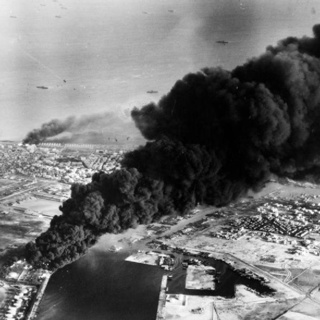
Illustration: Smoke rises from oil tanks beside the Suez Canal hit during the initial Anglo-French assault on Port Said, 5 November 1956. Public Domain

Music: Bach Partita #2c by J Bu licensed under an Attribution-NonCommercial-No Derivatives (aka Music Sharing) 3.0 International License


Avsnitt(274)

273. From a humble address to a royal arrest

273. From a humble address to a royal arrest

Well, we’re living in curious times.For the first time in four centuries, a member of the British royal family has been arrested in connection with a criminal investigation. Andrew Mountbatten-Windsor...

22 Feb 14min

272. What a fine mess you've got us into

272. What a fine mess you've got us into

This is the last episode in this main series of A History of England. I may add others on specific topics – by all means use the comments to suggest any you’d like me to examine – or in response to in...

20 Dec 202543min

271. Breaking records

271. Breaking records

Following the rather grim comedy of Boris Johnson, the Conservatives gave Britain the even more ridiculous spectacle of Liz Truss. She proceeded to push the British economy to the edge of the abyss, a...

7 Dec 202514min
270. Phenomenal Boris

270. Phenomenal Boris

It’s the time of Boris. This episode tracks Boris Johnson’s character, starting with a less than complimentary report from his housemaster at Eton to this parents, through his time in the rich kids’ B...

30 Nov 202514min
269. Brexit

269. Brexit

In 2015, Cameron returned to office with a majority of his own even if it wasn’t particularly huge. At least it meant he no longer needed to be in a coalition with the Lib Dems, who’d taken a terrible...

23 Nov 202514min
268. The winners and the damned: peacetime coalition

268. The winners and the damned: peacetime coalition

It’s 2007, and Tony Blair is out. In his place is Gordon Brown, who’d proved his capacity as a Chancellor. Sadly, he was now to show that promotion to Prime Minister was one step too many , since he s...

16 Nov 202514min
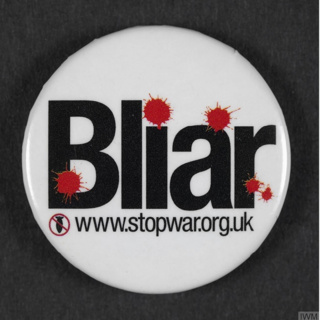
267. Bliar

267. Bliar

As the title of this episode suggests, this is where we look at how Tony Blair’s reputation was wrecked by the growing awareness that he’d produced infamously bad justifications to launch Britain into...

9 Nov 202514min

266. A time of dodgy dossiers

266. A time of dodgy dossiers

When Tony Blair took Britain to war in Iraq in 2003, as part of a US-led and rather limited coalition of nations, it was against the will of large numbers of Brits expressed in possibly the biggest de...

2 Nov 202514min

Populärt inom Historia

massmordarpodden
historiska-brott
motiv
kod-katastrof
historiepodden-se
p3-historia
rss-historien-om
olosta-mord
rss-seriemordarpodden
rss-historiska-brottslingar
rss-brottsligt
historianu-med-urban-lindstedt
rss-massmordarpodden
krigshistoriepodden
militarhistoriepodden
rss-arkiv-stieg
obskyr-historia
vetenskapsradion-historia
harrisons-dramatiska-historia
nu-blir-det-historia