Quantum-Classical Hybrids: Bridging Bits and Qubits for Real-World Impact

Quantum-Classical Hybrids: Bridging Bits and Qubits for Real-World Impact

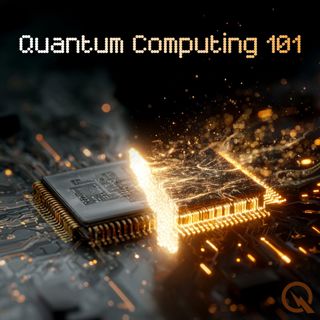
This is your Quantum Computing 101 podcast.

Is it too dramatic to say the world changed last Friday? Maybe. But in quantum computing, progress doesn’t always make headlines—it ripples. I’m Leo, the Learning Enhanced Operator, and today on Quantum Computing 101, we’ll dive right into the most intriguing quantum-classical hybrid solution making waves this week.

Picture this: April 18, 2025. A team of researchers unveils a method to control light using 3D photonic-crystal cavities. While headlines tout “matter mediating ultrastrong coupling between light particles,” the subtext is clear to those of us in the trenches—hybrid quantum-classical approaches are stepping beyond theory into impactful reality. Why is this so important? Because this breakthrough bridges the best of both computational worlds: the relentless logic of classical bits and the entangled magic of qubits.

Hybrid computing is like running a relay race where classical processors dash out of the starting blocks, handling broad, brute-force tasks with efficiency, before handing off to quantum runners—qubits—that take the baton through computational mazes that would stump any classical machine. This week’s most exciting buzz is about a quantum-classical solution that leverages quantum optimization—think of D-Wave’s platform, fresh off its Qubits 2025 conference, where they highlighted customer success stories in actual, production-level quantum applications. On stage, D-Wave’s CEO, Alan Baratz, described how hybrid solvers are now solving financial optimization puzzles for real-world clients, combining quantum’s probabilistic leaps with classical certainty.

Let’s step into the lab for a closer look. Imagine a humming, supercooled chamber—close to absolute zero—housing niobium wires and Josephson junctions. Pulses of microwave energy dance across the system, capturing the very essence of probability. Here, hybrid algorithms orchestrate a seamless dialogue: a classical computer parses mountains of data, then calls on the quantum processor for the kinds of optimization only possible when bits become superposed qubits. The quantum hardware proposes solutions that are fed back into the classical side for refinement, iteratively homing in on results with accuracy and speed.

The dramatic heart of these hybrids lies in their adaptability. Just as our world juggles uncertainty—markets surging one day, tumbling the next—the quantum-classical approach allows algorithms to shift, adapt, and learn in real time. Think of the one-dimensional quantum magnetic materials researchers observed this week—a beautiful metaphor for hybrid solutions. In these materials, properties exist both as metallic and quantum at once, not unlike how hybrid computation holds onto the best of two realities.

I’ll pause to give credit where it’s due: teams at D-Wave, IBM, and institutions like MIT and the University of Oxford have been pioneering these hybrid solutions. Their vision is pragmatic—let quantum handle what it’s best at, let classical machines do the heavy lifting where they excel. And, as we saw at Qubits 2025, the integration is happening faster than skeptics predicted.

It’s easy to get caught up in the physics, but for me, the most thrilling part is the potential impact. Industries from finance to pharmaceuticals are piloting quantum-classical algorithms to solve previously intractable problems. Just as curved neutron beams are now promising new industrial applications, these hybrid approaches are expanding our computational toolkit for the real world.

Let me leave you with this thought: if the past few days have taught us anything, it’s that the quantum-classical divide is closing. Our world operates in shades of probability, and so now, increasingly, does our computing. Hybrid solutions are not a bridge—they’re the foundation for what comes next.

Thank you for listening to Quantum Computing 101. If you have questions or want to hear about a specific topic, just send me an email at leo@inceptionpoint.ai. Subscribe to stay on top of the quantum frontier. This has been a Quiet Please Production—explore more at quiet please dot AI.

For more http://www.quietplease.ai


Get the best deals https://amzn.to/3ODvOta

This content was created in partnership and with the help of Artificial Intelligence AI

Avsnitt(276)

Quantum Meets AI: How PhysVEC Hybrid Systems Are Cracking Crypto and Fixing the Qubit Noise Problem

Quantum Meets AI: How PhysVEC Hybrid Systems Are Cracking Crypto and Fixing the Qubit Noise Problem

This is your Quantum Computing 101 podcast.Imagine this: just days ago, Google Quantum AI unleashed a bombshell whitepaper, revealing they can shatter 256-bit elliptic curve cryptography—the backbone ...

5 Apr 3min

Quantum-Classical Hybrids: How Genesis Mission Fuses AI, Supercomputing and Qubits to Double US Research Power

Quantum-Classical Hybrids: How Genesis Mission Fuses AI, Supercomputing and Qubits to Double US Research Power

This is your Quantum Computing 101 podcast.Imagine this: just days ago, on April 2nd, King's College London spotlighted Professor Roger Colbeck's breakthrough in device-independent quantum cryptograph...

3 Apr 3min

Quantum Leap Forward: How Classiq and Nvidia CUDA-Q Hybrid Computing Could Crack RSA Encryption by 2030

Quantum Leap Forward: How Classiq and Nvidia CUDA-Q Hybrid Computing Could Crack RSA Encryption by 2030

This is your Quantum Computing 101 podcast.Imagine this: just days ago, on March 31st, Classiq unveiled their integration with Nvidia's CUDA-Q at GTC, a hybrid quantum-classical powerhouse that lets d...

1 Apr 3min

Quantum-Classical Hybrid Computing: The 303-Atom Protein That Changed Everything

Quantum-Classical Hybrid Computing: The 303-Atom Protein That Changed Everything

This is your Quantum Computing 101 podcast.# Quantum Computing 101: The Hybrid RevolutionGood afternoon, and welcome back to Quantum Computing 101. I'm Leo, and today we're talking about something tha...

30 Mars 3min

Quantum Hybrid Revolution: How IBM and NVIDIA Merged Qubits with GPUs to Crack Impossible Chemistry Problems in 2026

Quantum Hybrid Revolution: How IBM and NVIDIA Merged Qubits with GPUs to Crack Impossible Chemistry Problems in 2026

This is your Quantum Computing 101 podcast.Imagine this: just days ago, on March 26, 2026, IBM's quantum team at Yorktown Heights stunned the world by simulating the magnetic crystal KCuF3 on their He...

29 Mars 3min

Hybrid Quantum Revolution: How NVIDIA and ORCA Fused Light Speed Qubits With GPU Power at GTC 2026

Hybrid Quantum Revolution: How NVIDIA and ORCA Fused Light Speed Qubits With GPU Power at GTC 2026

This is your Quantum Computing 101 podcast.Imagine this: just days ago at NVIDIA's GTC 2026, ORCA Computing's photonic quantum systems fused with NVIDIA's cuTensorNet software right there at Imperial ...

27 Mars 4min

QIAPO Hybrid Revolution: How German Quantum-Classical Fusion Solves Real Logistics and Chip Manufacturing Nightmares

QIAPO Hybrid Revolution: How German Quantum-Classical Fusion Solves Real Logistics and Chip Manufacturing Nightmares

This is your Quantum Computing 101 podcast.Imagine you're deep in a Saarland University lab, the hum of cryostats vibrating like a cosmic heartbeat, lasers slicing through the chill as neutral atoms d...

25 Mars 3min

Quantum Meets GPU: How Hybrid Computing Just Cracked the Drug Discovery Code at GTC 2026

Quantum Meets GPU: How Hybrid Computing Just Cracked the Drug Discovery Code at GTC 2026

This is your Quantum Computing 101 podcast.Imagine this: just days ago, at NVIDIA's GTC 2026 in San Jose, UCL researchers, partnering with NVIDIA, Technical University of Munich, LMU, and IQM Quantum ...

23 Mars 3min

Populärt inom Politik & nyheter

aftonbladet-krim
svenska-fall
p3-krim
rss-krimstad
flashback-forever
spar
rss-sanning-konsekvens
rss-vad-fan-hande
aftonbladet-daily
motiv
politiken
rss-klubbland-en-podd-mest-om-frolunda
rss-aftonbladet-krim
grans
rss-krimreportrarna
olyckan-inifran
krimmagasinet
rss-flodet
rss-frandfors-horna
dagens-eko