
APIs as the Execution Layer of AI with Postman's Rodric Rabbah

APIs as the Execution Layer of AI with Postman's Rodric Rabbah

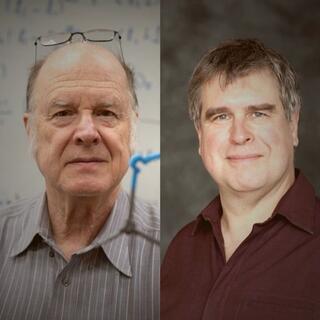
In this episode of Hanselminutes, Scott Hanselman chats with Roderick Rabah, Head of Product at Postman Flows, about the evolution of software development, the intersection of APIs and AI, and finding the "right layer of abstraction" for problem-solving. Drawing on his deep expertise in compiler optimization, distributed systems, and serverless computing, Rabah shares his perspectives on building tools that empower developers to create efficiently and explores the paradigm shift toward visual programming and AI-driven automation.

The conversation dives into how Postman is innovating in the software space, how approaches to software engineering are transforming with generative AI, and why embracing new ways of working is critical for staying ahead in this rapidly evolving technological landscape.

Key Topics
  • [01:08] Introduction of Roderick Rabah: From research scientist to API innovator
  • [02:14] Evolution of software development: From FPGAs to serverless computing
  • [03:23] APIs and AI: The transformative intersection powering workflows
  • [05:33] The rise of tool-calling and agents: Simplifying backend tasks
  • [07:33] Managing complexity: Why structured APIs make integration seamless
  • [12:08] Visual programming languages: The paradigm shift for developers
  • [16:42] Postman Flows: Building applications through visual workflows
  • [20:24] Embracing generative AI: How senior and junior engineers benefit
  • [29:02] Deploying with WebAssembly: Making cloud integration accessible
  • [30:33] Reflections on the future of technology and its impact on software careers
Main Takeaways
  1. API + AI Integration: APIs combined with large language models are unlocking new capabilities for software development by abstracting complex operations and enabling automation.
  2. Visual Programming Paradigm Shift: Applications are increasingly built using visual workflows where developers focus on intent rather than low-level code implementation, driving efficiency and accessibility.
  3. Generative AI Empowerment: Generative AI tools are accelerating the pace of innovation, empowering engineers to fix bugs, streamline workflows, and manage edge cases efficiently.
  4. Structured APIs Critical for AI: Thoughtfully designed APIs with proper documentation and safeguards are essential to ensure that autonomous AI agents interact correctly and securely.
  5. Accessible Deployment: New runtime frameworks, like serverless with WebAssembly, make it easier for developers to deploy applications across the cloud, enabling broader adoption of AI-driven solutions.
Notable Quotes

"Serverless is where you think about servers less." – Scott Hanselman

"At what point does communicating your intent to AI become programming again?" – Roderick Rabah

"Visual programming resonates with builders because it matches the mental model of decomposing problems." – Roderick Rabah

"Technology transforms rapidly. You have to figure out how to wield this immense power." – Roderick Rabah

"Don’t throw away your critical thinking just because AI makes building faster." – Roderick Rabah

Resources Mentioned
  • Postman Flows – Tools for visual programming and API integrations: postman.com
  • Replit – Generative coding platform for automating development tasks: replit.com
  • WebAssembly – Runtime framework for deploying serverless applications: webassembly.org
  • Books on Compiler Theory: Suggested resource for expanding understanding of abstractions

Follow along for more insights, tips, and conversations with industry leaders. These show notes summarize key moments in the podcast for easy reference and understanding - these show notes were generated by a custom gpt-4o-nano model trained in previous episodes of Hanselminutes

Avsnitt(1000)

Fabulous Adventures in Data Structures and Algorithms with Eric Lippert

Fabulous Adventures in Data Structures and Algorithms with Eric Lippert

Join Scott and Eric Lippert for a lively tour through Fabulous Adventures in Data Structures and Algorithms, a fresh take on timeless topics that flips the script on how programmers think about core tools of the trade. Eric shares why he wrote a book that avoids the predictable interview-prep regurgitations, and instead dives into clever, lesser-known data structures and algorithmic ideas that he’s encountered over a long career in language design and tooling. You’ll hear how immutability can make data structures both simpler and faster, why backtracking shows up everywhere from tree search to puzzle solving, and how a deeper understanding of performance and abstraction can change the way you architect code. Along the way Eric reveals how to reconnect joy with problem solving, find surprising patterns that scale across domains, and build intuition that serves you long after the syntax fades from memory. https://www.manning.com/books/fabulous-adventures-in-data-structures-and-algorithms

8 Jan 32min

Vjekoslav Krajačić on File Pilot and a return to fast UIs

Vjekoslav Krajačić on File Pilot and a return to fast UIs

Modern computers are faster than ever, yet much of our software feels slower, heavier, and more frustrating to use. In this episode of Hanselminutes, Scott talks with Vjekoslav Krajačić, creator of File Pilot, about bringing speed and responsiveness back to everyday tools.Vjekoslav built File Pilot as a reaction to bloated file managers and laggy interfaces, focusing on instant feedback, keyboard-first workflows, and a UI that feels immediate. We talk about what actually makes software feel fast, why modern frameworks often work against that goal, and how users instinctively know when an app respects their time.This is a conversation about restraint, craft, and why fast UIs still matter.https://filepilot.tech

1 Jan 33min

Loris Cro on the Rise of Zig

Loris Cro on the Rise of Zig

Why are so many developers suddenly talking about Zig? Is it just another systems language, or is something deeper happening?Scott sits down with Loris Cro, one of the community voices behind Zig, to explore why this relatively young language is getting so much attention from systems programmers, game developers, and performance-obsessed engineers alike. We dig into Zig’s radical focus on simplicity, explicitness, and control...and why not having features like a garbage collector or hidden magic is actually the point.Loris explains how Zig approaches memory safety, cross-compilation, and interoperability with C in a way that feels refreshingly honest, and why Zig’s philosophy resonates in a world increasingly shaped by complex toolchains and opaque abstractions. Along the way, we talk about the cultural moment Zig is emerging into, what developers are really asking for in 2025, and whether Zig represents a return to fundamentals, or a glimpse of the future.

25 Dec 202532min

Trusting Agentic AI with Dr. Dawn Song

Trusting Agentic AI with Dr. Dawn Song

In this partnership episode between Hanselminutes and the ACM Bytecast, Scott talks with Dr. Dawn Song, MacArthur Fellow and leading researcher in computer security and AI and co-director at the Berkeley Center for Responsible Decentralized Intelligence about how privacy-preserving computation, fairness, and accountability can help us design intelligent systems we can actually trust.https://agenticai-learning.org

18 Dec 202535min

Human Agency in a Digital World with Marcus Fontoura

Human Agency in a Digital World with Marcus Fontoura

Marcus Fontoura has led engineering teams at IBM, Yahoo, Google, and Microsoft...building the very systems that power our digital lives. Now, as the author of Human Agency in a Digital World, he’s asking a more profound question: how do we stay in charge of the technology we create? Scott and Marcus explore what it means to move from being passengers to pilots in an age of automation — through ethics, education, and intentional design.https://fontoura.org

11 Dec 202534min

Daniel Temkin and the Beauty of Esoteric Languages

Daniel Temkin and the Beauty of Esoteric Languages

What happens when code stops being useful and starts being art? Scott talks with artist and programmer Daniel Temkin about his new book Forty-Four Esolangs, a deep dive into the world of esoteric programming languages...systems designed not to ship software, but to provoke thought. They explore how absurdity, constraint, and humor reveal something profound about how we think in code.https://danieltemkin.com

4 Dec 202535min

The Digital Runway: IT at the Philadelphia Airport with Camille Tomlin

The Digital Runway: IT at the Philadelphia Airport with Camille Tomlin

Scott sits down with Camille Tomlin, Head of IT at Philadelphia International Airport, to explore the intersection of aviation, technology, and leadership. They discuss how airports are transforming digitally — with IoT, data analytics, and smart infrastructure — and how Camille leads a team that bridges city government, airlines, and millions of passengers every year.

27 Nov 202532min

C++ is Still Here, Still Powerful with Gabriel Dos Reis

C++ is Still Here, Still Powerful with Gabriel Dos Reis

In a world of Rust, Go, and Python, why does C++ still matter? Dr. Gabriel Dos Reis joins Scott to explain how C++ continues to shape everything from GPUs and browsers to AI infrastructure. They talk about performance, predictability, and the art of balancing power with safety...and how the language’s constant evolution keeps it relevant four decades in.

20 Nov 202535min

Populärt inom Utbildning

rss-bara-en-till-om-missbruk-medberoende-2
historiepodden-se
det-skaver
nu-blir-det-historia
alska-oss
harrisons-dramatiska-historia
johannes-hansen-podcast
allt-du-velat-veta
not-fanny-anymore
rss-sjalsligt-avkladd
sektledare
rikatillsammans-om-privatekonomi-rikedom-i-livet
sa-in-i-sjalen
i-vantan-pa-katastrofen
rss-om-vi-ska-vara-arliga
sektpodden
polisutbildningspodden
sex-pa-riktigt-med-marika-smith
vi-gar-till-historien
rss-max-tant-med-max-villman