Quantum-Classical Synergy: Powering the Future of Energy Optimization

Quantum-Classical Synergy: Powering the Future of Energy Optimization

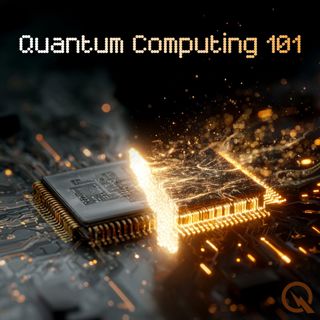
This is your Quantum Computing 101 podcast.

The future of computing is unfolding right before our eyes, and late last week, the world watched as IonQ and Oak Ridge National Laboratory announced a quantum-classical breakthrough that could reshape how our energy grids function. I’m Leo—the Learning Enhanced Operator—and you’re listening to Quantum Computing 101. Let’s jump directly into one of today’s most fascinating intersections: hybrid quantum-classical solutions and how these are starting to deliver results once thought impossible.

Right now, somewhere in a humming data center, IonQ’s 36-qubit Forte Enterprise quantum computer is working hand-in-hand with classical supercomputers. Together, they’ve tackled the notorious Unit Commitment problem—a challenge at the heart of global power grid management. Imagine planning the schedules for dozens of power generators, for 24 hours straight, balancing fluctuating demands, dealing with solar bursts and wind lulls, and aiming to waste as little as possible. It’s more than a puzzle—it’s like solving a synchronized dance across hundreds of variables, and up until now, even the fastest classical computers would sweat beneath the sheer volume of possibilities.

The hybrid approach is dazzling in its choreography. Classical computers do the heavy lifting—sifting through broad solution spaces, defining constraints, prepping datasets. Then, quantum processors step in for the trickiest passages, leveraging superposition and entanglement to explore countless potential solutions at once. Together, they found optimal generator schedules where classic algorithms hit the wall. This isn’t just academic: over 60% of the energy used in U.S. electricity generation is typically wasted. Shaving even a fraction of that with quantum-classical optimization translates to a cleaner, more efficient future[1][3][5].

Dramatically, we’re seeing quantum’s potential materialize in critical infrastructure. Suman Debnath at Oak Ridge describes it as “a significant milestone in applying quantum computing to real-world energy challenges”—not just promise, but proof. As IonQ’s hardware scales toward 100-200 high-fidelity qubits expected by 2026, the horizon is opening for entire grid balancing acts, even grid-scale financial modeling or logistics optimizations—domains where classical methods buckle under complexity[1][3][5].

And this, to me, echoes the global conversation. Just as energy grids adapt to swings in solar and wind, pushing and pulling resources dynamically, so too must we blend the strengths of classical and quantum systems. Companies like Fujitsu in Japan are laying groundwork for 10,000+ qubit machines, envisioning hybrid “comprehensive computing platforms” that combine quantum’s subtlety with the raw might of classical supercomputers—a beautiful parallel to symphonies and jazz bands, each playing out its part but harmonizing for something bigger than the sum[5][6].

We stand at the bridge where two worlds—classical’s precision and quantum’s wild possibilities—combine not just to solve problems, but to shift what kinds of problems we can even imagine. Thanks for tuning in to Quantum Computing 101. If you ever have questions or want a topic discussed on air, just send an email to leo@inceptionpoint.ai. Be sure to subscribe, and remember: This has been a Quiet Please Production. For more information, check out quietplease.ai.

For more http://www.quietplease.ai


Get the best deals https://amzn.to/3ODvOta

This content was created in partnership and with the help of Artificial Intelligence AI

Avsnitt(276)

Quantum Meets AI: How PhysVEC Hybrid Systems Are Cracking Crypto and Fixing the Qubit Noise Problem

Quantum Meets AI: How PhysVEC Hybrid Systems Are Cracking Crypto and Fixing the Qubit Noise Problem

This is your Quantum Computing 101 podcast.Imagine this: just days ago, Google Quantum AI unleashed a bombshell whitepaper, revealing they can shatter 256-bit elliptic curve cryptography—the backbone ...

5 Apr 3min

Quantum-Classical Hybrids: How Genesis Mission Fuses AI, Supercomputing and Qubits to Double US Research Power

Quantum-Classical Hybrids: How Genesis Mission Fuses AI, Supercomputing and Qubits to Double US Research Power

This is your Quantum Computing 101 podcast.Imagine this: just days ago, on April 2nd, King's College London spotlighted Professor Roger Colbeck's breakthrough in device-independent quantum cryptograph...

3 Apr 3min

Quantum Leap Forward: How Classiq and Nvidia CUDA-Q Hybrid Computing Could Crack RSA Encryption by 2030

Quantum Leap Forward: How Classiq and Nvidia CUDA-Q Hybrid Computing Could Crack RSA Encryption by 2030

This is your Quantum Computing 101 podcast.Imagine this: just days ago, on March 31st, Classiq unveiled their integration with Nvidia's CUDA-Q at GTC, a hybrid quantum-classical powerhouse that lets d...

1 Apr 3min

Quantum-Classical Hybrid Computing: The 303-Atom Protein That Changed Everything

Quantum-Classical Hybrid Computing: The 303-Atom Protein That Changed Everything

This is your Quantum Computing 101 podcast.# Quantum Computing 101: The Hybrid RevolutionGood afternoon, and welcome back to Quantum Computing 101. I'm Leo, and today we're talking about something tha...

30 Mars 3min

Quantum Hybrid Revolution: How IBM and NVIDIA Merged Qubits with GPUs to Crack Impossible Chemistry Problems in 2026

Quantum Hybrid Revolution: How IBM and NVIDIA Merged Qubits with GPUs to Crack Impossible Chemistry Problems in 2026

This is your Quantum Computing 101 podcast.Imagine this: just days ago, on March 26, 2026, IBM's quantum team at Yorktown Heights stunned the world by simulating the magnetic crystal KCuF3 on their He...

29 Mars 3min

Hybrid Quantum Revolution: How NVIDIA and ORCA Fused Light Speed Qubits With GPU Power at GTC 2026

Hybrid Quantum Revolution: How NVIDIA and ORCA Fused Light Speed Qubits With GPU Power at GTC 2026

This is your Quantum Computing 101 podcast.Imagine this: just days ago at NVIDIA's GTC 2026, ORCA Computing's photonic quantum systems fused with NVIDIA's cuTensorNet software right there at Imperial ...

27 Mars 4min

QIAPO Hybrid Revolution: How German Quantum-Classical Fusion Solves Real Logistics and Chip Manufacturing Nightmares

QIAPO Hybrid Revolution: How German Quantum-Classical Fusion Solves Real Logistics and Chip Manufacturing Nightmares

This is your Quantum Computing 101 podcast.Imagine you're deep in a Saarland University lab, the hum of cryostats vibrating like a cosmic heartbeat, lasers slicing through the chill as neutral atoms d...

25 Mars 3min

Quantum Meets GPU: How Hybrid Computing Just Cracked the Drug Discovery Code at GTC 2026

Quantum Meets GPU: How Hybrid Computing Just Cracked the Drug Discovery Code at GTC 2026

This is your Quantum Computing 101 podcast.Imagine this: just days ago, at NVIDIA's GTC 2026 in San Jose, UCL researchers, partnering with NVIDIA, Technical University of Munich, LMU, and IQM Quantum ...

23 Mars 3min

Populärt inom Politik & nyheter

aftonbladet-krim
svenska-fall
p3-krim
rss-krimstad
flashback-forever
spar
rss-sanning-konsekvens
rss-vad-fan-hande
aftonbladet-daily
motiv
politiken
rss-klubbland-en-podd-mest-om-frolunda
rss-aftonbladet-krim
grans
rss-krimreportrarna
olyckan-inifran
krimmagasinet
rss-flodet
rss-frandfors-horna
dagens-eko