Quantum Leaps: Malleable Hybrid Computing Unleashes Unimaginable Potential

Quantum Leaps: Malleable Hybrid Computing Unleashes Unimaginable Potential

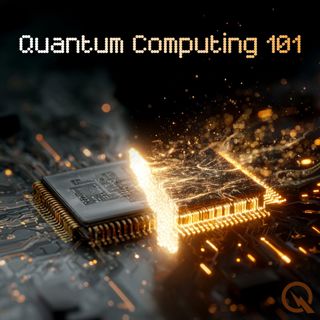
This is your Quantum Computing 101 podcast.

It’s August 10th, 2025, and my screens are blazing with headlines: quantum and classical computing are joining forces in ways we could barely imagine a year ago. Hi, I’m Leo—Learning Enhanced Operator—your resident quantum whisperer here at Quantum Computing 101. Today, I want to whisk you inside the engine room of a revolution: the most fascinating quantum-classical hybrid solution unveiled just days ago.

Let’s skip the pleasantries and dive straight in. On August 6th, researchers at the Fifth International Workshop on Integrating High-Performance and Quantum Computing announced a hybrid solution—the malleability-based dynamic resource allocation framework. It’s the most significant advance this week, and frankly, it changes the playbook. In essence, this approach lets us squeeze every drop of performance from both high-performance classical clusters and cutting-edge quantum processors by shifting computing resources dynamically—almost like choreographing a dance where CPUs and quantum circuits step up only when their rhythm matters most.

Picture this: you’re running a massive scientific simulation. The vast majority of calculations barrel along on classical cores—spinning through number-crunching like a Formula 1 car hugging each turn. But then comes a segment so complex and entangled not even a supercomputer dares touch it efficiently. Here’s where the quantum accelerator leaps in—processing the gnarly bits at phenomenal speed. Once done, classical resources swoop back in, resuming their marathon. What makes this week’s breakthrough so exhilarating is its flexibility. This malleable framework can release classical nodes when a quantum computer takes center stage and instantly reallocate tasks the millisecond quantum work wraps—maximizing every watt, minimizing idle time, and unleashing an entire ecosystem’s potential.

Let me add a tactile layer: imagine the hum and hiss of a cryogenically cooled quantum chip embedded inside a roaring datacenter. Fluid nitrogen clouds curl as room-temperature CPUs relay tasks, the air crackling with the anticipation of a quantum handoff. In one recently publicized experiment, the system processed a data clustering challenge. Parallelized classical workflows handled the heavy lifting, then—like a magician revealing a card—the quantum module tackled the pattern recognition segment. The payoff: solutions at a speed and accuracy that neither classical nor quantum could have managed solo.

I love this metaphor: Today’s hybrid computers are like symphony orchestras. Classical instruments lay down the groundwork; quantum solists improvise dazzling interludes, producing music impossible from either alone. This breakthrough isn’t just about numbers—it’s about radical teamwork at a molecular scale.

With giants like Google, IBM, and D-Wave making historic strides—did you hear D-Wave’s quantum annealer outperformed supercomputers for materials simulation last week?—the era of hybrid power is here. These advances won’t just stretch science; they will reshape industries, from finance to medicine and beyond.

That’s all for today, quantum adventurers. If you have questions or topics you want explored, email me at leo@inceptionpoint.ai. Don’t forget to subscribe to Quantum Computing 101. This is a Quiet Please Production. For more, check out quietplease dot AI. Stay curious—quantum history is still being written.

For more http://www.quietplease.ai


Get the best deals https://amzn.to/3ODvOta

This content was created in partnership and with the help of Artificial Intelligence AI

Avsnitt(276)

Quantum Meets AI: How PhysVEC Hybrid Systems Are Cracking Crypto and Fixing the Qubit Noise Problem

Quantum Meets AI: How PhysVEC Hybrid Systems Are Cracking Crypto and Fixing the Qubit Noise Problem

This is your Quantum Computing 101 podcast.Imagine this: just days ago, Google Quantum AI unleashed a bombshell whitepaper, revealing they can shatter 256-bit elliptic curve cryptography—the backbone ...

5 Apr 3min

Quantum-Classical Hybrids: How Genesis Mission Fuses AI, Supercomputing and Qubits to Double US Research Power

Quantum-Classical Hybrids: How Genesis Mission Fuses AI, Supercomputing and Qubits to Double US Research Power

This is your Quantum Computing 101 podcast.Imagine this: just days ago, on April 2nd, King's College London spotlighted Professor Roger Colbeck's breakthrough in device-independent quantum cryptograph...

3 Apr 3min

Quantum Leap Forward: How Classiq and Nvidia CUDA-Q Hybrid Computing Could Crack RSA Encryption by 2030

Quantum Leap Forward: How Classiq and Nvidia CUDA-Q Hybrid Computing Could Crack RSA Encryption by 2030

This is your Quantum Computing 101 podcast.Imagine this: just days ago, on March 31st, Classiq unveiled their integration with Nvidia's CUDA-Q at GTC, a hybrid quantum-classical powerhouse that lets d...

1 Apr 3min

Quantum-Classical Hybrid Computing: The 303-Atom Protein That Changed Everything

Quantum-Classical Hybrid Computing: The 303-Atom Protein That Changed Everything

This is your Quantum Computing 101 podcast.# Quantum Computing 101: The Hybrid RevolutionGood afternoon, and welcome back to Quantum Computing 101. I'm Leo, and today we're talking about something tha...

30 Mars 3min

Quantum Hybrid Revolution: How IBM and NVIDIA Merged Qubits with GPUs to Crack Impossible Chemistry Problems in 2026

Quantum Hybrid Revolution: How IBM and NVIDIA Merged Qubits with GPUs to Crack Impossible Chemistry Problems in 2026

This is your Quantum Computing 101 podcast.Imagine this: just days ago, on March 26, 2026, IBM's quantum team at Yorktown Heights stunned the world by simulating the magnetic crystal KCuF3 on their He...

29 Mars 3min

Hybrid Quantum Revolution: How NVIDIA and ORCA Fused Light Speed Qubits With GPU Power at GTC 2026

Hybrid Quantum Revolution: How NVIDIA and ORCA Fused Light Speed Qubits With GPU Power at GTC 2026

This is your Quantum Computing 101 podcast.Imagine this: just days ago at NVIDIA's GTC 2026, ORCA Computing's photonic quantum systems fused with NVIDIA's cuTensorNet software right there at Imperial ...

27 Mars 4min

QIAPO Hybrid Revolution: How German Quantum-Classical Fusion Solves Real Logistics and Chip Manufacturing Nightmares

QIAPO Hybrid Revolution: How German Quantum-Classical Fusion Solves Real Logistics and Chip Manufacturing Nightmares

This is your Quantum Computing 101 podcast.Imagine you're deep in a Saarland University lab, the hum of cryostats vibrating like a cosmic heartbeat, lasers slicing through the chill as neutral atoms d...

25 Mars 3min

Quantum Meets GPU: How Hybrid Computing Just Cracked the Drug Discovery Code at GTC 2026

Quantum Meets GPU: How Hybrid Computing Just Cracked the Drug Discovery Code at GTC 2026

This is your Quantum Computing 101 podcast.Imagine this: just days ago, at NVIDIA's GTC 2026 in San Jose, UCL researchers, partnering with NVIDIA, Technical University of Munich, LMU, and IQM Quantum ...

23 Mars 3min

Populärt inom Politik & nyheter

aftonbladet-krim
svenska-fall
p3-krim
rss-krimstad
flashback-forever
spar
rss-sanning-konsekvens
rss-vad-fan-hande
aftonbladet-daily
motiv
politiken
rss-klubbland-en-podd-mest-om-frolunda
rss-aftonbladet-krim
grans
rss-krimreportrarna
olyckan-inifran
krimmagasinet
rss-flodet
rss-frandfors-horna
dagens-eko