Quantum Fusion: Brilliance Unveils Hybrid Computing Future at ORNL

Quantum Fusion: Brilliance Unveils Hybrid Computing Future at ORNL

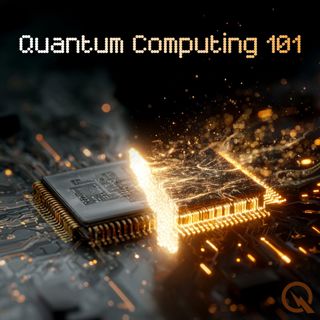
This is your Quantum Computing 101 podcast.

Picture this: I’m sitting under the flicker of lab fluorescents at Oak Ridge National Laboratory—the hum of server racks and the subtle whine of cryostats forming the soundtrack to another late night. But tonight, the air feels electric. Why? Because just yesterday, our field took a dramatic leap: Quantum Brilliance and ORNL achieved a new level of quantum-classical hybrid integration. This isn’t just tech jargon—it’s a glimpse into the future.

Let me walk you there. I’m Leo, your guide and resident quantum whisperer. My world is one where the line between the possible and the impossible gets fuzzier every week. Quantum Brilliance, out of Australia and Germany, has just deployed a quantum system so compact and resilient, it can merge seamlessly with classical high-performance clusters—not in a sci-fi sketch, but right here at one of the world's most advanced computing centers. Their diamond-based quantum processing units—think the size of a graphics card—sit alongside CPUs and GPUs, enabling workflows that braid quantum and classical computations in real time.

The effect? Imagine weaving quantum threads through the loom of a classical server cluster, producing results no classical system could manage alone. For problems in machine learning or chemistry, subtasks split off: the quantum processor handles those twisted, phase-sensitive calculations, while the classical machine races through the deterministic grind. This parallel, hybrid orchestration is not just efficient—it’s profoundly elegant.

Travis Humble, director of DOE’s Quantum Science Center, describes it as a defining turn in our push for next-generation supercomputers. Mark Luo at Quantum Brilliance calls it “the start of mass deployment,” with ambitions for quantum accelerators as common as GPUs in the data centers of tomorrow. The potential? Hundreds of thousands—maybe millions—of these quantum devices, joined with classical networks to solve puzzles ranging from protein folding to encrypted communication.

Step inside one of these hybrid testbeds and the sensory details are sharp: the squeak of antistatic shoes, the crystalline quantum device shimmering, cables like arteries pumping information at light speed. The drama of quantum measurement—the moment a fragile superposition collapses and our reality snaps into focus—never gets old. But in a hybrid environment, that drama is amplified: quantum and classical systems hand off data in blinks, feedback loops grow ever tighter, and suddenly computations that felt out of reach are now routine.

I can’t help but see parallels with world events. In the same way societies blend tradition and progress, these hybrid systems blend the brute force reliability of classical logic with the uncanny intuition of quantum mechanics. Just as yesterday’s political conventions are bending to new coalitions, today’s supercomputers are evolving—learning to collaborate, adapt, and innovate at astonishing speed.

As I unplug for the night and step outside, I’m struck by how the boundaries that once separated “classical” and “quantum” are dissolving. The best solutions don’t insist on purity—they embrace hybrid vigor.

Thank you for joining me, Leo, on Quantum Computing 101. Got burning questions or topics you’re eager to explore? Email me anytime at leo@inceptionpoint.ai. Be sure to subscribe so you never miss an episode—this has been a Quiet Please Production, and for more, visit quietplease dot AI.

For more http://www.quietplease.ai


Get the best deals https://amzn.to/3ODvOta

This content was created in partnership and with the help of Artificial Intelligence AI

Avsnitt(276)

Quantum Meets AI: How PhysVEC Hybrid Systems Are Cracking Crypto and Fixing the Qubit Noise Problem

Quantum Meets AI: How PhysVEC Hybrid Systems Are Cracking Crypto and Fixing the Qubit Noise Problem

This is your Quantum Computing 101 podcast.Imagine this: just days ago, Google Quantum AI unleashed a bombshell whitepaper, revealing they can shatter 256-bit elliptic curve cryptography—the backbone ...

5 Apr 3min

Quantum-Classical Hybrids: How Genesis Mission Fuses AI, Supercomputing and Qubits to Double US Research Power

Quantum-Classical Hybrids: How Genesis Mission Fuses AI, Supercomputing and Qubits to Double US Research Power

This is your Quantum Computing 101 podcast.Imagine this: just days ago, on April 2nd, King's College London spotlighted Professor Roger Colbeck's breakthrough in device-independent quantum cryptograph...

3 Apr 3min

Quantum Leap Forward: How Classiq and Nvidia CUDA-Q Hybrid Computing Could Crack RSA Encryption by 2030

Quantum Leap Forward: How Classiq and Nvidia CUDA-Q Hybrid Computing Could Crack RSA Encryption by 2030

This is your Quantum Computing 101 podcast.Imagine this: just days ago, on March 31st, Classiq unveiled their integration with Nvidia's CUDA-Q at GTC, a hybrid quantum-classical powerhouse that lets d...

1 Apr 3min

Quantum-Classical Hybrid Computing: The 303-Atom Protein That Changed Everything

Quantum-Classical Hybrid Computing: The 303-Atom Protein That Changed Everything

This is your Quantum Computing 101 podcast.# Quantum Computing 101: The Hybrid RevolutionGood afternoon, and welcome back to Quantum Computing 101. I'm Leo, and today we're talking about something tha...

30 Mars 3min

Quantum Hybrid Revolution: How IBM and NVIDIA Merged Qubits with GPUs to Crack Impossible Chemistry Problems in 2026

Quantum Hybrid Revolution: How IBM and NVIDIA Merged Qubits with GPUs to Crack Impossible Chemistry Problems in 2026

This is your Quantum Computing 101 podcast.Imagine this: just days ago, on March 26, 2026, IBM's quantum team at Yorktown Heights stunned the world by simulating the magnetic crystal KCuF3 on their He...

29 Mars 3min

Hybrid Quantum Revolution: How NVIDIA and ORCA Fused Light Speed Qubits With GPU Power at GTC 2026

Hybrid Quantum Revolution: How NVIDIA and ORCA Fused Light Speed Qubits With GPU Power at GTC 2026

This is your Quantum Computing 101 podcast.Imagine this: just days ago at NVIDIA's GTC 2026, ORCA Computing's photonic quantum systems fused with NVIDIA's cuTensorNet software right there at Imperial ...

27 Mars 4min

QIAPO Hybrid Revolution: How German Quantum-Classical Fusion Solves Real Logistics and Chip Manufacturing Nightmares

QIAPO Hybrid Revolution: How German Quantum-Classical Fusion Solves Real Logistics and Chip Manufacturing Nightmares

This is your Quantum Computing 101 podcast.Imagine you're deep in a Saarland University lab, the hum of cryostats vibrating like a cosmic heartbeat, lasers slicing through the chill as neutral atoms d...

25 Mars 3min

Quantum Meets GPU: How Hybrid Computing Just Cracked the Drug Discovery Code at GTC 2026

Quantum Meets GPU: How Hybrid Computing Just Cracked the Drug Discovery Code at GTC 2026

This is your Quantum Computing 101 podcast.Imagine this: just days ago, at NVIDIA's GTC 2026 in San Jose, UCL researchers, partnering with NVIDIA, Technical University of Munich, LMU, and IQM Quantum ...

23 Mars 3min

Populärt inom Politik & nyheter

aftonbladet-krim
svenska-fall
p3-krim
rss-krimstad
flashback-forever
spar
rss-sanning-konsekvens
rss-vad-fan-hande
aftonbladet-daily
motiv
politiken
rss-klubbland-en-podd-mest-om-frolunda
rss-aftonbladet-krim
grans
rss-krimreportrarna
olyckan-inifran
krimmagasinet
rss-flodet
rss-frandfors-horna
dagens-eko