Peter Groot and Akansha Vaswani - Tapering Strips and Shared Decision-Making

Peter Groot and Akansha Vaswani - Tapering Strips and Shared Decision-Making

On MIA Radio this week, Akansha Vaswani and Dr Peter Groot discuss Tapering Strips, a novel and practical solution for those who wish to taper gradually from a range of prescription drugs.

Akansha is a doctoral candidate at the University of Massachusetts, Boston and her dissertation research will involve interviewing psychiatrists in the US about their experiences helping people stop or reduce their dose of antidepressant medication. Dr Groot is a researcher and geneticist who has led the development of Tapering Strips.

In a recent study, published in the journal Psychosis, Dr Groot, together with Jim van Os, reported on the results of their trial which recorded the experiences of people using Tapering Strips.

In this episode we discuss:
  • What motivated Peter to be interested in and study the effects of coming off antidepressants drugs.
  • That the observational study reported in Psychosis was based on questionnaires completed by users who had made use of tapering medication (Tapering Strips) to slowly reduce their medication dosage.
  • How the questionnaire asked about withdrawal symptoms and the ease of tapering using the strips and whether people had tried to withdraw previously using conventional methods.
  • That Tapering Strips offer a flexible and necessary addition to standard doses that have been registered by the pharmaceutical companies.
  • That current guidelines advise doctors to let patients start on the same recommended dose of an antidepressant, without taking into account large differences that exist between patients (weight, sex, etc).
  • How we would be surprised if, when we came to buy shoes or clothes, our choices were limited to only a few sizes, but we don't question this limitation with our medications.
  • How current guidelines are based on group averages and do not help a doctor to determine how a given individual patient should taper.
  • How shared decision making, in which the patient and the doctor work in a collaborative way, can make tapering easier.
  • How shared decision making has contributed to the success of the use of tapering medication and the availability of tapering medication makes shared decision making practically possible.
  • How shared decision and the availability of tapering medication makes life easier for the doctor as well as for the patient.
  • How working initially as a volunteer to develop Tapering Strips brought Peter into contact with Professor Jim van Os and the User Research Centre of Maastricht University.
  • That, in the study, 1,750 questionnaires were sent, with 1,164 received, a response rate of 68%.
  • Of those returned, 895 said their goal was to taper their antidepressant drug completely and 70% succeeded in this goal.
  • That the median time taken for people in the study to withdraw from Venlafaxine was 56 days or two Tapering Strips.
  • There were a variety of reasons reported for those who didn't reach their goal, including the fact that some of the patients were still tapering.
  • Other reasons reported for not withdrawing completely were due to the occurrence of withdrawal symptoms, relapse of an original condition or even issues related to reimbursement of the cost of the tapering medication by insurance companies.
  • That 692 patients reported that previous attempts to withdraw had failed in comparison to the successful use of Tapering Strips.
  • That people using multiple drugs should only ever taper one medication at a time and in discussion with a medical professional.
  • That Peter's goal for Tapering Strips is to make sure that people that want to withdrawal gradually can access Tapering Strips and have the cost reimbursed by health insurers.
  • That Tapering Strips were not developed to get everyone off their antidepressant drug but to enable patients to get to a dosage that provides benefit for them (which can be zero) while minimising adverse effects.
  • That people outside the Netherlands can get Tapering Medication, but only with a prescription signed by a certified doctor, instructions and receipt/order forms can be found at taperingstrip.org.
  • That Tapering Strips are also available for antipsychotics, sedatives (benzodiazepines), analgesics and for some drugs other than psychotropics, like some anti-epileptic drugs, which are currently being developed.
  • That Peter warns against tapering by taking doses on alternating days, particularly for drugs like paroxetine or venlafaxine that have a short metabolic half-life, because this will lead to more severe withdrawal symptoms.

Relevant Links:

Tapering Strips (website of the User Research Centre of Maastricht University)

Treatment guidelines for the use of tapering strips

Summary of the tapering study in the journal Psychosis (blog)

Tapering Strips study from the journal Psychosis

Peter Groot interviewed on Let's Talk Withdrawal

Claire shares her experience with Tapering Strips (YouTube)

Petition requesting use of Tapering Strips in the UK

Mad in America report on Tapering strips study

Prime Time for Shared Decision Making

Mandatory Shared Decision Making

© Mad in America 2018

Avsnitt(290)

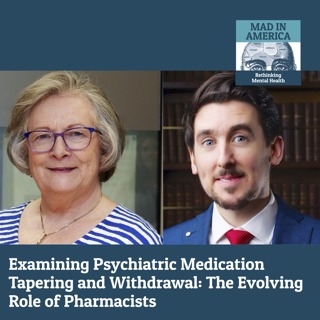
Examining Psychiatric Medication Tapering and Withdrawal: The Evolving Role of Pharmacists — A Conversation with Agnes Higgins and Cathal Cadogan

Examining Psychiatric Medication Tapering and Withdrawal: The Evolving Role of Pharmacists — A Conversation with Agnes Higgins and Cathal Cadogan

Welcome to the Mad in America podcast, my name is James. Today, we are discussing the experiences of people who have attempted to stop taking psychiatric drugs. These experiences are captured in a sur...

1 Apr 32min
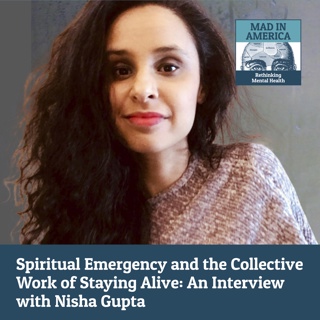
Spiritual Emergency and the Collective Work of Staying Alive: An Interview with Nisha Gupta

Spiritual Emergency and the Collective Work of Staying Alive: An Interview with Nisha Gupta

Nisha Gupta is an existential phenomenologist, a depth psychotherapist, a creativity scholar, and an artist. She's an Associate Professor of Psychology at the University of West Georgia and earned her...

25 Mars 48min

The Political Systems Driving Abuse in Psychiatry: An Interview with Human Rights Lawyer Alicia Ely Yamin

The Political Systems Driving Abuse in Psychiatry: An Interview with Human Rights Lawyer Alicia Ely Yamin

Alicia Ely Yamin is the Director of the Global Health and Rights Project and a lecturer at Harvard Law School. She's also an adjunct senior lecturer on health policy and management at the Harvard T.H....

18 Mars 45min
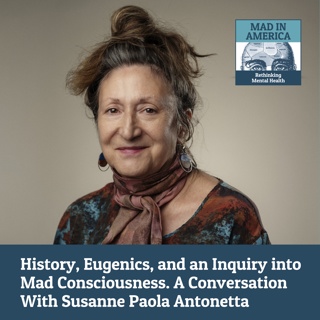
History, Eugenics, and an Inquiry into Mad Consciousness: A Conversation With Susanne Paola Antonetta

History, Eugenics, and an Inquiry into Mad Consciousness: A Conversation With Susanne Paola Antonetta

Susanne Paola Antonetta is an accomplished writer and poet, the author of numerous books, and in 2001 her book Body Toxic: An Environmental Memoir, won a prestigious American Book Award. Her latest bo...

11 Mars 49min
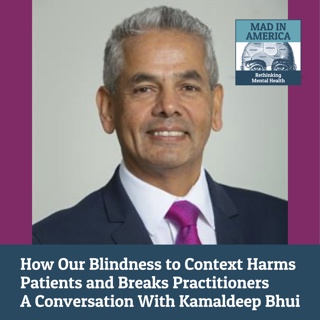
How Our Blindness to Context Harms Patients and Breaks Practitioners: A Conversation With Kamaldeep Bhui

How Our Blindness to Context Harms Patients and Breaks Practitioners: A Conversation With Kamaldeep Bhui

Kamaldeep Bhui is Professor of Psychiatry at the University of Oxford and Honorary Professor at Queen Mary University of London. He is internationally recognized for his groundbreaking work on cultura...

4 Mars 51min
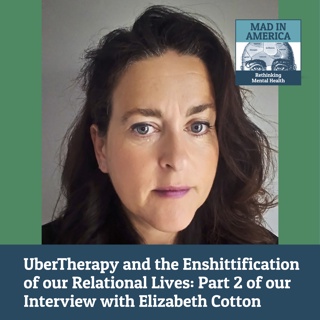
UberTherapy and the Enshittification of our Relational Lives: Part 2 of our Interview with Elizabeth Cotton

UberTherapy and the Enshittification of our Relational Lives: Part 2 of our Interview with Elizabeth Cotton

Elizabeth Cotton is Associate Professor of Responsible Business at the University of Leicester and the founder of Surviving Work, which carries out socially engaged research on mental health and work....

18 Feb 39min
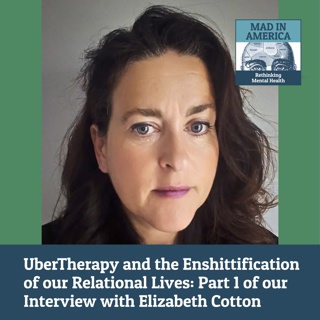
UberTherapy and the Enshittification of our Relational Lives: Part 1 of our Interview with Elizabeth Cotton

UberTherapy and the Enshittification of our Relational Lives: Part 1 of our Interview with Elizabeth Cotton

Elizabeth Cotton is Associate Professor of Responsible Business at the University of Leicester and the founder of Surviving Work, which carries out socially engaged research on mental health and work....

11 Feb 46min
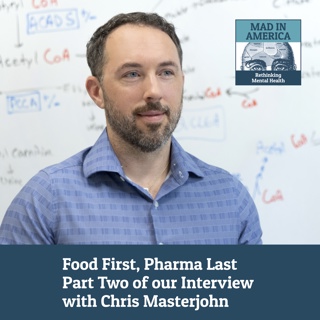
Food First, Pharma Last - Part Two of our Interview with Chris Masterjohn

Food First, Pharma Last - Part Two of our Interview with Chris Masterjohn

This week, we are joined by Chris Masterjohn, PhD. Chris is a nutritional scientist, a former professor, and the founder of Mitome. With a PhD in nutritional science and years of research in mitochond...

28 Jan 44min

Populärt inom Hälsa

somna-med-henrik
rss-bara-en-till-om-missbruk-medberoende-2
inga-beiga-morsor
rss-jossan-nina
alska-oss
rss-vuxna-pa-latsas
angestpodden
sexnoveller-deluxe
johannes-hansen-podcast
giggles-med-wiggles
sova-med-dan-horning
rss-viktmedicinpodden
not-fanny-anymore
sag-det-bara
vinterpasset
rss-sjalsligt-avkladd
brottarbroder
sa-in-i-sjalen
rss-the-house-podcast-3
rss-beratta-alltid-det-har