An Introduction to iNaturalist with Maddy Heredia

An Introduction to iNaturalist with Maddy Heredia

Hi Everyone! On today's episode of Backyard Ecology, we talk with Maddy Heredia who is the outreach specialist and a biologist with the Kentucky Nature Preserves. Maddy and I first met when she was in college and volunteered on a citizen science / community science program that I was leading. Today we turned things around as she taught me a little bit about iNaturalist, which is a program that I knew about in the broad sense, but have never really used myself. I had a lot of fun recording this episode and I hope you enjoy it too.

iNaturalist is a tool that can either be used through a smartphone app or online with your computer. iNaturalist is commonly used to help people identify a plant or animal. After you upload a picture and a little additional information about when and where you found it, iNaturalist will make recommendations as to what the organism could be. Other iNaturalist users can also comment on your photograph and help with the identification.

Another common way that iNaturalist is used is by people who want to document the plants and animals they find. You can document the plants and animals in your yard, the pollinator garden at the local elementary school, the county park or other public land, or anywhere else. The observations that you make and upload to iNaturalist are publicly accessible.

Those observations are extremely valuable to scientists because they can't be everywhere at all times. Also, we often don't know exactly where specific plants or animals are found, especially when it comes to understudied organisms like insects. Observations uploaded to iNaturalist can help fill in those knowledge gaps. For example, recently a species of moth that had previously never been documented in Kentucky before was documented in the state because someone took a picture of it and uploaded it to iNaturalist.

I like the fact that not only can I use iNaturalist to help me learn more about the plants and animals that I find, but it can also help scientists learn more about those plants and animals as well. After talking to Maddy and hearing her walk us through the steps of using iNaturalist, I think I'm going to set up an account to help document some of the plants and animals that I find, as well as, to help identify some of the mystery insects that I discover as I'm taking pictures of different pollinators.

If you aren't already using iNaturalist, then I encourage you to take a look at it. I'm guessing, that like me, you can find multiple uses for it. And if you use iNaturalist in Kentucky, please join the Kentucky Nature Preserve's projects so your observations can help them learn more about all of our amazing plants and animals.

Links:

Avsnitt(115)

More than just a forest: Our surprisingly diverse eastern ecosystems

More than just a forest: Our surprisingly diverse eastern ecosystems

Summary The general impression that many people have is that prior to European settlement the whole eastern U.S. was one giant old growth forest. But that wasn't the case. Using an interdisciplinary a...

18 Feb 21min
How to Be Successful with Your Habitat Goals

How to Be Successful with Your Habitat Goals

Summary When it comes to creating habitat, having a written set of goals can be extremely helpful in moving a task from the "I'll get to it someday" category to the "I'm actually going to get this don...

8 Jan 10min
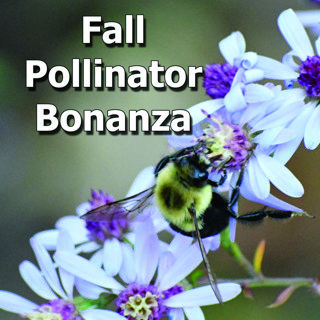
Short's aster: A beautiful late season extravaganza for pollinators

Short's aster: A beautiful late season extravaganza for pollinators

Summary Late blooming native plants are crucial sources of pollen and nectar for pollinators. One of my favorite species that blooms in October, and often into early November, is Short's aster (Symphy...

23 Okt 20257min
The Science Behind "Leave the Leaves"

The Science Behind "Leave the Leaves"

Summary "Leave the leaves" has become an increasingly common mantra each fall. However, until recently little to no scientific research had been done to quantify impacts of leaving your leaves in a ty...

9 Okt 202547min
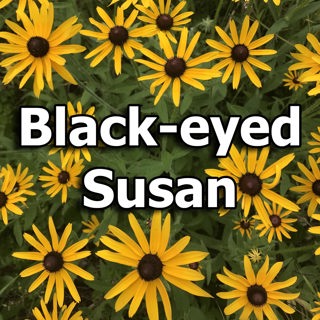
Black-eyed Susan: A must-have for the pollinator garden

Black-eyed Susan: A must-have for the pollinator garden

Summary Black-eyed Susan (Rudbeckia hirta) is a beautiful native plant that can be found throughout most of the eastern U.S. and makes a great addition to pollinator and native plant gardens. It can g...

25 Sep 20259min
A Bad Naturalist's Journey to Restore a Mountaintop Meadow

A Bad Naturalist's Journey to Restore a Mountaintop Meadow

Summary Paula Whyman shares her journey of trying to restore and manage a remnant prairie located on a Virginia mountaintop. Our conversation touches upon some of the challenges she faced, lessons she...

11 Sep 20251h 22min
Native Plants That Attract Hummingbirds to Eastern U.S. Gardens

Native Plants That Attract Hummingbirds to Eastern U.S. Gardens

Summary Hummingbirds are probably one of the most beloved groups of birds that people want to attract to their yards. In this episode, I share 10 of my favorite native plants for attracting hummingbir...

28 Aug 202513min
Gardening for Moths: Why It's Important for Backyard Conservation

Gardening for Moths: Why It's Important for Backyard Conservation

Summary In this episode, we focus on the fascinating world of moths and why gardening for moths is so im-portant for any backyard ecologist. We also talk about specific native plants grow to attract m...

7 Aug 20251h 11min

Populärt inom Vetenskap

p3-dystopia
svd-nyhetsartiklar
dumma-manniskor
kapitalet-en-podd-om-ekonomi
allt-du-velat-veta
doden-hjarnan-kemisten
rss-ufo-bortom-rimligt-tvivel-2
rss-vetenskapsradion-2
rss-vetenskapsradion
det-morka-psyket
bildningspodden
sexet
medicinvetarna
paranormalt-med-caroline-giertz
rss-spraket
har-vi-akt-till-mars-an
rss-experimentet
dumforklarat
barnpsykologerna
rss-tidsmaskinen