Asbestos disposal: New exciting methods

Asbestos disposal: New exciting methods

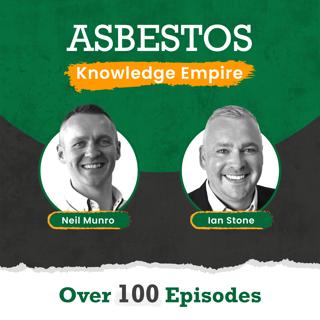
In this episode Neil and Ian discuss new exciting methods relating to asbestos disposal. These new methods if adopted will help stop asbestos having to go to landfill – as spoken about by Dr Yvonne Waterman in at the Birmingham Contamination Expo – Asbestos Denaturation

  • Chemical eradication – which leaves by products that can be re used in the building trades – asbestos cement
  • Thermal destruction – heated to extremely high temperatures where the asbestos is totally destroyed and becomes inert
  • Kinetic – asbestos is placed in large industrial units and heavy balls are also placed in the unit and the kinetic energy from the rotation of the unit destroys the asbestos fibre
  • Biological – growth of fungus to eradicate asbestos

More info re all of this will be at the European Asbestos Forum held in November in Holland

https://www.europeanasbestosforum.org/

Transcript:

Neil: Hi! Welcome to Asbestos Knowledge Empire. My name is Neil Munro.

Ian: Hi! I'm Ian Stone. So today we're talking about some exciting developments with regards to asbestos land fill.

Neil: What happens to asbestos? So we went to a conference or an exhibition.

Ian: It was the [unclear – 00:57]

Neil: That's the word.

Ian: Yeah, in Birmingham.

Neil: Lots of different people from the industry, asbestos industry flood, everyone in and around that was there. Lots of different companies sort of exhibitions sharing sort of new techniques, best practice, innovations and there are also quite a lot of seminars.

Ian: Yes, so, one of them we saw Dr. Yvonne Waterman she spoke about asbestos denaturation. So at the moment asbestos goes to the landfill, so we remove it, it gets bunked up or wrapped appropriately, gets taken off to other waste transfer station or straight to landfill.

Neil: Yeah, and get buried in the ground.

Ian: And that's the long short of it. Asbestos comes out of the ground, we wrapped it up, we stick it back in the ground.

Neil: And this is creating not a very nice legacy that we are leaving for future generations really, all these harmful material. So we imported all asbestos that's been used in this country, so we export it from different countries and create millions of tons of asbestos products and to this date all of it that's been removed is going to land fill.

Ian: Yes.

Neil: And if you can imagine the tons and tons of these materials that of now just been buried in the ground and will continue for the future. However, there are some really exciting innovations that are coming in their infancy to market and we just want to share those. We pick this up from some experts at the conference at the exhibition and so we got to share that in this podcast today.

Ian: Yeah. This is what Dr. Yvonne Waterman, I can't remember her colleague's name, but that's what she spoke about. We just want to give you kind of our layman's interpretation of what she spoke about.

Neil: Yeah, it is very layman.

Ian: There is going to be more information on this.

Neil: Different removal techniques have been pioneered in there, so how many is it roughly?

Ian: Four we've got.

Neil: So if we start with the first one then. This was the quite exciting one for me which I highly appreciate was chemical eradication.

Ian: I think this one sounds, I don't know, sounds the most promising to me.

Neil: Yeah, that and the kinetic one, and even the final one.

Ian: [unclear – 03:14]

Neil: This three definitely.

Ian: So yeah, chemical eradication, and what she spoke about was basically putting asbestos cement products into a vat of acid, don't know what type of acid it is.

Neil: Yeah, and the additional benefits, these are byproducts from industries. So they are using the acids that are byproducts of and waste products from other industries, and using them to break down the asbestos.

Ian: Yeah, and also what happens is once the asbestos is broken down that creates a byproduct of the original asbestos material so the Portland cement and the gypsum after basically what the chemical reaction does. It destroys the asbestos fibers in their entirety. So once it's been through the acid there is no asbestos fiber essentially left, and you're just left with materials that can then be re-pass and re put back into construction materials.

Neil: Yup, so these are inert materials that are left and yes they'd be really useful for like roads.

Ian: They were talking about making blocks out of them and basically reuse them as building materials.

Neil: Which if you think how much that's going to save in landfill is just unbelievable, when we use these materials that's just amazing.

Ian: It was kind of complex.

Neil: We've just… we got that very, very…

Ian: Dump it down to our very simplistic level.

Neil: Simple diagram explain it this cement sheet are loaded into big vats full of this acid and it's like two step process that it go through and like Ian said you end up with this inert raw material that's left at the end.

Ian: So next one thermal destruction. I don't know that she spoke about thermal in sense. It's just I know that… she did.

Neil: It is basically heating the asbestos products at to, I think it goes above 1,500 ºC, and basically it gets to a certain temperature where the asbestos just breaks down.

Ian: Again, the properties of the asbestos material while we've used it, it seizes to be like that, and basically you can't use it in the same manner. The fibers don't split and again it becomes inert. So again, kind of the byproduct of that you are left with an inert material that can be used and re-used. I know there's been trials in America and stuff where they use if for roads and things. So again, that's an option for the future.

Neil: Yeah, and I know for a fact that this has been used out in the States. Hasn't been brought over here yet I think simple because of the cost. They haven't been able to produce a cost effective way bringing that method over here.

Ian: No. Next one, kinetic, now this sounds pretty cool. Basically using large machines, large units that will rotate and within that machine are big steel balls or balls made of some material placed in there and then as the machine rotates the kinetic energy destroys anything that's put in there. So it's just smash the smithereens and what you are left with again it has broken it down to a point of no return, the asbestos fibers are fully destroyed and the other materials that are put in there are fully destroyed.

Neil: That's crazy.

Ian: It is. It's a mad one.

Neil: I don't quite get the science behind that either. I don't know how that works but.

Ian: I want to see the machine, the size of the machine that they are talking about to do this.

Neil: Yeah. On picture there, have drawn collider.

Ian: Exactly, yeah, like it is the next level science definitely.

Neil: The next one which was interest me but this is probably the less effective one is in time scale because it is the biological. Now, apparently there is a biological work breaking down asbestos. Again, I think this is predominantly across on cement products where they are using fungus/fungi to literally just eat the material away. But I think the trouble with this one is it takes years to actually do.

Ian: Yeah.

Neil: Yeah, that's just, can you imagine that? There are some mushrooms on certain asbestos.

Ian: Yeah, and there is no as he left.

Neil: Yeah.

Ian: Madness.

Neil: How was that?

Ian: Yeah, it was really great talk by Yvonne and she went into it in a hell lot of more data and we just flavored it now.

Neil: The reason we do it is because we want to obviously highlight the facts but it is also to give a shout out to Yvonne because it was a really good talk and

Ian: She had took the European Asbestos Forum.

Neil: That's it which is taking place in November.

Ian: Yeah, November in Holland. It is an annual conference that she puts on this a hell lot of speakers from around the world from asbestos and occupational health. The leading voices on it in the world are going to be attending.

Neil: Yes. If this type of stuff interest you this is kind of stuff that they are putting out there, they are pioneering. They just feeding this information out trying to change in the industry and essentially eradicate the asbestos risk.

Ian: Exactly. That's why we wanted to share it. It's a great talk I think that's going to be an amazing forum. Unfortunately, I am not going to be able to make it because I'm away on holiday but I think hopefully Neil is going to be attending there to kind of get more in-depth knowledge and information. I mean that chat that we saw she was on for about 30 minutes wasn't it so it is a real brief flavor. But yeah they are going to be doing a hell lot deeper than we have.

Neil: I hopefully. I'll be up here to share some information with you guys.

Ian: Hope you enjoy that, quite a random one, quite off the cuff. Remember asbestos first, not last.

Avsnitt(119)

The Condition of School Buildings: A Hidden Crisis

The Condition of School Buildings: A Hidden Crisis

In this episode, Neil and Ian summarise the findings presented in the recent National Audit Office report on the condition of school buildings. They explore the startling reality that many school buil...

17 Juli 202324min

ATaC and NORAC  - First Annual Data Analysis Report

ATaC and NORAC - First Annual Data Analysis Report

In this episode, Neil and Ian discuss the findings presented in a recent report produced jointly by ATaC & NORAC two organisations representing the asbestos surveying sector. The report contains some ...

10 Juli 202320min

Interview Charles Pickles: Asbestos Campaigner and Asbestos Expert

Interview Charles Pickles: Asbestos Campaigner and Asbestos Expert

In this episode, Neil and Ian speak to Charles Pickles who provides his in-depth opinion on the current asbestos management requirements and what should be changed. Charles Pickles is a renowned figur...

3 Juli 202338min

Interview Robin Bennett: Damage Report

Interview Robin Bennett: Damage Report

In this episode, Neil and Ian sit down with Robin Bennett. Robin is a renowned figure in the asbestos software industry. Today, Robin will share his insights on a groundbreaking report that analyzes a...

22 Juni 202327min

Liz Darlison MBE: Neil and Ian interview the CEO of the UKs national Mesothelioma charity – Mesothelioma UK

Liz Darlison MBE: Neil and Ian interview the CEO of the UKs national Mesothelioma charity – Mesothelioma UK

In this episode, Neil and Ian are joined by Liz Darlison MBE who is the Chief Executive Officer of national charity Mesothelioma UK. Liz shares her unique insights and experiences in helping people de...

23 Nov 202251min

BBC Radio Northampton Interview with Neil Munro – Global Asbestos Awareness Week

BBC Radio Northampton Interview with Neil Munro – Global Asbestos Awareness Week

Join Neil Munro on the Helen Blaby BBC Radio Northampton show. Raising awareness of Gobal Asbestos Awareness Week and discussing the current asbestos problems faced today. Get help with asbestos - htt...

14 Juni 20218min

Due diligence when purchasing a property

Due diligence when purchasing a property

In this episode Neil and Ian discuss the importance of doing your asbestos due diligence before purchasing a property. Whether that is a domestic or commercial property, asbestos should always be look...

7 Juni 202119min

Can you have asbestos removal works carried out in an occupied office?

Can you have asbestos removal works carried out in an occupied office?

In this episode Neil and Ian discuss the topic can asbestos removal works be carried out in an occupied office? Get help with asbestos - https://www.acorn-as.com

31 Maj 202110min

Populärt inom Business & ekonomi

badfluence
framgangspodden
rss-jossan-nina
varvet
rss-borsens-finest
uppgang-och-fall
avanzapodden
svd-tech-brief
fill-or-kill
bathina-en-podcast
lastbilspodden
borsmorgon
rss-inga-dumma-fragor-om-pengar
rss-kort-lang-analyspodden-fran-di
kapitalet-en-podd-om-ekonomi
rss-dagen-med-di
rss-den-nya-ekonomin
affarsvarlden
rss-borslunch
rikatillsammans-om-privatekonomi-rikedom-i-livet