
E166: Is the Internet Too Big to Moderate? — John Wihbey
El Podcast6 Nov 2025

E166: Is the Internet Too Big to Moderate? — John Wihbey

A wide-ranging conversation with Northeastern’s John Wihbey on how algorithms, laws, and business models shape speech online—and what smarter, lighter regulation could look like.

Guest bio: John Wihbey is a professor of media & technology at Northeastern University and director of the AI Media Strategies Lab. Author of Governing Babel (MIT Press). He has advised foundations, governments, and tech firms (incl. pre-X Twitter) and consulted for the U.S. Navy.

Topics discussed:

  • Section 230’s 1996 logic vs. the algorithmic era
  • EU DSA, Brazil/India, authoritarian models
  • AI vs. AI moderation (deepfakes, scams, NCII)
  • Hate/abuse, doxxing, and speech “crowd-out”
  • Platform opacity; case for transparency/data access
  • Creator-economy economics; downranking/shadow bans
  • Dead Internet Theory, bots, engagement gaming
  • Sports, betting, and integrity (NBA/NFL)
  • Gen Z jobs; becoming AI-literate change agents
  • Teaching with AI: simulations, human-in-loop assessment

Main points & takeaways:

  • Keep Section 230 but add obligations (transparency, appeals, researcher access).
  • Europe’s DSA has exportable principles, adapted to U.S. free-speech norms.
  • States lead on deepfake/NCII and youth-harm laws.
  • AI offense currently ahead; detection/provenance + humans will narrow the gap.
  • Lawful hate/abuse can practically silence others’ participation.
  • CSAM detection is harder with synthetics; needs better tooling/cooperation.
  • News/creator models are fragile; ad dollars shifted to platforms.
  • Opaque ranking punishes small creators; clearer recourse is needed.
  • Engagement metrics are Goodharted; bots inflate signals.
  • Live sports thrive on synchronization; gambling risks long-term integrity.
  • Students should aim to be the person who uses AI well, not fear AI.

Top 3 quotes:

  • “Keep 230, but add transparency and obligations—we don’t need censorship; we need visibility into how platforms actually govern speech.”
  • AI versus AI is the new reality—offense is ahead today, but defense will catch up with detection, provenance, and human oversight.”
  • “The platform is king—monetization and discoverability are controlled by opaque algorithms, and that unpredictability crushes small creators.”

🎙 The Pod is hosted by Jesse Wright
💬 For guest suggestions, questions, or media inquiries, reach out at https://elpodcast.media/
📬 Never miss an episode – subscribe and follow wherever you get your podcasts.
⭐️ If you enjoyed this episode, please rate and review the show. It helps others find us.

Thanks for listening!

Avsnitt(186)

1 in 20 Deaths: Inside Canada’s Assisted Dying System - Dr. Ramona Coelho

1 in 20 Deaths: Inside Canada’s Assisted Dying System - Dr. Ramona Coelho

Canada’s MAiD program has expanded rapidly—Dr. Ramona Coelho argues the system increasingly serves vulnerable people, with uneven safeguards and serious ethical, legal, and social risks. Guest bio: Dr...

24 Feb 1h
The Eavesdropper Economy: How Surveillance Built AI (E186)

The Eavesdropper Economy: How Surveillance Built AI (E186)

A lively tour from Cold War “The Thing” to today’s surveillance capitalism—showing how audio capture, too much data, and automation pressures helped turn listening into AI.Guest bios:Dr. Toby Heys — P...

18 Feb 1h
Managerial Class Ruined Tech (E185) - Darryl Campbell

Managerial Class Ruined Tech (E185) - Darryl Campbell

A former Silicon Valley insider explains how MBA-style “spreadsheet management” is breaking software—and why it’s making tech, AI, and everyday products worse.Guest bio:Darryl Campbell is a former tec...

10 Feb 1h 13min
55% of MIT Faculty Self-Censor — Here’s Why (E184)

55% of MIT Faculty Self-Censor — Here’s Why (E184)

MIT Free Speech Alliance president Wayne Stargardt explains how a few high-profile cancellations can drive widespread faculty self-censorship—even at a STEM powerhouse like MIT.Guest bio:Wayne Stargar...

5 Feb 52min

E183: Why Corporate America Will Never De-Woke | Law Prof Explains

E183: Why Corporate America Will Never De-Woke | Law Prof Explains

In this episode, Jesse talks with Fordham University School of Law corporate-law professor Sean J. Griffith about why “go woke, go broke” hasn’t really played out—and why big, publicly traded firms ca...

3 Feb 59min
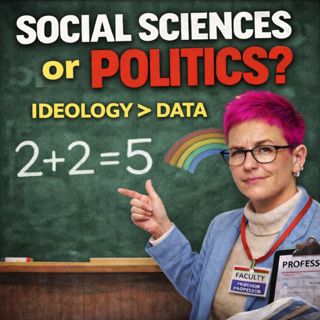
E181: Politics Is the Best Predictor of Academic Research — Prof Mark Horowitz

E181: Politics Is the Best Predictor of Academic Research — Prof Mark Horowitz

Political beliefs often matter more than data or methods in shaping how social scientists think about controversial issues. In this episode, sociologist Dr. Mark Horowitz explains why many professors ...

27 Jan 1h 8min
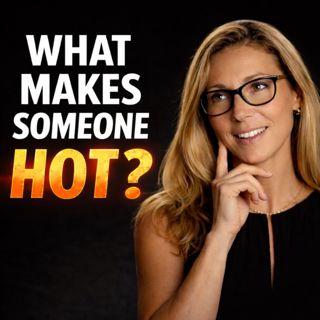
E180: Attraction & Disgust: Evolutionary Psychology Explained (Dr. Deb Lieberman)

E180: Attraction & Disgust: Evolutionary Psychology Explained (Dr. Deb Lieberman)

Evolutionary psychologist Debra Lieberman explains how “disgust” and other built-in mental programs shape attraction, kinship, morality, and even law—while modern technology and social media scramble ...

20 Jan 1h 3min

E179: Breaking the Gerontocracy: How Amanda Litman Is Getting Young People into Office

E179: Breaking the Gerontocracy: How Amanda Litman Is Getting Young People into Office

Amanda Litman argues U.S. leadership is too old, local races are dangerously uncontested, and the fastest fix is getting more young people to run—backed by better pay and campaign-finance reform.Guest...

16 Jan 50min

Populärt inom Business & ekonomi

badfluence
framgangspodden
varvet
rss-jossan-nina
uppgang-och-fall
rss-borsens-finest
avanzapodden
rss-svart-marknad
fill-or-kill
rss-kort-lang-analyspodden-fran-di
bathina-en-podcast
rss-dagen-med-di
24fragor
tabberaset
lastbilspodden
borsmorgon
rss-inga-dumma-fragor-om-pengar
dynastin
svd-tech-brief
loungepodden