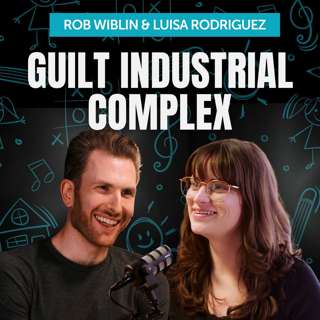
Rob & Luisa chat kids, the 2016 fertility crash, and how the 50s invented parenting that makes us miserable
80,000 Hours Podcast25 Marras 2025

Rob & Luisa chat kids, the 2016 fertility crash, and how the 50s invented parenting that makes us miserable

Global fertility rates aren’t just falling: the rate of decline is accelerating. From 2006 to 2016, fertility dropped gradually, but since 2016 the rate of decline has increased 4.5-fold. In many wealthy countries, fertility is now below 1.5. While we don’t notice it yet, in time that will mean the population halves every 60 years.

Rob Wiblin is already a parent and Luisa Rodriguez is about to be, which prompted the two hosts of the show to get together to chat about all things parenting — including why it is that far fewer people want to join them raising kids than did in the past.

Links to learn more, video, and full transcript: https://80k.info/lrrw

While “kids are too expensive” is the most common explanation, Rob argues that money can’t be the main driver of the change: richer people don’t have many more children now, and we see fertility rates crashing even in countries where people are getting much richer.

Instead, Rob points to a massive rise in the opportunity cost of time, increasing expectations parents have of themselves, and a global collapse in socialising and coupling up. In the EU, the rate of people aged 25–35 in relationships has dropped by 20% since 1990, which he thinks will “mechanically reduce the number of children.” The overall picture is a big shift in priorities: in the US in 1993, 61% of young people said parenting was an important part of a flourishing life for them, vs just 26% today.

That leads Rob and Luisa to discuss what they might do to make the burden of parenting more manageable and attractive to people, including themselves.

In this non-typical episode, we take a break from the usual heavy topics to discuss the personal side of bringing new humans into the world, including:

  • Rob’s updated list of suggested purchases for new parents
  • How parents could try to feel comfortable doing less
  • How beliefs about childhood play have changed so radically
  • What matters and doesn’t in childhood safety
  • Why the decline in fertility might be impractical to reverse
  • Whether we should care about a population crash in a world of AI automation

This episode was recorded on September 12, 2025.

Chapters:

  • Cold open (00:00:00)
  • We're hiring (00:01:26)
  • Why did Luisa decide to have kids? (00:02:10)
  • Ups and downs of pregnancy (00:04:15)
  • Rob’s experience for the first couple years of parenthood (00:09:39)
  • Fertility rates are massively declining (00:21:25)
  • Why do fewer people want children? (00:29:20)
  • Is parenting way harder now than it used to be? (00:38:56)
  • Feeling guilty for not playing enough with our kids (00:48:07)
  • Options for increasing fertility rates globally (01:00:03)
  • Rob’s transition back to work after parental leave (01:12:07)
  • AI and parenting (01:29:22)
  • Screen time (01:42:49)
  • Ways to screw up your kids (01:47:40)
  • Highs and lows of parenting (01:49:55)
  • Recommendations for babies or young kids (01:51:37)


Video and audio editing: Dominic Armstrong, Milo McGuire, Luke Monsour, and Simon Monsour
Music: CORBIT
Camera operator: Jeremy Chevillotte
Coordination, transcripts, and web: Katy Moore

Jaksot(321)

#8 - Lewis Bollard on how to end factory farming in our lifetimes

#8 - Lewis Bollard on how to end factory farming in our lifetimes

Every year tens of billions of animals are raised in terrible conditions in factory farms before being killed for human consumption. Over the last two years Lewis Bollard – Project Officer for Farm An...

27 Syys 20173h 16min

#7 - Julia Galef on making humanity more rational, what EA does wrong, and why Twitter isn’t all bad

#7 - Julia Galef on making humanity more rational, what EA does wrong, and why Twitter isn’t all bad

The scientific revolution in the 16th century was one of the biggest societal shifts in human history, driven by the discovery of new and better methods of figuring out who was right and who was wrong...

13 Syys 20171h 14min
#6 - Toby Ord on why the long-term future matters more than anything else & what to do about it

#6 - Toby Ord on why the long-term future matters more than anything else & what to do about it

Of all the people whose well-being we should care about, only a small fraction are alive today. The rest are members of future generations who are yet to exist. Whether they’ll be born into a world th...

6 Syys 20172h 8min

#5 - Alex Gordon-Brown on how to donate millions in your 20s working in quantitative trading

#5 - Alex Gordon-Brown on how to donate millions in your 20s working in quantitative trading

Quantitative financial trading is one of the highest paying parts of the world’s highest paying industry. 25 to 30 year olds with outstanding maths skills can earn millions a year in an obscure set of...

28 Elo 20171h 45min

#4 - Howie Lempel on pandemics that kill hundreds of millions and how to stop them

#4 - Howie Lempel on pandemics that kill hundreds of millions and how to stop them

What disaster is most likely to kill more than 10 million human beings in the next 20 years? Terrorism? Famine? An asteroid? Actually it’s probably a pandemic: a deadly new disease that spreads out o...

23 Elo 20172h 35min

#3 - Dario Amodei on OpenAI and how AI will change the world for good and ill

#3 - Dario Amodei on OpenAI and how AI will change the world for good and ill

Just two years ago OpenAI didn’t exist. It’s now among the most elite groups of machine learning researchers. They’re trying to make an AI that’s smarter than humans and have $1b at their disposal. Ev...

21 Heinä 20171h 38min

#2 - David Spiegelhalter on risk, stats and improving understanding of science

#2 - David Spiegelhalter on risk, stats and improving understanding of science

Recorded in 2015 by Robert Wiblin with colleague Jess Whittlestone at the Centre for Effective Altruism, and recovered from the dusty 80,000 Hours archives. David Spiegelhalter is a statistician at th...

21 Kesä 201733min

#1 - Miles Brundage on the world's desperate need for AI strategists and policy experts

#1 - Miles Brundage on the world's desperate need for AI strategists and policy experts

Robert Wiblin, Director of Research at 80,000 Hours speaks with Miles Brundage, research fellow at the University of Oxford's Future of Humanity Institute. Miles studies the social implications surrou...

5 Kesä 201755min

Suosittua kategoriassa Koulutus

rss-murhan-anatomia
psykopodiaa-podcast
voi-hyvin-meditaatiot-2
rss-narsisti
rss-liian-kuuma-peruna
rss-vapaudu-voimaasi
dear-ladies
aamukahvilla
psykologia
leveli
kesken
ihminen-tavattavissa-tommy-hellsten-instituutti
rss-uskonto-on-tylsaa
rss-duodecim-lehti
rss-valo-minussa-2
rahapuhetta
adhd-podi
rss-tietoinen-yhteys-podcast-2
rss-hereilla
rss-xamk-podcast