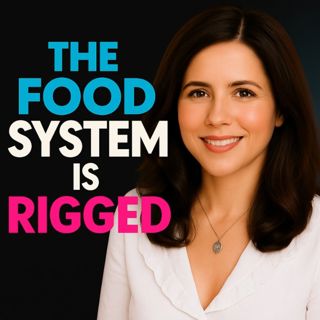

E169: Why Diets Fail: The Hidden Forces Controlling What You Eat - Julia Belluz
El Podcast27 Marras 2025

E169: Why Diets Fail: The Hidden Forces Controlling What You Eat - Julia Belluz

Investigative health journalist Julia Belluz breaks down what really drives obesity and chronic disease—metabolism myths, ultra-processed food, bad incentives, and why our entire food environment is quietly rigged against us.

Guest bio:
Julia Belluz is a Paris-based health and science journalist and co-author of Food Intelligence: The Science of How Food Both Nourishes and Harms Us, written with NIH researcher Dr. Kevin Hall. Over more than a decade reporting for outlets like Vox and The New York Times, she’s become one of the sharpest explainers of nutrition science, chronic disease, and the politics of the global food system.

Topics discussed:

  • The Biggest Loser study: what Kevin Hall actually discovered about extreme weight loss and metabolic slowdown
  • Why “a slow metabolism” is not destiny—and why the biggest losers had the biggest metabolic drops
  • Is a calorie a calorie? Low-carb vs low-fat when calories are controlled
  • Protein “maximization,” the protein appetite, and why excess protein isn’t magic
  • Vitamins, supplements, kidney stones, and the $2T wellness industry
  • The 10,000+ chemicals in the U.S. food supply and the GRAS loophole
  • Ultra-processed foods, added salt/sugar/fat, and the simple math of calorie surplus
  • Food environments vs willpower: why it’s so hard to “eat right” in the U.S.
  • What France gets right on markets, school lunches, and prepared foods
  • Industry funding, NIH underinvestment in nutrition, and government’s failure to regulate
  • Practical strategies: reshaping your home food environment and demanding better policy

Main points:

  • Extreme weight loss = extreme metabolic slowdown
  • Biggest Loser contestants showed huge willpower and lost enormous amounts of weight—but the biggest losers had the largest and most persistent drops in metabolic rate, even six years later.
  • Metabolism followed weight loss; it didn’t cause it. “Slow metabolism” is not a life sentence, and it’s not the main driver of the obesity epidemic.
  • For fat loss, calories still mostly rule
  • When Kevin Hall tightly controls calories in the lab, low-carb vs low-fat leads to almost identical fat loss, with only a trivial edge for low-fat.
  • Macro wars are wildly overstated; total calories and food environment matter far more than whether you’re Team Carbs or Team Fat.
  • Protein is essential, but not a cheat code
  • Humans (and many animals) seem to have a “protein appetite” that keeps intake in a fairly narrow range worldwide.
  • Overshooting that range doesn’t give you free fat loss—you essentially excrete the extra nitrogen and keep the calories.
  • Supplements are often useless—or harmful
  • Routine multivitamins rarely help people who aren’t deficient and can sometimes increase risk.
  • Under-regulated “metabolism boosters” and weight-loss pills are a real source of ER visits and kidney issues.
  • The chemicals loophole is real—and alarming
  • Since 1958, and especially after 1997, U.S. companies have been allowed to classify new food chemicals as “generally recognized as safe” without real FDA oversight, independent review, or even notification.
  • We don’t yet know how much these chemicals contribute to disease, but we already have more than enough evidence to indict excess calories and the salt–sugar–fat trifecta.
  • It’s the food environment, not your moral character
  • Obesity has risen across ages and countries as food environments have shifted—cheap, omnipresent, ultra-processed, aggressively marketed calories.
  • France shows what policy can do: strong school-meal standards, protected fresh markets, and widely available healthy prepared foods all make “the default choice” less toxic.
  • Policy and leadership, not just personal hacks
  • Less than ~5% of NIH funding goes to nutrition research, while industry funding quietly shapes what gets studied.
  • Individual strategies (cooking more, controlling home food, simplifying meals) matter—but large-scale change requires political pressure and better rules of the game.

Top quotes:

  • “The people who lost the most weight on The Biggest Loser ended up with the greatest metabolic slowdown—and that slowdown was still there six years later.”
  • “We don’t need conspiratorial chemicals to explain the obesity epidemic—an endless supply of cheap, ultra-processed food high in salt, sugar, and fat is plenty.”
  • “Obesity is not a mass failure of willpower. It’s what happens when entire populations are dropped into toxic food environments and then told the problem is their character.”

🎙 The Pod is hosted by Jesse Wright
💬 For guest suggestions, questions, or media inquiries, reach out at https://elpodcast.media/
📬 Never miss an episode – subscribe and follow wherever you get your podcasts.
⭐️ If you enjoyed this episode, please rate and review the show. It helps others find us.

Thanks for listening!

Jaksot(186)

E170: Boomers Didn’t Steal Your Future. This Did - Dr. Jennie Bristow

E170: Boomers Didn’t Steal Your Future. This Did - Dr. Jennie Bristow

Sociologist Dr. Jennie Bristow joins Jesse to dismantle “generation wars” rhetoric—especially Boomer-blaming—and re-center the real story: stalled economies, broken higher ed, housing dysfunction, and...

3 Joulu 20251h 10min
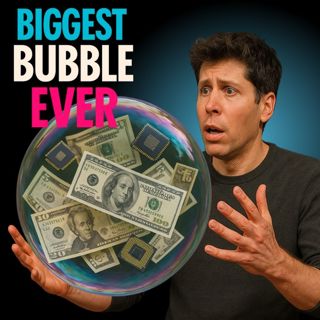
E168: AI - Biggest Bubble in Human History? Tech Economist Says YES

E168: AI - Biggest Bubble in Human History? Tech Economist Says YES

Tech economist Dr. Jeffrey Funk argues that today’s AI boom is the biggest bubble in history—far larger than dot-com or housing—because colossal infrastructure spending is chasing tiny, unprofitable r...

20 Marras 20251h 39min

E167: Nuclear Rockets, AI Agents & Science Hype | RealClear Science’s Ross Pomeroy

E167: Nuclear Rockets, AI Agents & Science Hype | RealClear Science’s Ross Pomeroy

Steven Ross Pomeroy, Chief Editor of RealClearScience, joins the podcast to discuss NASA’s abandoned nuclear propulsion programs, the future of AI and white-collar work, the rise of “scienceploitation...

13 Marras 202539min

E166: Is the Internet Too Big to Moderate? — John Wihbey

E166: Is the Internet Too Big to Moderate? — John Wihbey

A wide-ranging conversation with Northeastern’s John Wihbey on how algorithms, laws, and business models shape speech online—and what smarter, lighter regulation could look like.Guest bio: John Wihbey...

6 Marras 20251h 33min

E165: STUDY Shows NFL Favors the Chiefs — Lead Researcher Explains

E165: STUDY Shows NFL Favors the Chiefs — Lead Researcher Explains

Finance professor Spencer Barnes explains research showing postseason officiating systematically favors the Mahomes-era Chiefs—consistent with subconscious, financially driven “regulatory capture,” no...

1 Marras 20251h 2min

E164: The Real Reason You Can Speak: Explained by Evolutionary Biologist - Dr. Madeleine Beekman

E164: The Real Reason You Can Speak: Explained by Evolutionary Biologist - Dr. Madeleine Beekman

How human babies, big brains, and social life likely forced Homo sapiens to invent precise speech ~150–200k years ago—and what that means for learning, tech, and today’s kids.Guest Bio:Madeleine Beekm...

29 Loka 20251h 10min
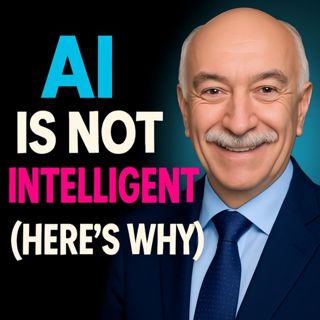
E163: Why AI Still Loses to Humans: Renowned Psychologist Explains - Dr. Gerd Gigerenzer

E163: Why AI Still Loses to Humans: Renowned Psychologist Explains - Dr. Gerd Gigerenzer

A candid conversation with psychologist Gerd Gigerenzer on why human judgment outperforms AI, the “stable world” limits of machine intelligence, and how surveillance capitalism reshapes society.Guest ...

25 Loka 20251h 3min

Suosittua kategoriassa Liike-elämä ja talous

sijotuskasti
mimmit-sijoittaa
psykopodiaa-podcast
rss-rahapodi
pomojen-suusta
rss-rahamania
ostan-asuntoja-podcast
juristipodi
rss-myyntikoulu
rss-seuraava-potilas
rss-draivi
sijoitusovi-podcast
rss-lahtijat
rss-startup-ministerio
herrasmieshakkerit
rahapuhetta
bakkari-tarinoita-tapahtumien-takahuoneista
lakicast
rss-h-asselmoilanen
rss-turha-edes-yrittaa