
Episode #376: Cycle Syncing, Cardio Myths, and Iron Deficiency: A Barbell Medicine Review of Diary of a CEO's Viral Claims

Episode #376: Cycle Syncing, Cardio Myths, and Iron Deficiency: A Barbell Medicine Review of Diary of a CEO's Viral Claims

Cycle Syncing, Cardio Myths, and Iron Deficiency: A Barbell Medicine Review of Viral Claims

Episode Summary: Debunking Women's Health Claims and Setting Optimal Targets

In this in-depth episode, Dr. Jordan Feigenbaum, joined by Dr. Lauren Colenso-Semple and Dr. Austin Baraki, breaks down the viral women's health claims made on a popular podcast, separating misleading mechanistic theory from actionable, evidence-based advice.

They tackle three major topics: the idea that Cycle Syncing is necessary for performance (spoiler: it's not); the confused messaging surrounding HIIT and Zone 2 cardio (consistency is key); and a critical discussion on Iron Deficiency, clarifying why standard lab cutoffs for ferritin are too low and why treating to an optimal target (greater than or equal to 50 ng/mL) is essential for managing fatigue and optimizing exercise performance in women.


⏱️ Episode Timestamps

  • 1:29 I. Cycle Syncing: The Claim and the Mechanistic Logic
  • 18:54 II. Conditioning Confusion: High Intensity, Zone 2, and Zone Definitions
  • 21:10 Polarized vs. Pyramidal Training (Context)
  • 47:08 III. Iron Deficiency: Normalizing Low Ferritin
  • 51:52 Evidence Review: Setting Accurate Ferritin Cutoffs


⭐ Get More Value: Exclusive Content and Resources

Connect with Dr. Lauren Colenso-Semple: @drlaurencs1

Want to support the show and get early, ad-free access to all episodes plus exclusive bonus content? Subscribe to Barbell Medicine Plus and get ad-free listening, product discounts, and more. Try it free for 30-days.

Unsure which training plan is right for you? Take the free Barbell Medicine Template Quiz to be matched with the ideal program for your goals and experience level.

For media, support, or general questions, please contact us at support@barbellmedicine.com


I. Cycle Syncing: Why Consistency Trumps Hormone Status

The Problem with Mechanistic Reductionism

The viral claim that women must systematically adjust their training volume and intensity based on fluctuating hormones (estrogen and progesterone) to optimize performance or avoid harm is based on a reductionist and largely unproven hypothesis. While hormone changes are real, relying solely on mechanistic data (what happens in isolated cells or textbook diagrams) is insufficient, as the complex, interactive nature of human physiology often overrides these single-factor effects.

Dr. Feigenbaum and Dr. Colenso-Semple clarify that no reliable human evidence supports the idea that cycle syncing leads to superior athletic performance or adaptation. The fundamental flaw in the advice is that it confuses a plausible mechanism with a meaningful outcome.


Harm Assessment: The Cost of Inconsistency

The primary harm in cycle syncing is that it leads to missed training opportunities. Adaptation is driven by consistent training load (mechanotransduction), not a temporary hormone profile. Planning to proactively reduce training intensity or volume based on an unproven hormone schedule is detrimental to long-term strength and endurance gains.

Training modifications should be reactive—if a person genuinely feels symptoms of fatigue, pain, or discomfort on a given day (regardless of their cycle status), they should adjust or skip the workout. The advice to only exercise or train hard when you "feel awesome" is inconsistent with the reality of progressive training and often sets unrealistic expectations.


II. Conditioning Confusion: Context is Everything

Debunking Zone 2 and HIIT Extremism

The hosts address the confusing and contradictory advice regarding high-intensity interval training (HIIT) and Zone 2 cardio, particularly the claim that Zone 2 is "bro science" and should be avoided.

The issue lies in a lack of context. The discussion on polarized (80/20) versus pyramidal training only becomes relevant for high-volume endurance athletes (those training for 10+ hours per week) where managing fatigue via intensity distribution is critical.

For the general population—the vast majority of people consuming the viral content—the goal is simple: consistency. Adhering to the minimum physical activity guidelines (150 minutes of moderate or 75 minutes of vigorous activity per week) is the priority. For this audience, almost any combination of volume and intensity works, as long as it is challenging enough and sustainable. The complex debate over intensity distribution is entirely non-actionable for people simply trying to start or maintain an exercise habit.

The advice was non-actionable because it:

  1. Used incorrect zone definitions ("Zone 1 is sitting around").
  2. Failed to integrate high-load resistance training into the cardio recommendation.
  3. Ignored the relationship between training frequency, volume, and total training load.


III. Iron Deficiency: Treating to Optimal Physiology

Normalizing Deficiency: The Problem with Lab Cutoffs

Dr. Baraki addresses the critical issue of Iron Deficiency, emphasizing that many standard laboratory cutoffs for ferritin are misleadingly low. Labs often set the lower limit of "normal" (e.g., 12–15 ng/mL) based on population averages, not optimal physiology. This is problematic because upwards of 50% of young women in these samples may have completely depleted iron stores (non-anemic iron deficiency) due to menstrual blood loss and insufficient dietary intake. By accepting these low limits, the medical system is effectively normalizing deficiency.


Optimal Ferritin Targets and Clinical Management

The consequences of non-anemic iron deficiency include significant symptoms like fatigue, impaired exercise performance, and restless leg syndrome. The body strips iron from other tissues, including muscle, to prioritize red blood cell production, masking the deficiency until it reaches the end stage of anemia.

Clinical guidelines are evolving, recognizing that higher ferritin levels are necessary for optimal health:

  • General Target: A ferritin target of greater than or equal to 50 ng/mL is reasonable for most patients, especially those experiencing fatigue.
  • Restless Leg Syndrome (RLS): A higher target of greater than or equal to 75 ng/mL may be necessary to address RLS, which is strongly linked to low iron stores in the brain.
  • Treatment: Management often involves oral or IV iron supplementation to treat to this optimal target, while also investigating and treating the underlying causes of blood loss or malabsorption.

The idea that we are accepting lower levels due to a "sicker population" is a misconception; in reality, cutoffs are being increased (e.g., American Gastroenterology Association: 45 ng/mL; American Society of Hematology: 50 ng/mL) as clinicians learn more about optimal physiology and the necessity of managing non-anemic iron deficiency.


IV. Conclusion: Core Takeaways

The goal of reviewing this viral content is to provide a vital filter for the public, differentiating between a simple mechanism and an outcome that truly matters to long-term health and training.


  1. Consistency is King: For health, find a training program you can adhere to consistently. Do not let fear of cortisol or unproven hormone matching keep you from moving your body.
  2. Lift Weights: If your goal is to get stronger and improve bone mineral density, you must lift weights.
  3. Address Fatigue: Do not overlook iron deficiency; address fatigue by targeting optimal ferritin levels.


V. Citations


Our Sponsors:
* Check out FIGS and use my code FIGSRX for a great deal: https://wearfigs.com
* Check out Factor: https://factormeals.com/bbm50off
* Check out Quince: https://quince.com/BBM


Support this podcast at — https://redcircle.com/barbell-medicine-podcast/donations

Advertising Inquiries: https://redcircle.com/brands

Privacy & Opt-Out: https://redcircle.com/privacy

Jaksot(418)

Episode #346: Direct To Consumer Lab Testing

Episode #346: Direct To Consumer Lab Testing

In this episode of the Barbell Medicine podcast, Dr. Jordan Feigenbaum and Dr. Austin Baraki delve into the rapidly expanding world of direct-to-consumer lab testing. They discuss the significant grow...

2 Touko 20251h 22min
Episode #345: Hip Pain, What Do? (Assessment, Plan,  and Monitoring)

Episode #345: Hip Pain, What Do? (Assessment, Plan, and Monitoring)

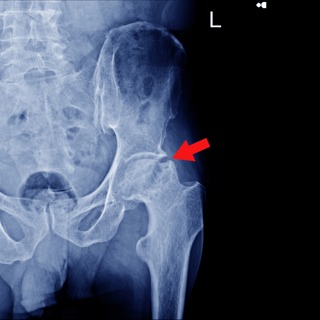
In this episode, Dr. Jordan Feigenbaum and Dr. Derek Miles discuss hip pain, focusing on a personal case of Dr. Feigenbaum's recent injury. They explore the symptoms, diagnosis, and treatment strategi...

25 Huhti 202550min

Episode 344: Man Has A Seizure While Lifting (Mystery Case)

Episode 344: Man Has A Seizure While Lifting (Mystery Case)

In this episode of the Barbell Medicine podcast, Dr. Jordan Feigenbaum and Dr. Austin Baraki delve into a medical mystery case involving a 41-year-old male who experienced a seizure while lifting weig...

18 Huhti 202544min

Episode #343: Rise in Colon Cancer, LDL Elevations, Does Strength=Size, and What Do Doctors Know About Nutrition?

Episode #343: Rise in Colon Cancer, LDL Elevations, Does Strength=Size, and What Do Doctors Know About Nutrition?

In this episode of the Barbell Medicine podcast, Dr. Jordan Feigenbaum and Dr. Austin Baraki discuss the rise of colon cancer, managing elevated LDL levels, micro- and meso-cycle lengths, strength tra...

11 Huhti 202548min

Episode #342: Avoiding DOMS, Sudafed, Food Matrix, and Training on GLP1ra's

Episode #342: Avoiding DOMS, Sudafed, Food Matrix, and Training on GLP1ra's

In this episode of the Barbell Medicine podcast, Dr. Jordan Feigenbaum and Dr. Austin Baraki discuss managing soreness, taking Sudafed while training, the food matrix effect, the impact of resistance ...

4 Huhti 202550min

Episode #341: Irritable Bowel Syndrome (IBS) and Diet, Quack Watch, and More!

Episode #341: Irritable Bowel Syndrome (IBS) and Diet, Quack Watch, and More!

In this episode of The Barbell Medicine Podcast, Drs. Baraki and Feigenbaum discuss a Irritable Bowel Syndrome (IBS), new research, and a new quack watch segment on Dr. Ardis.Papers:Staudacher 2023Har...

28 Maalis 20251h 33min

Episode #340: Woman With Severe Abdominal Pain After Sit-Ups

Episode #340: Woman With Severe Abdominal Pain After Sit-Ups

In this episode of The Barbell Medicine Podcast, Drs. Baraki and Feigenbaum discuss a mystery case of young woman who presents with severe abdominal pain after working out.Case:https://pmc.ncbi.nlm.ni...

21 Maalis 202527min

Episode #339: March 2025 Research Review

Episode #339: March 2025 Research Review

In this episode of The Barbell Medicine Podcast, Drs. Baraki and Feigenbaum review new data on seed oils as well as combining HIIT with lifting weights.https://jamanetwork.com/journals/jamainternalmed...

14 Maalis 20251h 2min

Suosittua kategoriassa Terveys ja hyvinvointi

unicast
tiedenaiset-podcast
rss-pitaisko-erota
psykopodiaa-podcast
vakeva-elama-viisaampi-mieli-vahvempi-keho
voi-hyvin-meditaatiot-2
meditaatiot-suomeksi
rss-pt-paahtio
rss-narsisti
paritellen
rss-hanna-tikander
paaasia-podcast
terapiassa
junnut-pelissa
rss-mighty-finland-podcast
rss-uplevel-by-sonja-hannus
rss-lihavuudesta-podcast
fitnessvastaanotto
rss-sanelunpurku-podcast
rss-ayurglow-harmoninen-elama