

The Epstein Files Fallout Explored With Psychotherapist Shavaun Scott-WEEK IN REVIEW
When the Epstein files go public, the biggest shock won’t be a single name — it will be the realization of how many institutions failed, looked away, or quietly enabled a predator to operate at the highest levels of society. And once that truth lands, America is going to feel something profound: institutional betrayal. In this riveting one-hour discussion, Tony Brueski and psychotherapist Shavaun Scott dig into the psychology of what happens when the public discovers that the systems they trusted were protecting someone like Jeffrey Epstein. Governments. Universities. Financial institutions. Social circles. Even media figures. When the public sees how interconnected it all was, trust fractures — sometimes permanently. Shavaun explains why institutional betrayal wounds deeper than individual harm, why people struggle to process wrongdoing by powerful figures, and why this release may cause a destabilizing but necessary shift in how Americans view power, authority, and accountability. We explore the psychological whiplash of discovering that “the system worked” was a myth. Why people defend public figures out of identity rather than fact. And why denial becomes a survival mechanism when the truth feels too big to accept. Most importantly, we examine what healing could look like — how truth, even painful truth, can be the beginning of a more honest national conversation about abuse, complicity, and institutional decay. This interview isn’t about politics. It’s about psychology. And it’s about what happens when a country finally sees what was in the dark. #HiddenKillers #EpsteinFiles #InstitutionalBetrayal #ShavaunScott #TonyBrueski #TrueCrimeAnalysis #PowerAndAbuse #Psychology #NationalTrauma #MentalHealth Want to comment and watch this podcast as a video? Check out our YouTube Channel. https://www.youtube.com/@hiddenkillerspod Instagram https://www.instagram.com/hiddenkillerspod/ Facebook https://www.facebook.com/hiddenkillerspod/ Tik-Tok https://www.tiktok.com/@hiddenkillerspod X Twitter https://x.com/tonybpod Listen Ad-Free On Apple Podcasts Here: https://podcasts.apple.com/us/podcast/true-crime-today-premium-plus-ad-free-advance-episode/id1705422872
23 Marras 202537min

Inside Donna Adelson’s Mind: How She Justified the Murder Of Dan Markel-WEEK IN REVIEW
How does a grandmother, a former schoolteacher, a woman who spent decades projecting the image of a devoted matriarch, end up at the center of one of the most disturbing family-driven crimes in recent memory? Tonight, we go deep into the psychology behind the Donna Adelson case — not to excuse her actions, but to finally understand the mental scaffolding that allowed her to justify something most people couldn’t even imagine doing. In this episode of Hidden Killers, we break down the narcissistic mindset that shaped Donna’s worldview for decades. We explore the internal story she built, one where her needs were moral law, her fears were prophecy, and her opinions were reality. This is the story of a woman who saw herself not as the architect of destruction, but as the protector of her family — even as every step she took brought that same family closer to ruin. We examine how Donna reframed boundaries as attacks, how she turned conflict into persecution, and how she slowly recast Dan Markel not as a human being but as an obstacle. Through that lens, her choices began to feel “reasonable” — even righteous — inside the distorted logic of a narcissistic mind determined to stay in control at any cost. This episode takes you inside that psychological maze. We expose how self-deception becomes a shield, how entitlement becomes a compass, and how emotional convenience becomes a moral code. Most importantly, we show how a person can move step-by-step from resentment to rationalization to catastrophe — without ever believing they crossed a line. If you’ve ever wondered how someone justifies something so destructive… this is the breakdown you’ve been waiting for. Stay with us. It’s uncomfortable. It’s unsettling. But it explains the world Donna Adelson built — and why it collapsed. #HiddenKillers #DonnaAdelson #DanMarkelCase #TrueCrimeAnalysis #PsychologyBreakdown #CriminalMindset #FamilyCrime #JusticeSystem #NarcissisticAbuse #TrueCrimeCommunity Want to comment and watch this podcast as a video? Check out our YouTube Channel. https://www.youtube.com/@hiddenkillerspod Instagram https://www.instagram.com/hiddenkillerspod/ Facebook https://www.facebook.com/hiddenkillerspod/ Tik-Tok https://www.tiktok.com/@hiddenkillerspod X Twitter https://x.com/tonybpod Listen Ad-Free On Apple Podcasts Here: https://podcasts.apple.com/us/podcast/true-crime-today-premium-plus-ad-free-advance-episode/id1705422872
22 Marras 202519min
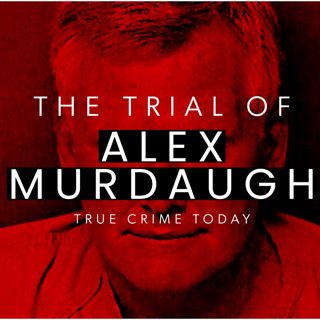
Did Alex Murdaugh Have A Hidden Accomplice? Housekeeper’s NEW Shocking Claim!-WEEK IN REVIEW
In the noise, chaos, and courtroom spectacle of the Murdaugh murders, one voice was never fully heard — and it may be the one that changes how you see this case forever. Blanca Turrubiate-Simpson, the Murdaugh family’s longtime housekeeper, has now broken her silence in a memoir packed with the kind of details only someone inside that home could recognize. And one revelation stands above the rest: Blanca does not believe Alex acted alone. Tonight on Hidden Killers, we go deep into Blanca’s account — not the sanitized version from trial clips or headlines, but the raw observations she lived through the morning after Maggie and Paul were killed. She walks into Moselle expecting grief and chaos. Instead, she finds staging. She finds inconsistencies. She finds details so off-pattern that her instincts, built from fourteen years of working inside that home, start screaming that something else happened here — something larger than the state ever pursued. We explore every anomaly Blanca describes: Maggie’s SUV parked in a place she never parked. Pajamas and underwear laid out in a way Maggie would never prepare them. A kitchen “cleaned” in a way that didn’t match her routines. And later, the infamous Edisto beach towel Blanca had washed that morning — suddenly appearing in Alex’s Suburban on police body cam, then vanishing for good. Then there’s the chilling image she shares of an unfamiliar woman walking through the property after the funerals as if she owned the place. And perhaps most disturbing of all, the fact that Blanca says law enforcement never interviewed her — the one person who understood the difference between routine and staging. In Blanca’s eyes, the murders had one gunman, but the aftermath had more than one set of hands. If you think you already know this case, you need to hear this. #HiddenKillers #TonyBrueski #Murdaugh #AlexMurdaugh #MaggieMurdaugh #PaulMurdaugh #TrueCrime #BlancaSimpson #Moselle #CrimeDocumentary Want to comment and watch this podcast as a video? Check out our YouTube Channel. https://www.youtube.com/@hiddenkillerspod Instagram https://www.instagram.com/hiddenkillerspod/ Facebook https://www.facebook.com/hiddenkillerspod/ Tik-Tok https://www.tiktok.com/@hiddenkillerspod X Twitter https://x.com/tonybpod Listen Ad-Free On Apple Podcasts Here: https://podcasts.apple.com/us/podcast/true-crime-today-premium-plus-ad-free-advance-episode/id1705422872
22 Marras 202521min
Delphi’s Ignored Leads — Why Investigators Dropped the Red Flags-WEEK IN REVIEW
Today, defense attorney Bob Motta and I take a hard look at one of the most troubling aspects of the Delphi murder investigation: the leads that were dismissed, minimized, or never meaningfully followed.The depositions show something the public has never had a clear window into — investigators explaining why certain suspects weren’t pursued, why certain statements didn’t matter, why symbolic elements of the crime scene were ignored, and why potentially exculpatory information was either downplayed or outright forgotten.In this conversation, Bob breaks down how two individuals tied to the Odinism angle — individuals whose behavior should have triggered deeper investigation — were inexplicably filed as “no further action.” One made a disturbing comment about whether his DNA would be found on the girls. The other posted imagery eerily similar to the crime scene and owned a .40-caliber handgun that was never seized or tested. These aren’t fringe details. These are red flags. Massive ones.Yet the investigative record treats them as footnotes.Bob and I go through why leads like these get dropped, how narrative lock affects decision-making, and what happens when the pressure to find “the right suspect” overshadows the obligation to explore every suspect. We cover the symbolic patterns on the girls’ bodies, the missing tree-origin analysis on the sticks, the late disclosure of the Odinism file, and the dissonance between what investigators told the public versus what they swore to in depositions.This isn’t speculation. It’s not theory. It’s the investigators themselves, under oath, explaining why critical evidence was set aside — and whether that decision is now going to haunt the state on appeal.If you want to understand the investigative blind spots in the Delphi case, this is the episode.#Delphi #RichardAllen #TrueCrimeAnalysis #IgnoredEvidence #LegalInsights #DelphiDepositions #CrimeSceneReview #JusticeSystem #HiddenKillers #InvestigativeFailuresWant to comment and watch this podcast as a video?Check out our YouTube Channel. https://www.youtube.com/@hiddenkillerspodInstagram https://www.instagram.com/hiddenkillerspod/Facebook https://www.facebook.com/hiddenkillerspod/Tik-Tok https://www.tiktok.com/@hiddenkillerspodX Twitter https://x.com/tonybpodListen Ad-Free On Apple Podcasts Here: https://podcasts.apple.com/us/podcast/true-crime-today-premium-plus-ad-free-advance-episode/id1705422872
22 Marras 202559min