
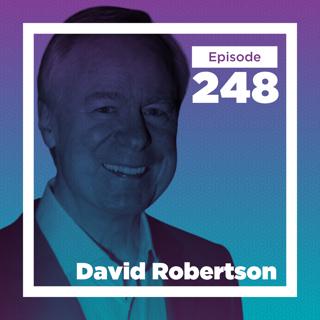
David Robertson on Conducting, Pierre Boulez, and Musical Interpretation
David Robertson is a rare conductor who unites avant-garde complexity with accessibility. After serving as music director of the Ensemble Intercontemporain, Pierre Boulez's storied contemporary-music ensemble, he went on to rejuvenate the St. Louis Symphony. Robertson combines a fearless approach to challenging scores with a deep empathy for audiences. Tyler and David explore Pierre Boulez's centenary and the emotional depths beneath his reputation for severity, whether Boulez is better understood as a surrealist or a serialist composer, the influence of non-Western music like gamelan on Boulez's compositions, the challenge of memorizing contemporary scores, whether Boulez's music still sounds contemporary after decades, where skeptics should start with Boulez, how conductors connect with players during a performance, the management lessons of conducting, which orchestra sections posed Robertson the greatest challenges, how he and other conductors achieve clarity of sound, what conductors should read beyond music books, what Robertson enjoys in popular music, how national audiences differ from others, how Robertson first discovered classical music, why he insists on conducting the 1911 version of Stravinsky's Petrushka rather than the 1947 revision, and more. Read a full transcript enhanced with helpful links, or watch the full video on the new dedicated Conversations with Tyler channel. Recorded March 12th, 2025. Help keep the show ad free by donating today! Other ways to connect Follow us on X and Instagram Follow Tyler on X Sign up for our newsletter Join our Discord Email us: cowenconvos@mercatus.gmu.edu Learn more about Conversations with Tyler and other Mercatus Center podcasts here. Photo Credit: Chris Lee
9 Heinä 59min
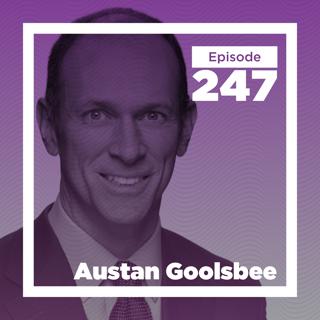
Austan Goolsbee on Central Banking as a Data Dog
Austan Goolsbee is one of Tyler Cowen's favorite economists—not because they always agree, but because Goolsbee embodies what it means to think like an economist. Whether he's analyzing productivity slowdowns in the construction sector, exploring the impact of taxes on digital commerce, or poking holes in overconfident macro narratives, Goolsbee is consistently sharp, skeptical, and curious. A longtime professor at the University of Chicago's Booth School and former chair of the Council of Economic Advisers under President Obama, Goolsbee now brings that intellectual discipline—and a healthy dose of humor—to his role as president of the Federal Reserve Bank of Chicago. Tyler and Austan explore what theoretical frameworks Goolsbee uses for understanding inflation, why he's skeptical of monetary policy rules, whether post-pandemic inflation was mostly from the demand or supply side, the proliferation of stablecoins and shadow banking, housing prices and construction productivity, how microeconomic principles apply to managing a regional Fed bank, whether the structure of the Federal Reserve system should change, AI's role in banking supervision and economic forecasting, stablecoins and CBDCs, AI's productivity potential over the coming decades, his secret to beating Ted Cruz in college debates, and more. Read a full transcript enhanced with helpful links, or watch the full video on the new dedicated Conversations with Tyler channel. Recorded March 3rd, 2025. Help keep the show ad free by donating today! Other ways to connect Follow us on X and Instagram Follow Tyler on X Follow Austan on X Sign up for our newsletter Join our Discord Email us: cowenconvos@mercatus.gmu.edu Learn more about Conversations with Tyler and other Mercatus Center podcasts here.
25 Kesä 58min

Chris Arnade on Walking Cities
Most people who leave Wall Street after twenty years either retire or find another way to make a lot of money. Chris Arnade chose to walk through cities most travelers never truly see. What emerged from this approach is a unique form of street-level sociology that has attracted a devoted following on Substack. Arnade's work suggests that our most sophisticated methods of understanding the world might be missing something essential that can only be discovered by moving slowly through space and letting strangers tell you, their stories. Tyler and Chris discuss how Beijing and Shanghai reveal different forms of authoritarian control through urban design, why Seoul's functional dysfunction makes it more appealing than Tokyo's efficiency, favorite McDonald's locations around the world, the dimensions for properly assessing a city's walkability, what Chris packs for long urban jaunts, why he's not interested in walking the countryside, what travel has taught him about people and culture, what makes the Faroe Islands and El Paso so special, where he has no desire to go, the good and bad of working on Wall Street, the role of pigeons and snapping turtles in his life, finding his 1,000 true fans on Substack, whether museums are interesting, what set him on this current journey, and more. Read a full transcript enhanced with helpful links, or watch the full video on the new dedicated CWT channel. Recorded February 27th, 2025. Help keep the show ad free by donating today! Other ways to connect Follow us on X and Instagram Follow Tyler on X Follow Chris on X Sign up for our newsletter Join our Discord Email us: cowenconvos@mercatus.gmu.edu Learn more about Conversations with Tyler and other Mercatus Center podcasts here. Photo Credit: Bryan Jones
18 Kesä 58min
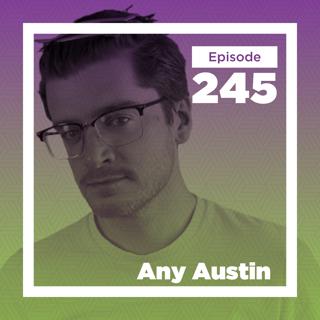
Any Austin on the Hermeneutics of Video Games
Any Austin has carved a unique niche for himself on YouTube: analyzing seemingly mundane or otherwise overlooked details in video games with the seriousness of an art critic examining Renaissance sculptures. With millions of viewers hanging on his every word about fluvial flows in Breath of the Wild or unemployment rates in the towns of Skyrim, Austin has become what Tyler calls "the very best in the world at the hermeneutics of infrastructure within video games." But Austin's deeper mission is teaching us to think analytically about everything we encounter, and to replace gaming culture's obsession with technical specs and comparative analysis with a deeper aesthetic appreciation that asks simply: what are we looking at, and what does it reveal? Tyler and Austin explore the value of the YouTube algorithm, what he notices now about real-world infrastructure, whether he perceives glitches IRL, why AI-generated art is getting less interesting, how the value of historical context differs between artistic forms, an aesthetic abundance agenda for nuclear power, the trajectory of video game quality since the 80s, whether the pace of seminal game releases has slowed, the relative value of commentary to the games themselves, why virtual reality adds nothing meaningful to the gaming experience, what's wrong with most video game analysis, what to eat in New Orleans, Tyler's gaming history, and more. Read a full transcript enhanced with helpful links, or watch the full video on the new dedicated CWT channel. Recorded March 7th, 2025. Help keep the show ad free by donating today! Other ways to connect Follow us on X and Instagram Follow Tyler on X Sign up for our newsletter Join our Discord Email us: cowenconvos@mercatus.gmu.edu Learn more about Conversations with Tyler and other Mercatus Center podcasts here.
11 Kesä 1h 5min
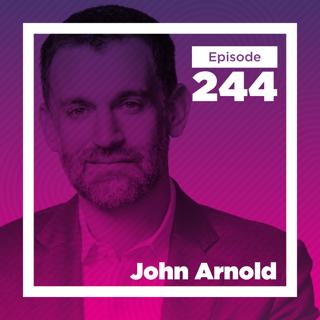
John Arnold on Trading, Energy, and Evidence-Based Philanthropy
John Arnold built his fortune in energy trading by surrounding himself with smart people, maintaining emotional detachment, sensing market imbalances through first-principles analysis, and focusing with laser intensity on a single niche until he dominated it completely. Now he's applying that same analytical rigor to philanthropy, where he's discovered that changing human behavior for the long term proves far more challenging than predicting natural gas prices, and that the academic research meant to guide social policy is often riddled with perverse incentives and poor methodology. Tyler and John discuss his shift from trading to philanthropy and more, including the specific traits that separate great traders from good ones, the tradeoffs of following an "inch wide, mile deep" trading philosophy, why he attended Vanderbilt, the talent culture at Enron, the growth in solar, the problem with Mexico's energy system, where Canada's energy exports will go, the hurdles to next-gen nuclear, how to fix America's tripartite energy grid, how we'll power new data centers, what's best about living in Houston, his approach to collecting art, why trading's easier than philanthropy, how he'd fix tax the US tax code and primary system, and what Arnold Ventures is focusing on next. Read a full transcript enhanced with helpful links, or watch the full video. Recorded April 28th, 2025. Help keep the show ad free by donating today! Other ways to connect Follow us on X and Instagram Follow Tyler on X Follow John on X Sign up for our newsletter Join our Discord Email us: cowenconvos@mercatus.gmu.edu Learn more about Conversations with Tyler and other Mercatus Center podcasts here.
4 Kesä 1h 4min
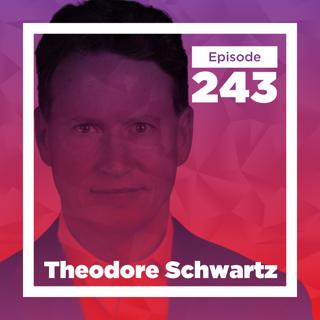
Theodore Schwartz on Neurosurgery, Consciousness, and Brain-Computer Interfaces
Get tickets to the CWT live show at 92NY with David Brooks! Theodore Schwartz stands at the pinnacle of neurosurgical expertise. With over 500 published articles, 200 pieces of commentary, and 5 patents to his name—effectively producing a scholarly work every two weeks for three decades—Schwartz spent most of his career at Weill Cornell Medicine, where he pioneered new minimally-invasive surgical techniques and led the Epilepsy Research Laboratory, among many (many) other things. His recent book Gray Matters: A Biography of Brain Surgery offers readers an insider's view of one of medicine's most demanding specialties. Tyler and Ted discuss how the training for a neurosurgeon could be shortened, the institutional factors preventing AI from helping more in neurosurgery, how to pick a good neurosurgeon, the physical and mental demands of the job, why so few women are currently in the field, whether the brain presents the ultimate bottleneck to radical life extension, why he thinks free will is an illusion, the success of deep brain stimulation as a treatment for neurological conditions, the promise of brain-computer interfaces, what studying epilepsy taught him about human behavior, the biggest bottleneck limiting progress in brain surgery, why he thinks Lee Harvey Oswald acted alone, the Ted Schwartz production function, the new company he's starting, and much more. Read a full transcript enhanced with helpful links, or watch the full video. Recorded January 31st, 2025. Help keep the show ad free by donating today! Other ways to connect Follow us on X and Instagram Follow Tyler on X Follow Theodore on X Sign up for our newsletter Join our Discord Email us: cowenconvos@mercatus.gmu.edu Learn more about Conversations with Tyler and other Mercatus Center podcasts here.
21 Touko 57min
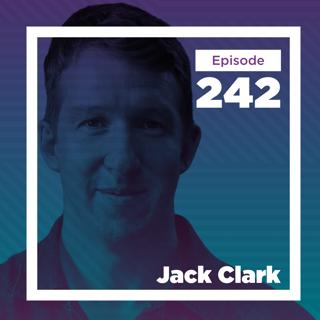
Jack Clark on AI's Uneven Impact
Few understand both the promise and limitations of artificial general intelligence better than Jack Clark, co-founder of Anthropic. With a background in journalism and the humanities that sets him apart in Silicon Valley, Clark offers a refreshingly sober assessment of AI's economic impact—predicting growth of 3-5% rather than the 20-30% touted by techno-optimists—based on his firsthand experience of repeatedly underestimating AI progress while still recognizing the physical world's resistance to digital transformation. In this conversation, Jack and Tyler explore which parts of the economy AGI will affect last, where AI will encounter the strongest legal obstacles, the prospect of AI teddy bears, what AI means for the economics of journalism, how competitive the LLM sector will become, why he's relatively bearish on AI-fueled economic growth, how AI will change American cities, what we'll do with abundant compute, how the law should handle autonomous AI agents, whether we're entering the age of manager nerds, AI consciousness, when we'll be able to speak directly to dolphins, AI and national sovereignty, how the UK and Singapore might position themselves as AI hubs, what Clark hopes to learn next, and much more. Read a full transcript enhanced with helpful links, or watch the full video. Recorded March 28th, 2025. Help keep the show ad free by donating today! Other ways to connect Follow us on X and Instagram Follow Tyler on X Follow Jack on X Sign up for our newsletter Join our Discord Email us: cowenconvos@mercatus.gmu.edu Learn more about Conversations with Tyler and other Mercatus Center podcasts here.
7 Touko 1h 2min
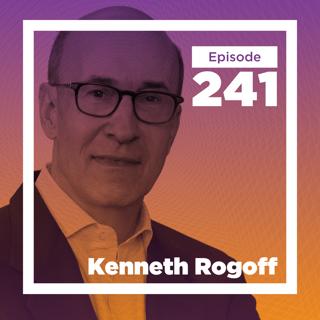
Kenneth Rogoff on Monetary Moves, Fiscal Gambits, and Classical Chess
Harvard economist Kenneth Rogoff approaches global finance with the same strategic foresight that made him a chess grandmaster. Author of the new book Our Dollar, Your Problem, Rogoff doesn't sugarcoat America's future: he foresees a significant inflation shock within a decade, far more severe than the post-COVID bout. When this second wave hits, he warns, "credibility's really going to be shot." In this conversation, Ken and Tyler tackle international economic dynamics, unresolved macro puzzles, the state of chess, and more, including whether trade deficits are truly unsustainable, why China's investment-heavy growth model has reached its limits, how currency depreciation neutralizes tariff effects, Pakistan's IMF bailouts, whether more Latin American countries should dollarize, Japan's deceptively peaceful economic decline, Europe's coming fiscal reckoning, how the US will eventually confront its ballooning debt, the puzzling absence of a recession during our recent disinflation, the potential of phasing out large denomination currency notes, the future relevance of stablecoins, whether America should start a CBDC, Argentina's chances under Milei, who will be the next dominant player in chess, hanging out with Bobby Fischer, drawing out against Magnus Carlsen, and how to save classical chess from excessive computer preparation. Read a full transcript enhanced with helpful links, or watch the full video. Recorded April 2nd, 2025. Help keep the show ad free by donating today! Other ways to connect Follow us on X and Instagram Follow Tyler on X Follow Kenneth on X Sign up for our newsletter Join our Discord Email us: cowenconvos@mercatus.gmu.edu Learn more about Conversations with Tyler and other Mercatus Center podcasts here.
30 Huhti 1h