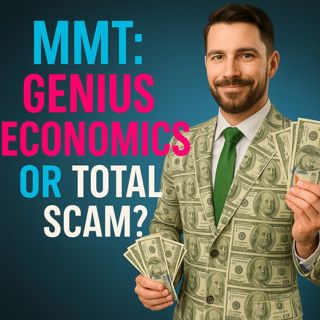

E172: MMT Is Going Mainstream - Right as the AI Bubble Is About to Pop: Explained by Dr. Maggiori
El Podcast9 Joulu 2025

E172: MMT Is Going Mainstream - Right as the AI Bubble Is About to Pop: Explained by Dr. Maggiori

A wide-ranging conversation with economist and AI consultant Dr. Emmanuel Maggiori on why Modern Monetary Theory overpromises a “free lunch,” what really causes inflation, how Bitcoin and AI are misunderstood, and why seductive economic stories are so dangerous.

GUEST BIO:
Emmanuel Maggiori is an armchair economist, computer scientist, and AI consultant based in the UK. Originally from Argentina, he has a PhD (earned in France), works with companies to build AI systems, and writes widely about economics and artificial intelligence. He is the author of several books, including If You Can Just Print Money, Why Do I Pay Taxes? Modern Monetary Theory Distilled and Debunked in Plain English, Smart Until It’s Dumb, and The AI Pocket Guide, and has a large following on LinkedIn and X/Twitter.

TOPICS DISCUSSED:

  • What Modern Monetary Theory (MMT) actually claims
  • How money is created in modern economies (broad money vs reserves)
  • Why MMT’s “taxes don’t fund spending” story is misleading
  • Stephanie Kelton’s accounting error and the “deficit myth”
  • The Cantillon effect and who really pays for money printing
  • Argentina, Venezuela, Zimbabwe, and real-world inflation episodes
  • Javier Milei, austerity, and Argentina’s recent disinflation
  • Government debt, “we owe it to ourselves,” and default via inflation
  • Bitcoin as a supposed solution to monetary problems
  • Who really created Bitcoin and what it’s actually good for
  • The current AI boom, why it’s a bubble on the business side, and unit economics
  • OpenAI, DeepSeek, Nvidia, and why foundational models lack a moat
  • How AI will change the labor market (coders, translators, blue-collar work)
  • AI, Hollywood/TV writing, and the gap between “good enough” and truly excellent work
  • Final cautions about seductive economic theories and AI hype

MAIN POINTS:

  • MMT in a nutshell: MMT says a government with its own currency can always create money to pay for spending and debt, and that taxes exist mainly to control inflation, create demand for the currency, and shape behavior—not to “fund” spending.
  • Accounting problems in MMT: Emmanuel argues that key MMT figures (especially Stephanie Kelton) made basic accounting errors about government bank accounts and money aggregates like M1, then papered over them with exceptions (e.g., temporary overdrafts at central banks).
  • Why taxes really matter: Even if a government could print money, in practice you need taxes before spending because the Treasury’s accounts can’t just go endlessly negative—and politically, raising taxes fast enough to control inflation is extremely unlikely.
  • Cantillon effect & asset swaps: Paying off debt with newly created money is not a harmless “asset swap.” It channels new money first to financial institutions, inflates asset prices and credit, and ultimately erodes the real value of ordinary people’s cash savings.
  • Real-world inflation is not an accident: In cases like Argentina, Venezuela, Zimbabwe, or Weimar Germany, there were real triggers (droughts, war reparations, commodity shocks), but the hyperinflation came from repeated resort to money printing as the default response.
  • Argentina as a warning: Emmanuel’s personal experiences—suitcases of cash for a normal dinner, unusable mortgages, dollarized house purchases—illustrate how chronic money printing and price controls destroy trust, planning, and basic economic functioning.
  • Javier Milei & austerity: Milei sharply cut deficits and money printing; inflation has fallen quickly. Critics say it’s just recession-driven demand collapse, but Emmanuel notes history shows disinflation often follows when governments stop printing and cut spending.
  • Debt and “we owe it to ourselves”: Government debt is a real intertemporal deal: some people give up current consumption so the state can use resources now, in exchange for more consumption later. Unexpected inflation is an economic default on those savers.
  • Bitcoin skepticism: Bitcoin solves a fascinating technical problem (a decentralized, hard-to-alter ledger), but Emmanuel questions its use as a stable store of value (because of huge volatility) and notes there are other ways to protect savings (equities, etc.).
  • AI bubble dynamics: AI as a technology is here to stay and genuinely useful, but foundational model providers have thin or no moats—methods are public, competitors catch up, and models become commodities competing on price with brutal compute costs.
  • Nvidia and the “shovel sellers”: Chip makers selling GPUs may fare better than model labs, but there are worrying signs (like unsold inventory) that they may be over-producing “shovels” for a gold rush that can’t all pay off.
  • AI startups on top of models: Most AI-powered apps (wrappers for therapy, yoga, productivity, etc.) have almost no defensible edge. Anyone can build similar products, so profits will be squeezed and many will fail.
  • Work & careers in the AI age: He wouldn’t steer a kid away from computer science—but urges them to be at the intersection of business and tech, not just a narrow coder. Routine “good enough” work (like basic translation) is more at risk than high-end, high-touch work.
  • Blue-collar and “boring” businesses: Physical, unsexy businesses (plumbing, soundproofing, trades) look very robust and lucrative; in London, plumbers often bill more than many white-collar professionals.
  • AI as an imitator, not an oracle: Large models are brilliant imitators trained on oceans of human text (Reddit, etc.), not machines designed for truth. They’ll keep sounding confident and sometimes being wrong.

TOP 3 QUOTES:

  • “MMT is like a theory that promises you a free lunch—and even MMT economists themselves use the phrase ‘free lunch.’ If it sounds like that, you should be very suspicious.”
  • “All these rules that stop governments from just printing money exist for a reason: we do not trust politicians with a blank check on the public purse.”
  • “AI is an incredible imitator. It’s trained on a massive pile of human text, and it’s very good at sounding right—but that doesn’t mean it’s true, or high-end work, or that it understands what it’s saying.”

🎙 The Pod is hosted by Jesse Wright
💬 For guest suggestions, questions, or media inquiries, reach out at https://elpodcast.media/
📬 Never miss an episode – subscribe and follow wherever you get your podcasts.
⭐️ If you enjoyed this episode, please rate and review the show. It helps others find us.

Thanks for listening!

Jaksot(186)

E170: Boomers Didn’t Steal Your Future. This Did - Dr. Jennie Bristow

E170: Boomers Didn’t Steal Your Future. This Did - Dr. Jennie Bristow

Sociologist Dr. Jennie Bristow joins Jesse to dismantle “generation wars” rhetoric—especially Boomer-blaming—and re-center the real story: stalled economies, broken higher ed, housing dysfunction, and...

3 Joulu 20251h 10min

E169: Why Diets Fail: The Hidden Forces Controlling What You Eat - Julia Belluz

E169: Why Diets Fail: The Hidden Forces Controlling What You Eat - Julia Belluz

Investigative health journalist Julia Belluz breaks down what really drives obesity and chronic disease—metabolism myths, ultra-processed food, bad incentives, and why our entire food environment is q...

27 Marras 202544min

E168: AI - Biggest Bubble in Human History? Tech Economist Says YES

E168: AI - Biggest Bubble in Human History? Tech Economist Says YES

Tech economist Dr. Jeffrey Funk argues that today’s AI boom is the biggest bubble in history—far larger than dot-com or housing—because colossal infrastructure spending is chasing tiny, unprofitable r...

20 Marras 20251h 39min

E167: Nuclear Rockets, AI Agents & Science Hype | RealClear Science’s Ross Pomeroy

E167: Nuclear Rockets, AI Agents & Science Hype | RealClear Science’s Ross Pomeroy

Steven Ross Pomeroy, Chief Editor of RealClearScience, joins the podcast to discuss NASA’s abandoned nuclear propulsion programs, the future of AI and white-collar work, the rise of “scienceploitation...

13 Marras 202539min

E166: Is the Internet Too Big to Moderate? — John Wihbey

E166: Is the Internet Too Big to Moderate? — John Wihbey

A wide-ranging conversation with Northeastern’s John Wihbey on how algorithms, laws, and business models shape speech online—and what smarter, lighter regulation could look like.Guest bio: John Wihbey...

6 Marras 20251h 33min

E165: STUDY Shows NFL Favors the Chiefs — Lead Researcher Explains

E165: STUDY Shows NFL Favors the Chiefs — Lead Researcher Explains

Finance professor Spencer Barnes explains research showing postseason officiating systematically favors the Mahomes-era Chiefs—consistent with subconscious, financially driven “regulatory capture,” no...

1 Marras 20251h 2min
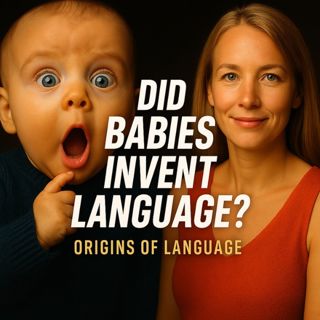
E164: The Real Reason You Can Speak: Explained by Evolutionary Biologist - Dr. Madeleine Beekman

E164: The Real Reason You Can Speak: Explained by Evolutionary Biologist - Dr. Madeleine Beekman

How human babies, big brains, and social life likely forced Homo sapiens to invent precise speech ~150–200k years ago—and what that means for learning, tech, and today’s kids.Guest Bio:Madeleine Beekm...

29 Loka 20251h 10min
E163: Why AI Still Loses to Humans: Renowned Psychologist Explains - Dr. Gerd Gigerenzer

E163: Why AI Still Loses to Humans: Renowned Psychologist Explains - Dr. Gerd Gigerenzer

A candid conversation with psychologist Gerd Gigerenzer on why human judgment outperforms AI, the “stable world” limits of machine intelligence, and how surveillance capitalism reshapes society.Guest ...

25 Loka 20251h 3min

Suosittua kategoriassa Liike-elämä ja talous

sijotuskasti
mimmit-sijoittaa
psykopodiaa-podcast
rss-rahapodi
pomojen-suusta
rss-rahamania
ostan-asuntoja-podcast
juristipodi
rss-myyntikoulu
rss-seuraava-potilas
rss-draivi
sijoitusovi-podcast
rss-lahtijat
rss-startup-ministerio
herrasmieshakkerit
rahapuhetta
bakkari-tarinoita-tapahtumien-takahuoneista
lakicast
rss-h-asselmoilanen
rss-turha-edes-yrittaa