#202 A Few Lessons From Warren Buffett
Founders2 Syys 2021

#202 A Few Lessons From Warren Buffett

What I learned from reading A Few Lessons for Investors and Managers From Warren Buffett by Warren Buffett and Peter Bevelin. ---- Founders Notes gives you the ability to tap into the collective knowledge of history's greatest entrepreneurs on demand. Use it to supplement the decisions you make in your work. Get access to Founders Notes here. ---- Big opportunities come infrequently. When it’s raining gold, reach for a bucket, not a thimble.Speculation is most dangerous when it looks easiest.Now it is a funny thing about life; if you refuse to accept anything but the best you very often get it. —W. Somerset Maugham"Moats" —a metaphor for the superiorities they possess that make life difficult for their competitors. Business history is filled with "Roman Candles," companies whose moats proved illusory and were soon crossed.When a company is selling a product with commodity-like economic characteristics, being the low-cost producer is all-important.In a business selling a commodity-type product, it's impossible to be a lot smarter than your dumbest competitor.As a wise friend told me long ago, "If you want to get a reputation as a good businessman, be sure to get into a good business."The truly big investment idea can usually be explained in a short paragraph.Our managers have produced extraordinary results by doing rather ordinary things—but doing them exceptionally well.If we are delighting customers, eliminating unnecessary costs and improving our products and services, we gain strength.On a daily basis, the effects of our actions are imperceptible; cumulatively, though, their consequences are enormous. When our long-term competitive position improves as a result of these almost unnoticeable actions, we describe the phenomenon as "widening the moat."We always, of course, hope to earn more money in the short-term. But when short-term and long-term conflict, widening the moat must take precedence.Charlie and I are not big fans of resumes. Instead, we focus on brains, passion and integrity.It's difficult to teach a new dog old tricks.Investors should understand that for certain companies, and even for some industries, there simply is no good long-term strategy.Most of our directors have a major portion of their net worth invested in the company. We eat our own cooking.Our trust is in people rather than process. A “hire well, manage little" code suits both them and me.Just run your business as if: (1) You own 100% of it; (2) It is the only asset in the world that you and your family have or will ever have; and (3) You can't sell it for at least a century.We believe in Charlie's dictum-“Just tell me the bad news; the good news will take care of itself".We do have a few advantages, perhaps the greatest being that we don't have a strategic plan. Thus we feel no need to proceed in an ordained direction but can instead simply decide what makes sense for our owners.We always mentally compare any move we are contemplating with dozens of other opportunities open to us. Our practice of making this comparison- acquisitions against passive investments –-is a discipline that managers focused simply on expansion seldom use.We have no master strategy, no corporate planners delivering us insights about socioeconomic trends, and no staff to investigate a multitude of ideas presented by promoters and intermediaries. Instead, we simply hope that something sensible comes along-and, when it does, we act.Loss of focus is what most worries Charlie and me.Charlie and I know that the right players will make almost any team manager look good. We subscribe to the philosophy of Ogilvy & Mather's founding genius, David Ogilvy: “If each of us hires people who are smaller than we are, we shall become a company of dwarfs. But, if each of us hires people who are bigger than we are, we shall become a company of giants."Our experience has been that the manager of an already high-cost operation frequently is uncommonly resourceful in finding new ways to add to overhead, while the manager of a tightly-run operation usually continues to find additional methods to curtail costs, even when his costs are already well below those of his competitors.A compact organization lets all of us spend our time managing the business rather than managing each other.Thirty years ago Tom Murphy, then CEO of Cap Cities, drove this point home to me with a hypothetical tale about an employee who asked his boss for permission to hire an assistant. The employee assumed that adding $20,000 to the annual payroll would be inconsequential. But his boss told him the proposal should be evaluated as a $3 million decision, given that an additional person would probably cost at least that amount over his lifetime, factoring in raises, benefits and other expenses (more people, more toilet paper). And unless the company fell on very hard times, the employee added would be unlikely to be dismissed, however marginal his contribution to the business.In both business and investments it is usually far more profitable to simply stick with the easy and obvious than it is to resolve the difficult.The most elusive of human goals- keeping things simple and remembering what you set out to do.Stay with simple propositions.Nothing sedates rationality like large doses of effortless money.Tomorrow is always uncertain.The less the prudence with which others conduct their affairs, the greater the prudence with which we should conduct our own affairs.In allocating capital, activity does not correlate with achievement.The roads of business are riddled with potholes; a plan that requires dodging them all is a plan for disaster.Unquestionably, some people have become very rich through the use of borrowed money. However, that's also been a way to get very poor.The trick is to learn most lessons from the experiences of others.When a problem exists, whether in personnel or in business operations, the time to act is now. ---- Founders Notes gives you the ability to tap into the collective knowledge of history's greatest entrepreneurs on demand. Use it to supplement the decisions you make in your work. Get access to Founders Notes here. ---- “I have listened to every episode released and look forward to every episode that comes out. The only criticism I would have is that after each podcast I usually want to buy the book because I am interested so my poor wallet suffers. ” — Gareth Be like Gareth. Buy a book: All the books featured on Founders Podcast

Jaksot(436)

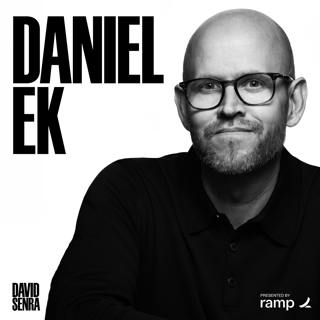
My conversation with Daniel Ek: Founder of Spotify

My conversation with Daniel Ek: Founder of Spotify

I started a new show so I can have long-form conversations with the greatest living founders. You can watch on Spotify, Apple Podcasts, YouTube, X, or the web.  The new show is on a separate feed so ...

28 Syys 20252h 9min

#401 How Bill Gates Works

#401 How Bill Gates Works

This episode is about Bill Gates' obsessive drive and hardcore work ethic. Bill Gates had the rarest entrepreneurial talent—the ability to see the leverage point in a new industry, seize it with relen...

24 Syys 20251h 8min

#400 The Stubborn Genius of James Dyson

#400 The Stubborn Genius of James Dyson

This episode covers the extreme perseverance and the stubborn genius of James Dyson. Dyson has a business philosophy which is very different from anything you might have encountered before. A philos...

12 Syys 20251h 13min

#399 How Elon Works

#399 How Elon Works

This episode covers the insanely valuable company-building principles of Elon Musk—and nothing else. I spent well over 60 hours reading (and rereading) the biography of Elon Musk written by Walter Is...

25 Elo 20251h 33min

#398 Steve Jobs In His Own Words (Make Something Wonderful)

#398 Steve Jobs In His Own Words (Make Something Wonderful)

A curated collection of Steve’s speeches, interviews, and correspondence, Make Something Wonderful offers a window into how one of the world’s most creative entrepreneurs approached his life and work....

14 Elo 20252h 1min

#397 Jiro Ono: Simplicity Is The Ultimate Advantage

#397 Jiro Ono: Simplicity Is The Ultimate Advantage

Jiro Ono is the greatest living sushi chef. He was kicked out his house when he was 9. He started working in a restaurant so he wouldn't have to sleep under a bridge. He never stopped. Over his 75 ye...

4 Elo 202541min

#396 The Obsession of Enzo Ferrari

#396 The Obsession of Enzo Ferrari

I've read hundreds of thousands of words about Enzo Ferrari. For this episode I distilled down his most important ideas into 1 hour. Ferrari was truly one of history's greatest obsessives. Episode sp...

30 Heinä 202557min

#395 How Geniuses and Speed Freaks Reengineered F1 into the World's Fastest-Growing Sport

#395 How Geniuses and Speed Freaks Reengineered F1 into the World's Fastest-Growing Sport

Those on the margins often come to control the center. That maxim ties together the three remarkable people profiled in this episode: Colin Chapman, known as “the mad scientist of F1”, did more to in...

22 Heinä 20251h 4min

Suosittua kategoriassa Liike-elämä ja talous

sijotuskasti
psykopodiaa-podcast
rss-rahapodi
mimmit-sijoittaa
rss-lahtijat
rahapuhetta
rss-porssipuhetta
rss-neuvottelija-sami-miettinen
rss-rahamania
rss-paasipodi
rss-porssipodi
ostan-asuntoja-podcast
oppimisen-psykologia
rss-strategian-seurassa
rss-h-asselmoilanen
rss-bisnesta-bebeja
rss-merja-mahkan-rahat
rss-inderes
rss-40-ajatusta-aanesta
rss-draivi