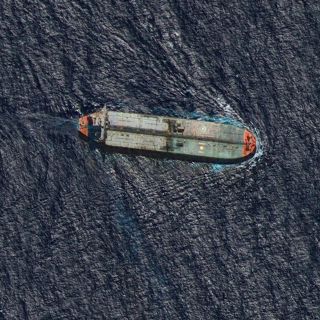


Biden’s Climate Shift
On the campaign trail and when he first came to office, President Biden had ambitious plans to deal with climate change, including promises to reduce fossil fuel production. Since the start of the war in Ukraine, however, Mr. Biden has largely stopped making the case for these plans, instead turning his focus to pumping as much oil and gas as possible. What is behind the president’s retreat on climate?Guest: Coral Davenport, an energy and environmental policy correspondent for The New York Times.Want more from The Daily? For one big idea on the news each week from our team, subscribe to our newsletter. Background reading: Rising costs at the pump, war in Ukraine, an emboldened fossil fuel industry and stalled legislation have imperiled President Joe Biden’s climate agenda.For more information on today’s episode, visit nytimes.com/thedaily. Transcripts of each episode will be made available by the next workday. Subscribe today at nytimes.com/podcasts or on Apple Podcasts and Spotify. You can also subscribe via your favorite podcast app here https://www.nytimes.com/activate-access/audio?source=podcatcher. For more podcasts and narrated articles, download The New York Times app at nytimes.com/app.
12 Huhti 202222min
How Two Friends Beat Amazon and Built a Union
This episode contains strong language. A year and a half ago, the Times journalists Jodi Kantor and Karen Weise began examining labor practices at Amazon.In the process, they met Christian Smalls and Derrick Palmer, two Amazon workers at a warehouse in New York, who had embarked on an improbable attempt to create the company’s first union. Last week, they did it.We sat down Mr. Smalls and Mr. Palmer to ask them how it happened.Guest: Jodi Kantor, an investigative reporter for The New York Times; and Christian Smalls and Derrick Palmer, warehouse workers who led the first successful unionization attempt at Amazon. Want more from The Daily? For one big idea on the news each week from our team, subscribe to our newsletter. Background reading: How Christian Smalls and Derrick Palmer won the first successful unionization effort at any Amazon warehouse in the United States, potentially one of the most significant labor victories in a generation. For more information on today’s episode, visit nytimes.com/thedaily. Transcripts of each episode will be made available by the next workday. Subscribe today at nytimes.com/podcasts or on Apple Podcasts and Spotify. You can also subscribe via your favorite podcast app here https://www.nytimes.com/activate-access/audio?source=podcatcher. For more podcasts and narrated articles, download The New York Times app at nytimes.com/app.
11 Huhti 202254min
The Sunday Read: ‘The Battle for the Mural — and the Future of Belarus’
For more than two decades, Belarus existed in an equilibrium of quiet authoritarianism. If the government’s repressions didn’t directly touch them, most Belarusians tolerated them. But over the course of 2020, the country’s history and identity, which never much interested a majority of people who lived there, became something they would sacrifice their lives for.Sarah A. Topol explores the battle over a political mural in a public park in Minsk and considers the future of Belarus. As a remarkable campaign of defiance against an increasingly totalitarian regime, the mural is an emblem of strength and a call for change — but to what end?This story was written by Sarah A. Topol and recorded by Audm. To hear more audio stories from publications like The New York Times, download Audm for iPhone or Android. Subscribe today at nytimes.com/podcasts or on Apple Podcasts and Spotify. You can also subscribe via your favorite podcast app here https://www.nytimes.com/activate-access/audio?source=podcatcher. For more podcasts and narrated articles, download The New York Times app at nytimes.com/app.
10 Huhti 20221h 52min
How Germany’s Approach to Russia Backfired
Thirty years ago, Germany put forth a theory for how to work with Russia. Major energy deals, leaders argued, would keep Russia from going to war with its neighbors.Over the past 20 years, Germany has made itself incredibly dependent on Russian gas. The war in Ukraine has complicated that relationship and has shown how Germany’s approach to Russia has not only failed, but also backfired.Guest: Katrin Bennhold, the Berlin bureau chief for The New York Times.Want more from The Daily? For one big idea on the news each week from our team, subscribe to our newsletter. Background reading: Germany, dependent on Russian gas, has so far refused to cut off President Vladimir V. Putin, whose war it is effectively subsidizing to the tune of some $220 million in energy payments a day.Under increasing pressure to sever the country’s reliance on Russian energy, German officials must contend with deeply rooted economic ties. For more information on today’s episode, visit nytimes.com/thedaily. Transcripts of each episode will be made available by the next workday. Subscribe today at nytimes.com/podcasts or on Apple Podcasts and Spotify. You can also subscribe via your favorite podcast app here https://www.nytimes.com/activate-access/audio?source=podcatcher. For more podcasts and narrated articles, download The New York Times app at nytimes.com/app.
8 Huhti 202229min
A Covid Mystery in Africa
As countries have struggled with disease and death throughout the coronavirus pandemic, one part of the world seems to have been mostly spared: central and western Africa.South Africa was deeply affected by waves of the coronavirus, as were countries in East Africa like Kenya and Uganda. But nations in the center and west of the continent appear to have been largely spared.What is behind these low case and death rates — and what does that tell us about the future of the pandemic?Guest: Stephanie Nolen, a global health reporter for The New York Times.Want more from The Daily? For one big idea on the news each week from our team, subscribe to our newsletter. Background reading: The coronavirus was expected to devastate Africa, but higher-income and better-prepared countries appear to have fared far worse.For more information on today’s episode, visit nytimes.com/thedaily. Transcripts of each episode will be made available by the next workday. Subscribe today at nytimes.com/podcasts or on Apple Podcasts and Spotify. You can also subscribe via your favorite podcast app here https://www.nytimes.com/activate-access/audio?source=podcatcher. For more podcasts and narrated articles, download The New York Times app at nytimes.com/app.
7 Huhti 202230min
Why Proving War Crimes Is Difficult and Rare
This episode details graphic scenes. Many around the world are calling the indiscriminate attacks on civilians in Bucha, a suburb northwest of the Ukrainian capital, Kyiv, a war crime.But investigating such atrocities is painstakingly complicated. Could one case that resulted in convictions — the genocide in Bosnia in the 1990s — offer lessons on how to proceed?Guest: Roger Cohen, the Paris bureau chief for The New York Times.Want more from The Daily? For one big idea on the news each week from our team, subscribe to our newsletter. Background reading: With Russian forces retreating, Ukrainians in Bucha are finding scores of bodies in yards and on the roads amid mounting evidence of intentional and indiscriminate killings.The images from Bucha spurred Western leaders to promise even tougher sanctions against Russia.For more information on today’s episode, visit nytimes.com/thedaily. Transcripts of each episode will be made available by the next workday. Subscribe today at nytimes.com/podcasts or on Apple Podcasts and Spotify. You can also subscribe via your favorite podcast app here https://www.nytimes.com/activate-access/audio?source=podcatcher. For more podcasts and narrated articles, download The New York Times app at nytimes.com/app.
6 Huhti 202232min
How the War in Ukraine is Creating a Global Food Crisis
Ukraine and Russia are enormous producers of wheat, corn, barley, sunflower oil and fertilizer. One study calculated that the two countries accounted for 12 percent of the world’s calories.With Ukraine under attack and Russia hit with strict sanctions, a huge supply of food is suddenly trapped — with Africa and the Middle East particularly imperiled.Guest: Jack Nicas, the Brazil bureau chief for The New York Times.Want more from The Daily? For one big idea on the news each week from our team, subscribe to our newsletter. Background reading: An increase in world hunger could be one of the repercussions of the war in Ukraine.For more information on today’s episode, visit nytimes.com/thedaily. Transcripts of each episode will be made available by the next workday. Subscribe today at nytimes.com/podcasts or on Apple Podcasts and Spotify. You can also subscribe via your favorite podcast app here https://www.nytimes.com/activate-access/audio?source=podcatcher. For more podcasts and narrated articles, download The New York Times app at nytimes.com/app.
5 Huhti 202221min
‘The Illegality of the Plan Was Obvious’
After months of investigation by a congressional committee, a federal judge has found that President Donald J. Trump and his allies most likely engaged in illegal activity in the wake of the 2020 election.How did the committee achieve that ruling?Guest: Luke Broadwater, a congressional reporter for The New York Times.Have you lost a loved one during the pandemic? The Daily is working on a special episode memorializing those we have lost to the coronavirus. If you would like to share their name on the episode, please RECORD A VOICE MEMO and send it to us at thedaily@nytimes.com. You can find more information and specific instructions here.Background reading: The judge’s comments in the civil case of a lawyer, John Eastman, who advised Mr. Trump, marked a significant breakthrough for the House committee.The ruling does not necessarily mean that a prosecution would arrive at the same conclusion. Here’s an explanation.Want more from The Daily? For one big idea on the news each week from our team, subscribe to our newsletter. For more information on today’s episode, visit nytimes.com/thedaily. Transcripts of each episode will be made available by the next workday. Subscribe today at nytimes.com/podcasts or on Apple Podcasts and Spotify. You can also subscribe via your favorite podcast app here https://www.nytimes.com/activate-access/audio?source=podcatcher. For more podcasts and narrated articles, download The New York Times app at nytimes.com/app.
4 Huhti 202224min