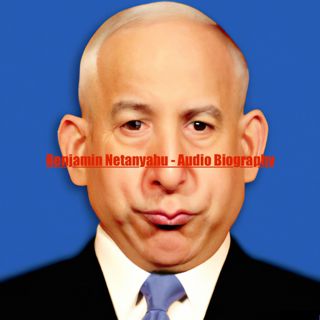
Netanyahu Under Fire: Gaza Hospital Strike Ignites Global Outrage

Netanyahu Under Fire: Gaza Hospital Strike Ignites Global Outrage

Benjamin Netanyahu BioSnap a weekly updated Biography.

Benjamin Netanyahu has been dominating headlines this week with a series of major developments reverberating both within Israel and internationally. According to SBS News and the New York Times, he addressed the world with a statement of deep regret following a deadly Israeli strike on the Nasser Hospital in Gaza that killed at least 20 people, including five journalists. Netanyahu called it a tragic mishap and confirmed the Israel Defense Forces would investigate the incident, while leading global media organizations demanded clearer explanations regarding the targeting of a location granted protection under international law. This hospital strike and Netanyahu’s response have triggered renewed international condemnation from both Western governments and the United Nations, reigniting debate about Israel’s conduct in the ongoing Gaza offensive.

On the broader war strategy, Netanyahu has steadfastly rejected calls to halt Israel’s military campaign. In recent high-profile interviews, such as with Sky News Australia, he reaffirmed that Israel will continue its operations in Gaza, stressing the necessity of military pressure to secure the release of hostages still being held and the eradication of Hamas. According to the Arab Center Washington DC, Netanyahu doubled down earlier this month on his long-term vision for Gaza, explicitly ruling out governance by either Hamas or the West Bank-based Palestinian Authority, and suggested instead a new regional or international administration after the conflict. His approach, described as uncompromising, has fueled sharp criticism at home and abroad, especially from the families of hostages and opposition figures who question his commitment to negotiating a release.

Turning north, Netanyahu made waves by announcing Israel’s readiness to scale back its presence in Lebanon should the Lebanese government disarm Hezbollah, stating that reciprocal Israeli measures would follow any Lebanese action. This came after meetings with senior US officials and drew cautious optimism from some corners, though Hezbollah leadership threatened civil unrest if the disarmament plan proceeds before Israel withdraws completely from southern Lebanon. The Jerusalem Post, Foundation for Defense of Democracies, and Instagram reports all noted the sensitive back-and-forth and the heightened tensions along the northern border.

On the public engagement front, Netanyahu has been vocal about the influence of social media, recently claiming in comments widely shared on Instagram that social media is damaging Israeli society and complicating national security, as criticism of his government’s transparency and decision-making has intensified. Social media has also amplified voices both defending and attacking his position on the Gaza war and the latest hospital tragedy, making Netanyahu a focal point for global debate and protest.

Beyond the official narrative, there are persistent questions and political intrigue swirling around possible ceasefire negotiations, the viability of Israel’s hostage policy, and even Netanyahu’s own domestic standing, as protests against his government’s handling of the war and crisis management continue across Israeli cities. While much speculation continues, what remains clear is Netanyahu’s determination to maintain Israel’s current course—and the international scrutiny that follows his every move.

Get the best deals https://amzn.to/3ODvOta

This content was created in partnership and with the help of Artificial Intelligence AI

Jaksot(49)

Benjamin Netanyahu - Audio Biography

Benjamin Netanyahu - Audio Biography

Benjamin Netanyahu is an Israeli politician who has served as Prime Minister of Israel on five separate occasions, making him the longest-serving Prime Minister in Israeli history. He is also the leader of the Likud party, a right-wing political party. Early Life and Education Netanyahu was born in Tel Aviv, Israel, on October 21, 1949. His father, Benzion Netanyahu, was a historian and Zionist activist, and his mother, Zehava Netanyahu, was a translator and educator. Netanyahu's family moved to the United States when he was six years old, and he grew up in Philadelphia and New York City. Netanyahu returned to Israel in 1967 to join the Israel Defense Forces. He served in the Sayeret Matkal, an elite special forces unit, and took part in several military operations. After his military service, Netanyahu studied architecture and political science at the Massachusetts Institute of Technology (MIT). Political Career Netanyahu began his political career in the 1970s as an advisor to several Israeli Prime Ministers. He was elected to the Knesset, the Israeli Parliament, in 1988, and he has served in various ministerial positions, including Deputy Prime Minister, Minister of Finance, and Minister of Foreign Affairs. Netanyahu was first elected Prime Minister in 1996. He served one term before being defeated by Ehud Barak in 1999. Netanyahu returned to office as Prime Minister in 2009, and he has served in that position ever since. He is the first Israeli Prime Minister to be elected to a third consecutive term. Political Views Netanyahu is a right-wing politician who is known for his hawkish views on security. He is a strong supporter of Israeli settlements in the occupied Palestinian territories, and he has opposed the creation of a Palestinian state. Netanyahu has also been critical of the Iran nuclear deal, and he has called for tougher sanctions on Iran. Current Crisis Netanyahu is currently facing a number of challenges, including a criminal corruption investigation, a series of protests against his government, and a new coalition government that is seeking to replace him. In 2019, Netanyahu was indicted on charges of bribery, fraud, and breach of trust. He has denied all wrongdoing, and the trial is still ongoing. In 2021, Israel was rocked by a series of protests against Netanyahu's government. The protests were sparked by a number of factors, including the government's handling of the COVID-19 pandemic, its economic policies, and its corruption scandals. In 2023, a new coalition government was formed in Israel. The coalition government is composed of eight parties, including the centrist Yesh Atid party, the right-wing Yamina party, and the Arab-Israeli Ra'am party. The coalition government is seeking to replace Netanyahu as Prime Minister. Legacy Netanyahu is a controversial figure, but there is no doubt that he has had a major impact on Israeli politics. He is a skilled politician who has been able to maintain his grip on power for a long time. However, he is also facing a number of challenges, and it remains to be seen whether he will be able to maintain his position as Prime Minister. Thanks for listening to Quiet Please. Remember to like and share wherever you get your podcasts.This content was created in partnership and with the help of Artificial Intelligence AI

29 Marras 20233min

Suosittua kategoriassa Politiikka ja uutiset

aikalisa
rss-ootsa-kuullut-tasta
ootsa-kuullut-tasta-2
tervo-halme
rss-vaalirankkurit-podcast
et-sa-noin-voi-sanoo-esittaa
rss-kuka-mina-olen
rss-podme-livebox
politiikan-puskaradio
otetaan-yhdet
rikosmyytit
rss-merja-mahkan-rahat
aihe
viisupodi
rss-hyvaa-huomenta-bryssel
rss-raha-talous-ja-politiikka
rss-tasta-on-kyse-ivan-puopolo-verkkouutiset
rss-50100-podcast