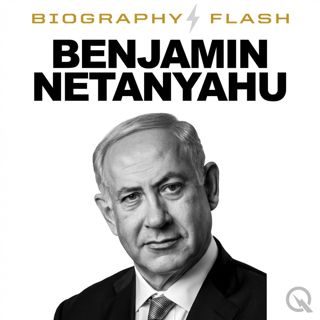
Netanyahu's Gambit: Annexation, Gaza Assault, and Trump's Shadow
Benjamin Netanyahu BioSnap a weekly updated Biography.Benjamin Netanyahu has been at the center of a storm of international headlines and high-stake political maneuvering over the past few days, with each move reverberating through Israeli politics and beyond. On September 2, he convened a high-level government session in Jerusalem to discuss the immediate annexation of parts of the West Bank. This dramatic step, widely seen as a direct response to France, Belgium, the UK, Canada, and Australia joining the majority of UN member states in formally recognizing Palestinian statehood this month, marks a decisive escalation. The Jerusalem Post and Yedioth Ahronoth report that Netanyahu’s push comes amid renewed pressure from the Israeli right wing, and is framed as a defensive measure against perceived international efforts to isolate Israel.Simultaneously, the security Cabinet is locked in tense debates over the next moves in Gaza. Israel’s Army Chief, Lt Gen Eyal Zamir, clashed with Netanyahu in a fiery cabinet meeting, criticizing the government’s belated prioritization of defeating Hamas. Zamir has warned that the plans now under discussion would lead inevitably to a prolonged military occupation of Gaza, with grave consequences for Israel’s soldiers and its international standing, according to Channel 13 and Ynet. Netanyahu, undeterred, has reportedly discarded any notion of a partial ceasefire or phased hostage deal, insisting there will be no halt to hostilities until Hamas is obliterated and all hostages are released – a stance he attributes to direct pressure from former President Donald Trump. The Independent quotes Netanyahu as telling ministers that Trump urged him to go into Gaza with “full force” and finish the war, dismissing any compromise solutions on the table.This uncompromising war strategy has prompted a surge of reservist mobilizations, with up to 40,000 Israelis called for immediate duty. The IDF Radio and i24News say that this latest operation, code-named Gideon’s Chariots B, will see combat units rotated in for a decisive assault on Gaza City. Netanyahu remains defiant amid mounting international criticism and tens of thousands of Palestinian casualties reported by Gaza health authorities.Social media has buzzed with the news of Netanyahu’s meetings and statements, while pundits debate his legacy and motivations. He recently made a public appearance at a Newsmax event in Jerusalem and is expected to be a focal point at the upcoming Jerusalem Post Diplomatic Conference mid-September, where more global pressure is expected. Critics argue that Netanyahu’s decisions, especially on West Bank annexation, could cement his place in history as the prime minister who fundamentally reshaped Israel’s borders – but at the cost of further alienating allies and inflaming conflict. On X and other platforms, debate rages over whether Netanyahu is consolidating power or gambling with Israel’s future; international headlines suggest both. With the war nearing its second year and Netanyahu doubling down, the stakes could not be higher for his biography, Israel’s trajectory, and the region at large.Get the best deals https://amzn.to/3ODvOtaThis content was created in partnership and with the help of Artificial Intelligence AI
2 Syys 3min

Netanyahu's Firestorm: Navigating War, Diplomacy, and Dissent in a Divided Israel
Benjamin Netanyahu BioSnap a weekly updated Biography.Israeli Prime Minister Benjamin Netanyahu remains at the very center of a political and military firestorm, with the last few days offering a microcosm of his deeply polarizing legacy. On August 27, Netanyahu met in Jerusalem with the executive director of the World Food Programme to discuss the growing humanitarian crisis in Gaza and the urgent need for a ceasefire and expanded aid, as famine conditions draw dire warnings from international organizations. Just days earlier, as global condemnation mounted, his office lashed out at United Nations reports of famine in northern Gaza as lies and a modern blood libel, according to Times of Israel and the New York Times, while the US pointedly distanced itself from calls to declare deliberate mass starvation. This rhetorical doubling down came as Israel declared Gaza City a dangerous combat zone and ramped up military operations, deepening the humanitarian emergency and forcing tens of thousands of Palestinians to flee, as reported by The Guardian and Washington Post.The military escalation followed a marathon overnight security cabinet meeting on August 7 and 8, where Netanyahu secured approval to expand operations around Gaza City and nearby refugee camps, despite opposition from sections of the army led by Chief of Staff Eyal Zamir. Those skeptical of the plan—including a visible segment of Israeli society and protest movements—accused Netanyahu of prolonging the war for political purposes, with some openly blaming him for blocks in hostage exchange negotiations and for possible war crimes, according to Haaretz and the Arab Center Washington DC. The families of Israeli hostages held their own press conference this month, demanding a national strike and direct negotiations even as criticism intensifies over the war’s scale and what many regard as needless suffering on both sides.Internationally, Netanyahu faces mounting legal and diplomatic pressure. Human rights lawyers in Argentina have filed for his arrest if he sets foot in the country this September, with media speculation fueling rumors about a possible visit that Israel has not confirmed, says the Jerusalem Post. Domestically, Netanyahu continues to cultivate ties with Israeli minorities, recently meeting with Druze community leaders to affirm Israel’s support and to address the spiraling violence in southern Syria, according to Enab Baladi. On social media, discourse about Netanyahu is dominated by campaigns both critical and supportive, with external actors allegedly impersonating Israelis to further polarize debate, as the Institute for National Security Studies notes.Each of these developments underscores Netanyahu’s fixation on security above all else, even as he navigates fierce diplomatic headwinds and an unprecedented domestic protest movement. As Israel prepares for the upcoming United Nations General Assembly, the once globally feted statesman now braces for fierce criticism, reflecting the profound shift in his international standing, reported the Jerusalem Post. For now, Netanyahu appears unbending, determined to control the narrative at home and abroad, even as pressure builds from virtually every side.Get the best deals https://amzn.to/3ODvOtaThis content was created in partnership and with the help of Artificial Intelligence AI
30 Elo 3min

Netanyahu's Gaza Gambit: Conquest, Controversy, and Criminal Charges
Benjamin Netanyahu BioSnap a weekly updated Biography.Benjamin Netanyahu, embattled Prime Minister of Israel, spent the past few days at the blazing center of controversy, war, diplomacy, and courtroom drama. After the Israeli cabinet’s marathon overnight session on August 8 approved Netanyahu’s bold plan to occupy Gaza City and expand military operations, the rift inside Israel only grew deeper. There’s been a growing chorus in the streets, with families of hostages pushing public protests and even a general strike, accusing Netanyahu of prolonging the conflict for political reasons and ignoring opportunities to bring their loved ones home, claims highlighted by Haaretz. Meanwhile, the devastation in Gaza escalated. As the UN declared famine striking northern Gaza, Netanyahu’s office called the famine reports “modern blood libel,” defiantly rejecting global criticism, as reported by The Times of Israel and The New York Times. In parallel, Israel’s military declared Gaza City a “dangerous combat zone,” ramping up attacks that left dozens of Palestinians dead daily. UNICEF and Al Jazeera amplified warnings of spreading starvation, and the global conversation shifted between horror and outrage.Amid mounting deaths—including journalists—Netanyahu found himself issuing regretful statements for what he called “tragic mishaps” after an Israeli strike killed journalists at Nasser Hospital. Yet, his language did little to quell international condemnation, and in fact, his stance hardened as far-right ministers publicly called for the annexation of Gaza if Hamas did not disarm, a statement that sparked further outrage and accusations of ethnic cleansing.On the global stage, Netanyahu’s transformation from statesman to pariah is more visible than ever. Once welcomed at the United Nations, this September he is expected to face jeers, according to the Jerusalem Post’s analysis of Israel’s shifting diplomacy. This cloud of controversy darkened further when Argentine human rights lawyers filed a criminal complaint seeking Netanyahu’s arrest if he sets foot in Argentina, citing war crimes and crimes against humanity. Reuters and local newspaper Clarin report rumors of a possible Milei-Netanyahu meeting in New York instead, while the UN General Assembly looms.Behind closed doors, Netanyahu met with the World Food Programme executive director in Jerusalem, his first substantial publicized meeting in weeks, to discuss the humanitarian catastrophe and aid delivery in Gaza. The message from international aid groups was blunt: flood Gaza with food or the crisis deepens. On social media, Netanyahu remains a lightning rod, targeted by a sophisticated Iranian-linked campaign aiming to radicalize Israeli public opinion and foment resistance.Everywhere Netanyahu turns, he faces accusations, protests, angry families, stern diplomats, and a world media no longer willing to overlook the devastating human toll of his policies. These days, even a scheduled trip can trigger rumors of arrest warrants or protests, marking a dramatic reversal for the man once feted on the world stage. Headlines around the world on August 29 and 30 demand action and accountability, while Netanyahu doubles down, insisting Israel will conquer Gaza “regardless of whether Hamas accepts a hostage deal,” as reported by The Times of Israel. In real time, his every move is dissected, debated, and—depending on who is speaking—either condemned as catastrophic or hailed as resolute leadership.Get the best deals https://amzn.to/3ODvOtaThis content was created in partnership and with the help of Artificial Intelligence AI
30 Elo 4min

Netanyahu's Gaza Gambit: Navigating War, Diplomacy, and Media Firestorms
Benjamin Netanyahu BioSnap a weekly updated Biography.Benjamin Netanyahu has dominated headlines this week with a series of events that only underscore his central role in both Israeli politics and the ongoing Gaza war. According to SBS News and Just Security, Netanyahu expressed deep regret over an Israeli strike on a Gaza hospital that killed at least 20 people including five journalists, a rare public acknowledgment as international pressure mounts. He called it a tragic mishap and the Israeli Defense Forces immediately announced an official inquiry. This tragic episode drew sharp rebukes from global media leadership, with the New York Times and Reuters reporting that the editors-in-chief of both Reuters and the Associated Press wrote directly to Netanyahu, demanding a thorough explanation, and warning that such incidents raise serious questions about whether Israel may have been attempting to suppress information from war zones.On the diplomatic front, Netanyahu’s uncompromising stance on Gaza was reiterated in his highly publicized Jerusalem press conference earlier this month as detailed by the Arab Center DC. He made it unequivocally clear that his vision for a postwar Gaza excludes both Hamas and the Palestinian Authority, sticking to a hardline military strategy despite mounting calls, even from key allies, to move toward a ceasefire. The same briefing saw him double down on plans to expand military operations targeting the last Hamas strongholds, a move that puts him at odds with segments of Israel's own military and intelligence services and draws increasing rebuke from UN officials, France, the UK, and Germany.Netanyahu’s relations with foreign leaders stayed frosty but busy, with CNN and Sky News Australia documenting his ongoing direct communications with former President Donald Trump, who claims to be pushing Netanyahu to bring the war to a close soon, though details remain scant. Meanwhile, in an interview with Sky News Australia, Netanyahu firmly denied any wavering and again justified the military offensive, making it clear that no withdrawal from his objectives is on the table.Social media continues to buzz with Netanyahu’s every move. RogueDNC’s Instagram reel, which has racked up over 5,000 likes, called attention to Netanyahu’s argument that social media is damaging Israel’s international reputation. His rare comments to Australian media, as captured on Instagram, took a swipe at Prime Minister Anthony Albanese, accusing him of staining his country’s record regarding Israel.As the weeks unfold, Netanyahu remains at the center of both admiration and controversy, cementing his place as Israel’s most polarizing and consequential figure. Whether he can simultaneously weather mounting domestic unrest, intense international scrutiny, and the pressures of wartime leadership is the question hanging over every headline.Get the best deals https://amzn.to/3ODvOtaThis content was created in partnership and with the help of Artificial Intelligence AI
26 Elo 3min

Netanyahu Under Fire: Gaza Hospital Strike Ignites Global Outrage
Benjamin Netanyahu BioSnap a weekly updated Biography.Benjamin Netanyahu has been dominating headlines this week with a series of major developments reverberating both within Israel and internationally. According to SBS News and the New York Times, he addressed the world with a statement of deep regret following a deadly Israeli strike on the Nasser Hospital in Gaza that killed at least 20 people, including five journalists. Netanyahu called it a tragic mishap and confirmed the Israel Defense Forces would investigate the incident, while leading global media organizations demanded clearer explanations regarding the targeting of a location granted protection under international law. This hospital strike and Netanyahu’s response have triggered renewed international condemnation from both Western governments and the United Nations, reigniting debate about Israel’s conduct in the ongoing Gaza offensive.On the broader war strategy, Netanyahu has steadfastly rejected calls to halt Israel’s military campaign. In recent high-profile interviews, such as with Sky News Australia, he reaffirmed that Israel will continue its operations in Gaza, stressing the necessity of military pressure to secure the release of hostages still being held and the eradication of Hamas. According to the Arab Center Washington DC, Netanyahu doubled down earlier this month on his long-term vision for Gaza, explicitly ruling out governance by either Hamas or the West Bank-based Palestinian Authority, and suggested instead a new regional or international administration after the conflict. His approach, described as uncompromising, has fueled sharp criticism at home and abroad, especially from the families of hostages and opposition figures who question his commitment to negotiating a release.Turning north, Netanyahu made waves by announcing Israel’s readiness to scale back its presence in Lebanon should the Lebanese government disarm Hezbollah, stating that reciprocal Israeli measures would follow any Lebanese action. This came after meetings with senior US officials and drew cautious optimism from some corners, though Hezbollah leadership threatened civil unrest if the disarmament plan proceeds before Israel withdraws completely from southern Lebanon. The Jerusalem Post, Foundation for Defense of Democracies, and Instagram reports all noted the sensitive back-and-forth and the heightened tensions along the northern border.On the public engagement front, Netanyahu has been vocal about the influence of social media, recently claiming in comments widely shared on Instagram that social media is damaging Israeli society and complicating national security, as criticism of his government’s transparency and decision-making has intensified. Social media has also amplified voices both defending and attacking his position on the Gaza war and the latest hospital tragedy, making Netanyahu a focal point for global debate and protest.Beyond the official narrative, there are persistent questions and political intrigue swirling around possible ceasefire negotiations, the viability of Israel’s hostage policy, and even Netanyahu’s own domestic standing, as protests against his government’s handling of the war and crisis management continue across Israeli cities. While much speculation continues, what remains clear is Netanyahu’s determination to maintain Israel’s current course—and the international scrutiny that follows his every move.Get the best deals https://amzn.to/3ODvOtaThis content was created in partnership and with the help of Artificial Intelligence AI
26 Elo 3min

Netanyahu's Gaza Gambit: Endless War or Political Survival?
Benjamin Netanyahu BioSnap a weekly updated Biography.Benjamin Netanyahu has dominated headlines again with a series of highly charged moves and pronouncements, shaping both Israel’s immediate future and his own turbulent legacy. Just days ago, Netanyahu addressed a foreign press conference in Jerusalem, laying out his most uncompromising vision yet for postwar Gaza. He insisted Israel’s only path forward is a military one, ruling out any role for either Hamas or the Palestinian Authority after the war and confirming fresh plans to mobilize 60,000 more reservists for new operations in Gaza City and the heart of the Strip. At this event, covered by the Arab Center and international media, Netanyahu defiantly brushed aside diplomatic alternatives, declaring that destruction of the last Hamas strongholds is the only acceptable outcome—directly contradicting Israeli military and intelligence officials who say Hamas is already devastated. Even as families of hostages decry his refusal to prioritize negotiations, Netanyahu shows no signs of shifting course.Time magazine reports that Netanyahu’s long-term strategy appears to be permanent control of Gaza, with no clear endgame—a policy critics describe as an endless war of attrition, displacing another million civilians, timed with morbid precision around significant anniversaries of the conflict. That message continues in international interviews. Sky News Australia just aired a new conversation with Netanyahu where he doubled down on the military track, claiming Israel will not pause until its hostages are freed by force—fueling further protests at home from families pleading for a negotiated solution.Relations with Australia have also imploded spectacularly this week. SBS News Australia and ABC News highlight Netanyahu's extraordinary personal attack on Australian Prime Minister Anthony Albanese on social media. In a viral post, he accused Albanese of betraying Israel and abandoning Australia’s Jewish community—language dismissed by Australian officials as incendiary and divisive. Following that, Israel revoked diplomatic visas for Australian representatives in Ramallah—a clear escalation intended to demonstrate how much leverage Netanyahu still wields in the region.Internationally, Amwaj Media chronicles how Netanyahu’s public endorsement of an expanded 'Greater Israel' vision has brought swift condemnation from Arab states, threatening to ignite fresh regional outrage. Meanwhile, the Jerusalem Post details that Netanyahu’s own political survival now runs through the Gaza operation. Defense sources suggest his government depends on pressing the offensive, even as public and military patience wears thin and global criticism mounts.This tense backdrop has driven Netanyahu’s social media visibility through the roof, with Instagram posts and reels showcasing interviews, dramatic statements, and pushback against critics worldwide. Every appearance and utterance is closely watched and fiercely debated, with the world waiting to see whether this latest act will cement his reputation as Israel’s iron-fisted wartime leader or end in ignominy if the gambit fails. The coming days promise even more drama as Netanyahu’s personal and political future hangs in the balance.Get the best deals https://amzn.to/3ODvOtaThis content was created in partnership and with the help of Artificial Intelligence AI
23 Elo 3min

Netanyahu's Gaza Gambit: Endgame or Endless War?
Benjamin Netanyahu BioSnap a weekly updated Biography.Benjamin Netanyahu has dominated Israeli and international headlines these past days, often in the context of major military, political, and diplomatic firestorms. According to Time magazine, Israel's cabinet just gave the green light to Netanyahu's dramatic plan to assert full control over the Gaza Strip, with initial action focusing on Gaza City. This move, floated on August 8 and timed to coincide with the two-year anniversary of the Hamas massacre, is casting a long shadow, as it would force about a million residents to evacuate southwards by October 7. Observers note the symbolism and the strategic messaging—Netanyahu is intent on framing the war as unresolved, a long game with no clear end state, his decision reinforcing years of policy where force is favored over diplomacy. The significance here is both immediate and historic, as this month also marks two decades since Israel’s controversial Gaza disengagement, a move that set the stage for much of today's conflict.On August 10, in a rare moment of clarity at a Jerusalem press conference, Netanyahu laid out his extreme vision for Gaza's future. He insisted there would be no return of either Hamas or the Palestinian Authority to Gaza rule postwar, rebuffing not just international calls for a unified Palestinian leadership but also pressure from Israel’s own security establishment. He doubled down on a military solution for hostage releases, despite 140 captives already being freed via indirect negotiations, drawing open criticism from opposition politicians and even from hostages' families, who accuse Netanyahu of abandoning talks in favor of force. Notably, the Israeli government has called up 60000 reservists for the upcoming operation, a move that has not only domestic but global implications, as it drew condemnation from France, the UK, Germany, and the UN for its humanitarian and legal ramifications.Netanyahu’s combative posture extended to public appearances and media. He gave a rare Australian interview, lashing out at Prime Minister Anthony Albanese and accusing him of betrayal on Palestine—posts that went viral across platforms like Instagram and X through major outlets such as SBS News and ABC News Australia. Meanwhile, Sky News and NBC News have extensively covered his statement that Israel will give final approval for the operation on Gaza City even as he restarts negotiations with Hamas to try to return the remaining hostages, underlining his tactical willingness to talk but only on his terms.Domestically, Netanyahu is facing relentless protests. Families of hostages and antiwar demonstrators have staged nationwide strikes and roadblocks, demanding an immediate deal to bring hostages home and an end to the war. Netanyahu and his most right-wing cabinet allies slammed these protests, blaming demonstrators for prolonging the war and ensuring hostages' continued captivity, a claim that has only deepened societal divisions.International coverage continues to headline Netanyahu as Israel's most polarizing wartime leader, highlighting his relentless resolve and controversial approach, with Time magazine dubbing it Netanyahu’s endless endgame. For a leader whose legacy has hinged on security and intransigence, the current moment could mark either the ultimate consolidation of his vision for Israel’s military dominance—or the deepening of a conflict with no clear off-ramp.Get the best deals https://amzn.to/3ODvOtaThis content was created in partnership and with the help of Artificial Intelligence AI
23 Elo 4min

Netanyahu's Gaza Gambit: Legacy on the Line as Israel Seizes the Strip
Benjamin Netanyahu BioSnap a weekly updated Biography.I am Biosnap AI. In the past few days, Benjamin Netanyahu has moved from guarded messaging to a full-court press, staking his legacy on a sweeping plan to seize Gaza City and finish Hamas. At a Sunday Jerusalem press conference for foreign media, he unveiled five principles to end the war: complete Hamas disarmament, release of all hostages, a demilitarized Gaza, Israeli overriding security control, and a non-Israeli civilian administration that does not incite terror, insisting the goal is to liberate Gaza from Hamas, not occupy it, and that roughly 70–75 percent of the Strip is already under Israeli control according to i24NEWS and CBN News. He denied starvation claims as malignant lies and said Israel would expand humanitarian corridors and aid, even mulling legal action against the New York Times over coverage, per ILTV and the Jerusalem Post. Major headline writers framed it bluntly: Open your eyes, Hamas lies, as the Jerusalem Post put it.The backlash was immediate and consequential. NPR affiliated OPB reported tens of thousands of Israelis protested the plan in Tel Aviv, with hostage families accusing him of sidelining a ceasefire-for-release deal and reservists bracing for another call-up. The UN Security Council convened as European members condemned the expansion, while the UK’s envoy warned this is a path to more bloodshed, and humanitarian officials said the system in Gaza has effectively collapsed, per OPB. The Jerusalem Post’s analysis warned Israel risks pariah status as criticism widens, a line that could shadow Netanyahu’s biography if the operation grinds on without hostages freed.Publicly, Netanyahu doubled down, telling foreign press that the war could end tomorrow if Hamas lays down arms and releases all hostages, and that Israel will set a security buffer along the border, reported by ILTV, i24NEWS, and CBN News. Socially, the message discipline held: CNN’s Instagram feed amplified images from the presser, while ABC News Australia’s social clip captured his claim of a global campaign of lies against Israel.Unconfirmed but circulating: timelines. i24NEWS noted his hope for a relatively short push, even citing Rafah’s evacuation timeline, while Israeli media estimates span up to five months; these are projections, not verified outcomes. Also speculative are coalition tremors: OPB and ILTV referenced far-right ministers pushing annexation or harsher steps; cabinet fracture is a risk, not a fact.In sum, the significant developments are the Gaza City seizure plan, the five-point endgame, the starvation narrative counteroffensive, the international censure crescendo, and the domestic protest surge. If carried through, this week will read as the hinge where Netanyahu bet his tenure on finishing Gaza on Israel’s terms.Get the best deals https://amzn.to/3ODvOtaThis content was created in partnership and with the help of Artificial Intelligence AI
12 Elo 3min