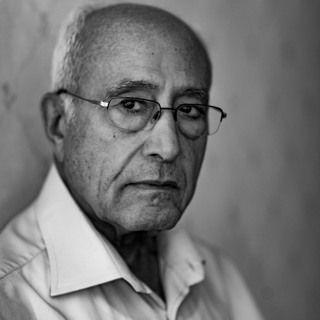
Nakba #10 - Mohamad Zarra
Överlevarna29 Joulu 2025

Nakba #10 - Mohamad Zarra

1946 ”As a boy, I remember the beach in Tantura. I was five or six years old. The sand was soft, clean, and white. The water was shallow far out. The coast consisted of alternating coves and small islands. I used to swim in the sea with my father. That is an important memory. 1948 ”I started school in March 1948, but three months later we were forced to flee. Tantura was occupied on May 24, 1948—the same day I turned seven years old. I remember how the bloody night began. I heard bursts of gunfire and the deafening thunder of cannons. The Haganah attacked from three directions. Our family—my aunts on my father’s and mother’s sides and their families—gathered in my grandmother’s house. Everyone was afraid; everyone was screaming and crying. My mother held my three youngest siblings in her arms. That night I could not sleep. Some prayed to Allah; others cursed the Jews. Even the dogs were afraid. More than one hundred villagers were killed that night. In the morning, the streets were filled with bodies. My father and some male relatives went to the school to organize resistance. Around noon the Zionists entered Tantura. The village raised a white flag; there was nothing else to do. The Jewish soldiers gathered the women and children in the square. In the chaos I spotted my mother and my younger siblings. They were searched by female soldiers looking for gold and money. They took everything—rings and necklaces. They tore off earrings so that blood spurted from the women’s and girls’ ears. The soldiers went into the houses and emptied them of everything of value—furniture, valuables, and money. The items were hauled away by horse and cart. Other soldiers collected the dead bodies scattered in the streets. They dumped the bodies in front of the women and children, as a final act of humiliation. Then some of the village’s snipers began shooting at the Zionists again, despite the white flag. They killed some Haganah soldiers, which resulted in the Jewish soldiers, in blind fury, shooting every man who came in their way. People fell like bowling pins. Meanwhile, people from a nearby Jewish settlement joined the Haganah. When things calmed somewhat, we were ordered down to the beach. On the way I saw several dead bodies, among them my maternal grandfather, Abu Hamek Jidek, and one of my uncles, Ami Abdel Aziz. Crying women wandered around looking for men and children among the bodies. The May sun was mercilessly hot. When we reached the beach, the sand was hot like fire. Everyone was barefoot. We began hopping like grasshoppers. We were hungry and thirsty, but the soldiers gave us nothing to eat or drink. My grandfather was the village mukhtar. He had smuggled weapons from Syria to Palestine, and now the Haganah wanted to make an example of him. Two soldiers took him to a house by the beach. They pushed him inside and closed the door. Shortly afterward, two pistol shots echoed out over the sea. The men—those aged sixteen and older—were lined up on the beach. A soldier whipped those who did not keep the line straight. The soldiers marched them away, ten at a time, a few hundred meters down the beach. There they were shot. The remaining men were taken to the village cemetery, lined up, and ordered to dig their own graves. When a line had finished digging, the men were shot in the back of the head and fell into the graves they had dug. We remained on the beach, paralyzed with terror. For some, their stomachs turned. Those of us who survived the massacre were forced to go to Fureidis, a neighboring village about four kilometers away. We walked on foot, and I still remember how badly my legs and feet hurt. We were guarded by soldiers. Some pleaded with the soldiers to be allowed to return to their houses to fetch clothes and other belongings, but in vain. When we arrived in Fureidis, the villagers gave us food and drink. We stayed there for a few days. We learned that the military had blown up all the houses .”

Tämä jakso on lisätty Podme-palveluun avoimen RSS-syötteen kautta eikä se ole Podmen omaa tuotantoa. Siksi jakso saattaa sisältää mainontaa.

Jaksot(323)

Nakba #18- Fatima Abdurahman Steti

Nakba #18- Fatima Abdurahman Steti

1944 “My father had a fairly large shoe shop in Haifa. We also owned real estate. We were very well off financially. As a child, I never noticed any tension between the Jews and us. We lived next door...

30 Joulu 202553min
Nakba #17 - Hayat Dawud Muhammad al-Qawasmi

Nakba #17 - Hayat Dawud Muhammad al-Qawasmi

1941 “The house I grew up in was located on one of Jerusalem’s main streets. The façade was white and the door was blue. When you entered the house, you went down a few steps and arrived in a large ro...

30 Joulu 20252h 11min
Nakba #16 - Fayza Abed Bayrakji

Nakba #16 - Fayza Abed Bayrakji

1946 “My father owned a lot of land where he grew grapes, figs, olives, and other crops. We also had livestock. Many people worked for us during the harvest season. My father died when I was three yea...

30 Joulu 202548min
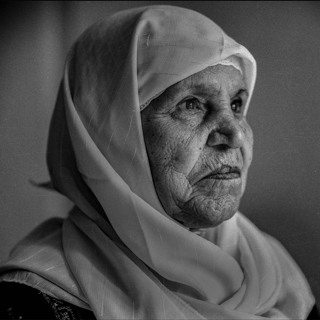
Nakba #15 - Sara Aydi

Nakba #15 - Sara Aydi

1937 “I was an only child. My father died when I was four years old. My mother remarried his cousin. They had four more children.” 1947 “I got married when I was fifteen. My husband, Mahmud, was eight...

30 Joulu 202559min
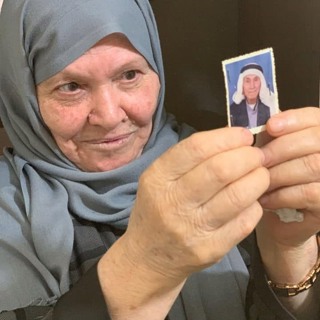
Nakba #14 - Fawzeeyya Mustafa

Nakba #14 - Fawzeeyya Mustafa

1948 “Before I had turned seven, we finally got a school in our village. My father wanted me to receive an education. I, along with eight other girls, started school. Four months later, al-Nakba occur...

30 Joulu 202546min
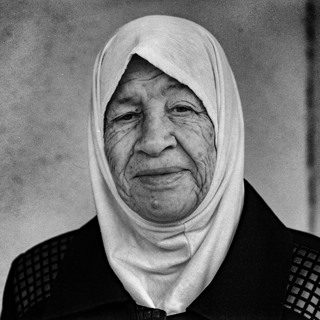
Nakba #14 - Dunia Hameed

Nakba #14 - Dunia Hameed

“I always slept next to my grandmother. I used to lie there hugging her. One evening, I woke up to gunfire and bombing. There were only children and women in the room. It was crowded. Everyone was lyi...

29 Joulu 20251h 17min
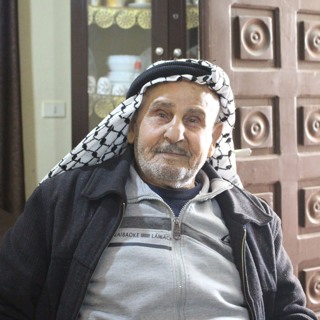
Nakba #13 - Hassan Ahmed Jaber

Nakba #13 - Hassan Ahmed Jaber

“My country is not a suitcase, and I am not on a journey.”

29 Joulu 202557min
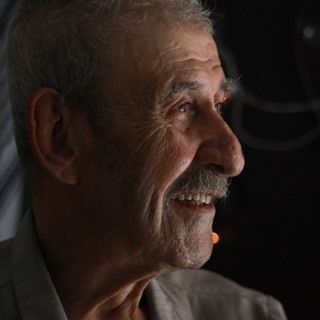
Nakba #12 - Mofid al Sadek

Nakba #12 - Mofid al Sadek

1948 — When was the first time you met a Jew? “It was when they bombed our village and we were forced to flee with only the clothes we were wearing. Everything else we had to leave behind. But I never...

29 Joulu 202538min

Suosittua kategoriassa Koulutus

rss-murhan-anatomia
psykopodiaa-podcast
voi-hyvin-meditaatiot-2
adhd-podi
rss-rahamania
rss-valo-minussa-2
rss-narsisti
kesken
rss-liian-kuuma-peruna
rss-luonnollinen-synnytys-podcast
rss-tietoinen-yhteys-podcast-2
rahapuhetta
filocast-filosofian-perusteet
rss-niinku-asia-on
ihminen-tavattavissa-tommy-hellsten-instituutti
rss-vapaudu-voimaasi
rss-arkea-ja-aurinkoa-podcast-espanjasta
aamukahvilla
jari-sarasvuo-podcast
rss-elamankoulu