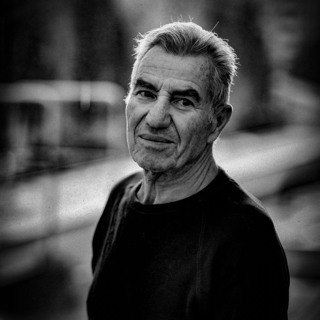
Nakba #20 - Lee Mahmud Musa
Överlevarna31 Joulu 2025

Nakba #20 - Lee Mahmud Musa

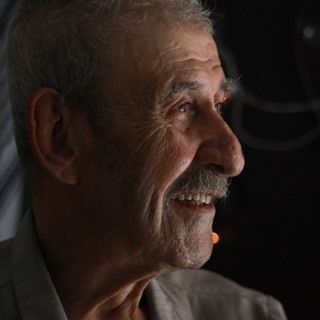
1943 “My father was a simple man who worked in all kinds of construction jobs. He was the kindest person in the world. Every time my mother chased us, he yelled at her. My father also had a cart from which he sold boiled corn. Sometimes I went with him. The cart was set up about fifty meters uphill from the clock tower in Jaffa.” 1948 “My father was cycling uphill when he was shot in the arm. But he had no plans to leave Jaffa. My mother panicked and screamed at us: ‘The Jews are killing us! Run!’ She grabbed my brother and me and we ran along a dried-up riverbed. Many people were fleeing. We reached Nahalin, north of Lydda. There we stayed with my maternal grandparents and uncles. It was hell. The first evening we had to go out and beg for bread. We slept on mattresses on the floor—no beds. That was what it meant to be a refugee. Everyone lived like that. Wealthy families wouldn’t take us in. ‘Go to hell,’ they said. We stayed in Nahalin for two years. During that time, I didn’t go to school. 1950 “With the help of the UN, we returned to my father in Jaffa. My father was at home when we arrived. We hadn’t seen each other for more than two years. He was the same as ever.” 1956 “I stopped going to school when I was thirteen and started working in a shoemaker’s shop run by some Jews from Iraq. They were all communists. They discussed politics and I listened. That’s how I got my political education. When Nasser came to power in Egypt in 1952, the Iraqi Jews celebrated, because Nasser was against imperialism. When Israel attacked Nasser in 1956, they opposed it. They wanted Israel to support the Egyptian people in order to build peace. That’s when I understood that the conflict had nothing to do with religion. As long as a Jew criticizes Zionism, he has a human heart. As long as a Muslim criticizes Saudi Arabia, he has a human heart.” 1967 “After a few years I left the shoemaker’s shop and joined the communist youth movement. The members were both Jews and Arabs. A party comrade helped me get a job as an elevator mechanic. I repaired elevators at a hospital in Jaffa. On the first day of the war, my comrade was fired. Then I quit as well. I started working at a hotel in Eilat, but the police forbade me from working there. In Tel Aviv I worked at a restaurant, where I was called a dirty Arab. I began calling myself Moishe to avoid trouble. Eventually I decided to emigrate to Sweden. My mother tried to stop me at any cost. But my father came into my bedroom on the last night and asked if I had enough money. He wanted to give me money, even though he needed it himself.” (starts crying) 1969 “I went to visit my parents in Jaffa. I rented a car and took my parents and siblings to Tiberias. I planned to take them to the Golan Heights, but I changed my mind and turned back. Instead, we went down to Lake Tiberias and ate fish at a restaurant. I gave back what little I could. When I was about to leave, I was stopped at the airport. I ended up in a room with four intelligence soldiers who interrogated me for an hour. They cursed, kicked, and beat me. They wanted to know why I had been in the Golan Heights. Meanwhile, the passengers were sitting on the plane waiting. When I boarded, people stared at me as if I were a terrorist.” 1973 “I went to Israel to attend one of my sisters’ weddings. At the airport I was taken to a room where a man explained that they were arresting me because I had a gun, which was of course a lie. Then the military arrived, blindfolded me, and drove me to a prison. In prison I was interrogated every day. They wanted to know which Palestinian movement I belonged to. When I refused, they started kicking me. They stripped me naked and beat me until I collapsed on the floor. ‘What are you doing here, you dirty Arab?’ one of the guards shouted, pressing his boot against my face. I was imprisoned for fifteen days. I missed my sister’s wedding. My return ticket had expired, so I had to buy a new one.”

Tämä jakso on lisätty Podme-palveluun avoimen RSS-syötteen kautta eikä se ole Podmen omaa tuotantoa. Siksi jakso saattaa sisältää mainontaa.

Jaksot(323)

Nakba #18- Fatima Abdurahman Steti

Nakba #18- Fatima Abdurahman Steti

1944 “My father had a fairly large shoe shop in Haifa. We also owned real estate. We were very well off financially. As a child, I never noticed any tension between the Jews and us. We lived next door...

30 Joulu 202553min
Nakba #17 - Hayat Dawud Muhammad al-Qawasmi

Nakba #17 - Hayat Dawud Muhammad al-Qawasmi

1941 “The house I grew up in was located on one of Jerusalem’s main streets. The façade was white and the door was blue. When you entered the house, you went down a few steps and arrived in a large ro...

30 Joulu 20252h 11min
Nakba #16 - Fayza Abed Bayrakji

Nakba #16 - Fayza Abed Bayrakji

1946 “My father owned a lot of land where he grew grapes, figs, olives, and other crops. We also had livestock. Many people worked for us during the harvest season. My father died when I was three yea...

30 Joulu 202548min
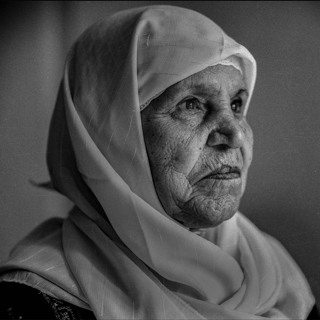
Nakba #15 - Sara Aydi

Nakba #15 - Sara Aydi

1937 “I was an only child. My father died when I was four years old. My mother remarried his cousin. They had four more children.” 1947 “I got married when I was fifteen. My husband, Mahmud, was eight...

30 Joulu 202559min
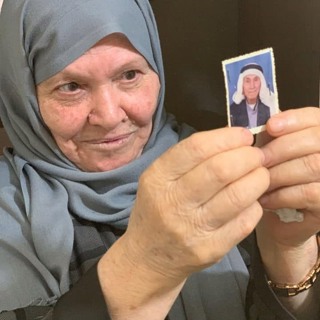
Nakba #14 - Fawzeeyya Mustafa

Nakba #14 - Fawzeeyya Mustafa

1948 “Before I had turned seven, we finally got a school in our village. My father wanted me to receive an education. I, along with eight other girls, started school. Four months later, al-Nakba occur...

30 Joulu 202546min
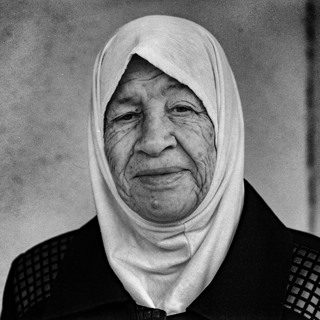
Nakba #14 - Dunia Hameed

Nakba #14 - Dunia Hameed

“I always slept next to my grandmother. I used to lie there hugging her. One evening, I woke up to gunfire and bombing. There were only children and women in the room. It was crowded. Everyone was lyi...

29 Joulu 20251h 17min
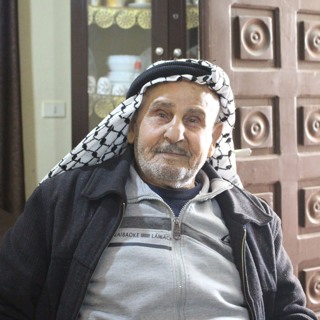
Nakba #13 - Hassan Ahmed Jaber

Nakba #13 - Hassan Ahmed Jaber

“My country is not a suitcase, and I am not on a journey.”

29 Joulu 202557min
Nakba #12 - Mofid al Sadek

Nakba #12 - Mofid al Sadek

1948 — When was the first time you met a Jew? “It was when they bombed our village and we were forced to flee with only the clothes we were wearing. Everything else we had to leave behind. But I never...

29 Joulu 202538min

Suosittua kategoriassa Koulutus

rss-murhan-anatomia
psykopodiaa-podcast
voi-hyvin-meditaatiot-2
adhd-podi
rss-rahamania
rss-liian-kuuma-peruna
rahapuhetta
kesken
rss-valo-minussa-2
rss-narsisti
rss-luonnollinen-synnytys-podcast
rss-tietoinen-yhteys-podcast-2
rss-vapaudu-voimaasi
rss-niinku-asia-on
filocast-filosofian-perusteet
psykologia
ihminen-tavattavissa-tommy-hellsten-instituutti
rss-duodecim-lehti
aamukahvilla
rss-elamankoulu