Nakba #26 - Assad Ammya
Överlevarna31 Joulu 2025

Nakba #26 - Assad Ammya

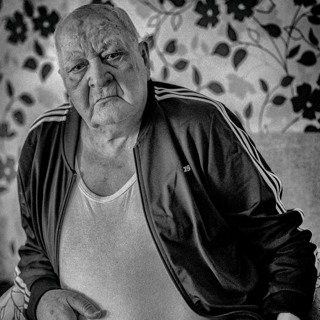
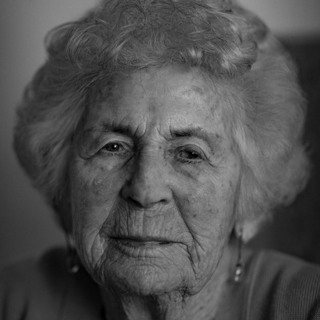
“We lived in a small house on Mount Carmel. It was a mixed area with Muslims and Jews. My father worked at a cigarette factory and also sold olive oil. My brother started working at Spinneys supermarket, which was owned by a couple of Englishmen. I had seven Jewish friends in the neighborhood who sometimes came over to our home. Cohen later became a police chief under the British. Another was named Shabbatai Levi, one was Spector, and a girl was named Sternheim. My mother invited everyone to eat. She baked bread, boiled eggs with onion skins so they turned brown, and served cheese and yogurt. We spoke Hebrew with one another. My grandfather made Arabic coffee that lasted the whole day. Cohen’s father used to come and drink coffee with my father. The girl Sternheim worked in a flower shop. ‘I will protect you,’ she said. ‘I will come and get you wherever you are. Call me and I will come. Don’t be afraid.’ I still remember her phone number: 3917.” (begins to cry) I had just turned 13 and worked at a café in central Haifa. The owner was named Siegel. He spoke only German. Jochanan also worked at the café, and we became friends. One day Jochanan was hit by a British military jeep. The driver was drunk. Jochanan was taken to the hospital but died four days later. I wanted to attend his funeral but couldn’t because I had nothing to cover my head with. I stood at the entrance to the cemetery and cried. ‘Is he your brother?’ a man asked. ‘No, he’s my friend, but he was like a brother.’ The man gave me a kippah with a Star of David on it so that I could approach the grave.” “The first time I noticed unrest was when the Stern Gang blew up a car outside the British police station in Haifa. That was in early 1947. We moved to Kababir in Haifa, where only Muslims lived. My brother-in-law Ibrahim drove us in his car. We rented an apartment. But after a while it didn’t feel safe in Kababir either, so we moved on to al-Tira, south of Haifa, where we owned a house. Al-Nakba began when the Haganah blew up 16 houses in al-Tira. Assad al-Bardan, one of our neighbors, went out at night with a lamp to see what was happening. He was shot. There were air raids at night. People were afraid to sleep in their homes and sought refuge in olive groves and caves. On the last day, before we fled, the shooting was constant. Only my brother and I were at home. My parents were hiding in a cave, but we didn’t know where. We went outside to see what was happening. ‘What are you doing here?’ a man asked. ‘Everyone has already fled.’” “We didn’t know where to go. We were from Mount Carmel and didn’t know the surroundings of al-Tira. We were afraid. We left our house when the moon had risen and saw about 50 Jewish soldiers entering al-Tira. We lay down on the mountain so as not to be discovered. As we continued walking, we met Muhammad and Afu. They showed us the way to ‘Ain Hawd. It was dawn when we arrived, but bombs were falling, so we continued south. After three hours we reached Ijzim. There we met our oldest brother, who gave us each a cigarette. Our brother paid a man to guide us out of Ijzim toward Nablus in the West Bank. There they gave us breakfast and water, and there we finally found our mother and one of her sisters. Together we continued to Jordan. There was little water. After a couple of months, a truck took us to Duma, outside Damascus in Syria. We and about ten other families were allowed to stay in a mosque. They divided a hall with blankets where we lived. We stayed there for four or five months. Then the whole family was reunited again—except for one of my brothers, Ahmed, who was imprisoned in Palestine. I lived in Syria for 36 years. I came to Sweden in 1980.”

Tämä jakso on lisätty Podme-palveluun avoimen RSS-syötteen kautta eikä se ole Podmen omaa tuotantoa. Siksi jakso saattaa sisältää mainontaa.

Jaksot(323)

Överlevarna #19: Rosa Bornstein

Överlevarna #19: Rosa Bornstein

”Jag var så sjuk att jag inte klarade de dagliga appellerna. Utanför vår barack fanns det en likhög och inför varje appell drog min moster ut mig genom en fönsterglugg och gömde mig bland liken. Så kl...

27 Tammi 20181h 11min

Överlevarna #18: Leon Weintraub

Överlevarna #18: Leon Weintraub

”Första natten i frihet kunde jag inte sova. Sängen var för mjuk och det kändes som att jag föll. Jag var tvungen att lägga mig på golvet för att kunna somna.” Inspelad tisdag 5 dec 2017. Foto: Cato L...

20 Tammi 20182h 31min

Överlevarna #17: Lore Diamant

Överlevarna #17: Lore Diamant

”Jag fick syn på en jättestor skorsten som det bolmade rök ur. Vad i hela friden har de för tillverkning i fabriken, undrade jag. Ingen människa kunde föreställa sig, ingen hjärna kunde klura ut det, ...

13 Tammi 201854min

Överlevarna #16: Janina Nilsson

Överlevarna #16: Janina Nilsson

"Min pappa, Franek Bruber, dog i kriget. Min bror, Tadeusz, mördades i Buchenwald Min mamma, Maria, sa alltid att om vi inte kan gå till kyrkan, ställ er i ett hörn och be. För gud hör bön”, säger Jan...

6 Tammi 201824min

Överlevarna #15: Boleslaw Kalinski

Överlevarna #15: Boleslaw Kalinski

”Att leva var farligt. När vi kom till Auschwitz tänkte jag ingenting. Efter den där hemska resan var det tomt i huvudet. Och så blev jag ensam. De mördade alla tre” säger Boleslaw Kalinski. Han var 1...

23 Joulu 20171h 19min

Överlevarna #14: Lydia Gerstel

Överlevarna #14: Lydia Gerstel

”Mina föräldrar stannade kvar i Wien. Jag skulle räddas undan och hamnade hos en fiskarfamilj på Öckerö. De var snälla, men skolans rektor var antisemit. Han gav mig en örfil och sa till mig att åka t...

16 Joulu 201742min
Överlevarna #13: Sara Fransson

Överlevarna #13: Sara Fransson

"När tyskarna angrep Polen lämnade pappa Lodz och anslöt sig till den polska armén. Vid ett tillfälle gömde de sig i en skogsdunge och fick se hur tysk militär tvingade polska fångar att gräva sina eg...

9 Joulu 20171h
Överlevarna #12 - Tauba Katzenstein

Överlevarna #12 - Tauba Katzenstein

"I Auschwitz kunde du inte planera nånting, du kunde inte räkna ut nånting, inte känna nånting. Jag hade inga känslor. I Auschwitz fanns det inte ens utrymme för sorg", säger Tauba Katzenstein, född 1...

2 Joulu 201757min

Suosittua kategoriassa Koulutus

rss-murhan-anatomia
psykopodiaa-podcast
voi-hyvin-meditaatiot-2
adhd-podi
rss-rahamania
rss-liian-kuuma-peruna
rahapuhetta
kesken
rss-valo-minussa-2
rss-narsisti
rss-luonnollinen-synnytys-podcast
rss-tietoinen-yhteys-podcast-2
rss-vapaudu-voimaasi
rss-niinku-asia-on
filocast-filosofian-perusteet
psykologia
ihminen-tavattavissa-tommy-hellsten-instituutti
rss-duodecim-lehti
aamukahvilla
rss-elamankoulu