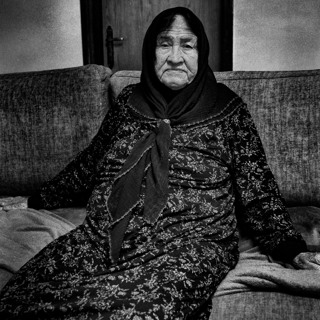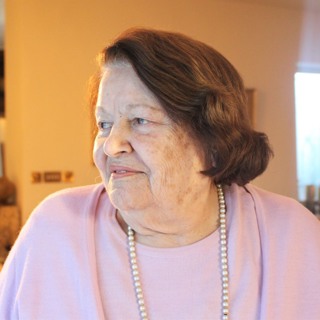
Nakba #45 - Widad Kawar
Överlevarna8 Tammi

Nakba #45 - Widad Kawar

1937 The family settled in Bayt Lahm. I started at a new boarding school, this time in Ramallah. It was run by the Quakers, and I felt very much at home there. In Ramallah, all women wore beautifully embroidered dresses. If they carried a bag, it too was embroidered; on their heads they wore an embroidered scarf. The teachers taught us embroidery, so we learned their patterns, which they had brought with them from the United States.” 1948 “The boarding school in Ramallah distributed our graduation certificates a couple of months early. Then we were sent home. Everyone was afraid that war would break out when the British left Filastin. People were waiting for something to happen. The Jordanian girls in my class did not know how they would get home. They were picked up by a Jordanian military vehicle. We found that very exciting. The road to al-Quds was not safe. There was gunfire between the two sides. Four or five of us girls shared a taxi. I got off at Bab al-‘Amud and went to the social welfare office. My father had good connections there. I found a woman who knew us, and she offered to drive me home to Bayt Lahm. Gradually, everything returned to normal. Peasant women began coming back to Bayt Lahm to sell their vegetables. There was a market on Saturdays, and that was when I got to know these women. They wore beautiful traditional clothing and silver jewelry. I used to talk to them and took an interest in their garments. They were beautifully embroidered in cross-stitch. When the dresses wore out, they sold parts of the garments: vegetables on the left, pieces of fabric on the right. The embroidery in Bayt Lahm is completely different from that in Ramallah—different stitches and different thread. The tradition is more closely linked to church embroidery, since there are so many monasteries in Bayt Lahm. When the war broke out a steady stream of refugees arrived from al-Quds and the surrounding villages. Everything was turned upside down. We had upper-class refugees from al-Quds who rented houses, and we had those who had nothing, who lived in camps. Poor refugees sometimes worked for the wealthy refugees. On market days, the refugee women had no vegetables to sell. Yet despite their poverty, they had intact clothing and looked healthy.” 1952 “The pieces of fabric grew into a collection of traditional Palestinian dresses. As soon as I heard that a Palestinian village had been destroyed by the Israelis—another piece of our Palestinian cultural heritage—I reacted by wanting to buy more dresses. I wanted to show how beautiful the textiles are. And not only that—the work required system and discipline. The women who embroidered strove for perfection. How could they remember the patterns? They had no templates to copy from. Perhaps they looked at their mother’s dress. I found this ability astonishing. The embroidered textiles are an important part of our cultural heritage. The women stopped embroidering these magnificent dresses when they ended up in refugee camps. Instead, they made simple refugee dresses with simple embroidery.” 1967 “After the occupation of al-Diffa al-Gharbia, the refugees’ situation worsened even further. Bayt Lahm was surrounded by Jewish settlements.” 2022 “In the Al Makhrur Valley, between Bayt Lahm and Bayt Jala, lies the Saint George Monastery. They make very good wine. Now Jewish settlers have seized half of the valley, and there are rumors that they will also take over the monastery.” Afterthought “I have been collecting these garments for over 70 years now. The collection amounts to 2,000 dresses, objects, and silver jewelry. My children want me to stop, but I continue to buy dresses in secret. As recently as today, I bought two dresses—one very simple and one more elaborate.”

Tämä jakso on lisätty Podme-palveluun avoimen RSS-syötteen kautta eikä se ole Podmen omaa tuotantoa. Siksi jakso saattaa sisältää mainontaa.

Jaksot(327)

Nakba #62 - Amina Ali Hammoud

Nakba #62 - Amina Ali Hammoud

”I was 14 when the jews attacked our village. My parents prohibited me to go outside, but I ran outside anyway to look at the soldiers. Then I ran back to my mother och explained the Israelis looked j...

8 Kesä 27min
Det judiska Högalid #46 - Josephine Schneider

Det judiska Högalid #46 - Josephine Schneider

Josephine Schneider om varför det tog så lång tid att göra radiodokumentären ”Judehuset som försvann”: - Jag tyckte det var skitjobbigt att göra en judisk grej, att komma ut som jude i en slags offent...

5 Kesä 17min
Det judiska Högalid #44 - Tom Granditsky

Det judiska Högalid #44 - Tom Granditsky

- Man ska väl inte prata skit om sin mamma, men när jag var liten och skrek kunde hon säga till pappa: “Ta hand om honom nu, det är du som ville ha honom”, säger Tom Granditsky. - Det är väl inte så r...

29 Touko 1h 49min

Andra generationen #90 - Lena Holzman

Andra generationen #90 - Lena Holzman

- Jag har svårt att behålla mina minnen och berättelser. De går in genom ett öra och ut genom det andra. Den saken är lite tokig med mig, säger Lena Holzman. - Jag har inte orkat gå in i det fullständ...

22 Touko 1h 13min

Det judiska Högalid #43 - Bernt Hermele

Det judiska Högalid #43 - Bernt Hermele

Nyligen var det någon, jag tror det var Bengt Hamberg, som föreslog att jag själv skulle bli intervjuad i ett avsnitt av podden. Jag tyckte väl inte att det kändes helt nödvändigt. Men så plötsligt da...

12 Touko 38min

Det judiska Högalid #42 - Erwin Salamon

Det judiska Högalid #42 - Erwin Salamon

- Jag träffade Marie, som inte är judinna, nyårsafton 1970, säger Erwin Salamon. Vad tyckte mamma och pappa om det? - Mamma sa: ”Jag skulle föredra om du hittade en judisk flicka”. Då fick jag ett ras...

8 Touko 1h 21min

Det judiska Högalid #41 - Håkan Blomqvist

Det judiska Högalid #41 - Håkan Blomqvist

- Jag älskade mina farföräldrar. Men de var antisemiter, de avskydde judar. Och de fortsatte att göra det även efter andra världskriget. Det var en obegriplighet för mig, säger Håkan Blomqvist. - Farf...

29 Huhti 1h 41min

Det judiska Högalid #40 - Bengt Hamberg

Det judiska Högalid #40 - Bengt Hamberg

- Jag vågade aldrig fråga mina föräldrar, hur flydde de undan Förintelsen och hur de kom till Sverige? Det skäms jag för än i dag, säger Bengt Hamberg.

17 Huhti 1h 21min

Suosittua kategoriassa Koulutus

rss-murhan-anatomia
psykopodiaa-podcast
voi-hyvin-meditaatiot-2
rss-hereilla
rss-valo-minussa-2
rss-narsisti
kesken
rss-liian-kuuma-peruna
rss-koira-haudattuna
rss-niinku-asia-on
dear-ladies
rss-opiskelemaan
rss-arkea-ja-aurinkoa-podcast-espanjasta
aamupore
rahapuhetta
adhd-podi
rss-rahamania
rss-tietoinen-yhteys-podcast-2
rss-suomen-aa-podcast
rss-retoriikan-kesakoulu