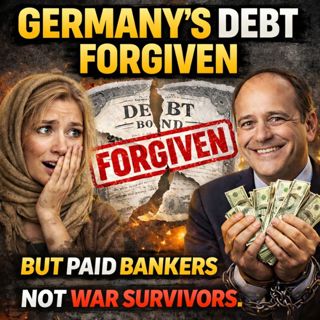

E177: Why Bankers Got Paid and Europe Recovered: The London Debt Agreement Explained
El Podcast9 Tammi

E177: Why Bankers Got Paid and Europe Recovered: The London Debt Agreement Explained

Economic historian Tobias Straumann breaks down how Germany’s debt meltdown in 1931 crashed the global economy—and how a surprisingly generous 1953 debt deal helped spark the German economic miracle by putting growth ahead of punishment.

GUEST BIO: Tobias Straumann (Switzerland) is Professor of Modern & Economic History at the University of Zurich; author of Out of Hitler’s Shadow and 1931: Debt, Crisis, and the Rise of Hitler.

TOPICS DISCUSSED:

  • 1931 as the real inflection point of the Great Depression
  • Treaty of Versailles + reparations politics (why it’s not a straight-line story)
  • Germany’s “double surplus” debt trap (budget + trade surplus) and default dynamics
  • Gold standard breakdown and global contagion
  • London Debt Agreement (1953): what it did and why it mattered
  • WWII reparations vs interwar debts vs private creditors (who got paid)
  • Cold War incentives vs the older “German problem” (balance of power since 1871)
  • 1990 reunification, the 2+4 treaty, and why reparations weren’t reopened
  • Later compensation: Israel/Claims Conference, forced labor, voluntary gestures
  • Poland/Greece reparations claims in modern politics
  • Comparisons: Japan/Italy reparations and postwar strategy
  • Modern debt parallels (domestic vs foreign-currency debt; political will)

MAIN POINTS:

  • 1931 turned a severe recession into a worldwide depression via Germany-centered financial contagion.
  • Versailles mattered, but Allied policy adjustments and domestic politics shaped outcomes more than a simple “Versailles caused WWII” line.
  • Germany’s foreign-currency debt made austerity + transfer demands self-defeating, ending in default and system collapse.
  • The 1953 London Debt Agreement was pivotal: it reduced and restructured interwar debts and made repayment compatible with recovery.
  • West Germany paid little-to-no WWII reparations (effectively deferred), while interwar private creditors recovered significant shares—morally messy but stabilizing.
  • Cold War pressures helped, but Europe’s long-running challenge was integrating a too-strong Germany into a stable order.
  • In 1990, the 2+4 framework avoided reopening WWII reparations to keep reunification politically and economically manageable.
  • Later payments (Israel, Holocaust victims, forced laborers) partially addressed moral claims outside classic state-to-state reparations.

TOP 3 QUOTES:

  • “We think that the year 1931 was the turning point… it turned into a worldwide depression.”
  • “It’s probably the biggest and most important debt settlement of the 20th century.”
  • “It’s morally hard to swallow… but it had the advantage of stabilizing Western Europe economically and politically.”

🎙 The Pod is hosted by Jesse Wright
💬 For guest suggestions, questions, or media inquiries, reach out at https://elpodcast.media/
📬 Never miss an episode – subscribe and follow wherever you get your podcasts.
⭐️ If you enjoyed this episode, please rate and review the show. It helps others find us.

Thanks for listening!

Jaksot(186)

E130: What Happens When No One Has Kids Anymore? - w/ Robin Hanson

E130: What Happens When No One Has Kids Anymore? - w/ Robin Hanson

🎙️ In this episode, economist and futurist Robin Hanson (George Mason University) explores the global fertility decline and what it means for innovation, culture, and civilization’s future.We discuss...

29 Huhti 20251h 9min

E129: Surviving Toxic Workplaces: Expert Tips from Donald Asher

E129: Surviving Toxic Workplaces: Expert Tips from Donald Asher

In this episode, Jesse talks with Dr. Donald Asher, renowned career strategist and author of Who Gets Promoted, Who Doesn’t, and Why. They dive into how to survive toxic workplaces, master office poli...

17 Huhti 20251h 18min
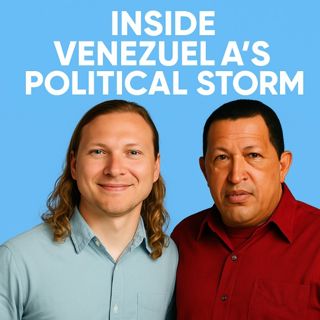
E128: The Fall of Venezuela: Prof. Tim Gill on Politics, Oil, & Sanctions

E128: The Fall of Venezuela: Prof. Tim Gill on Politics, Oil, & Sanctions

Sociologist Timothy Gill joins us to explore the roots of Venezuela’s crisis, the role of U.S. foreign policy, and how race, oil, and ideology shape the country's fate. We dig into the real impact of ...

8 Huhti 20251h 13min
E127: Cholesterol Doesn’t Cause Heart Disease: w/ Dr. Malcolm Kendrick

E127: Cholesterol Doesn’t Cause Heart Disease: w/ Dr. Malcolm Kendrick

Is cholesterol really the villain? Or have we been misled by decades of flawed research?In this explosive interview, Dr. Malcolm Kendrick—author of The Great Cholesterol Con—challenges the mainstream ...

30 Maalis 20251h 37min

E126: Can We Slow Aging? How Science Is Extending Healthspan - w/ Prof Richard Faragher

E126: Can We Slow Aging? How Science Is Extending Healthspan - w/ Prof Richard Faragher

In this episode, Jesse speaks with Professor Richard Faragher, one of the UK’s leading researchers on the biology of aging. They dive deep into why only 18% of people age well, what it means to age ba...

22 Maalis 20251h 5min
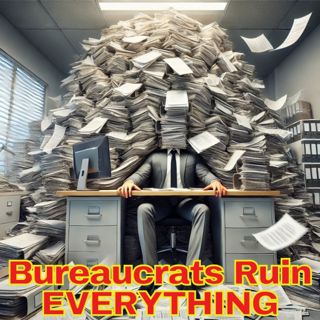
E125: How Bureaucracy Took Over Everything - w/ Barry Lam

E125: How Bureaucracy Took Over Everything - w/ Barry Lam

Philosophy professor and Hi-Phi Nation host Barry Lam joins Jesse to discuss his new book Fewer Rules, Better People. They dive into the rise of bureaucracy in American life, from healthcare to housin...

15 Maalis 20251h 16min

E124: Why Government Rules Make Homes Unaffordable - w/ Bryan Caplan

E124: Why Government Rules Make Homes Unaffordable - w/ Bryan Caplan

Economist Bryan Caplan joins the show to discuss his new graphic novel Build Baby Build: The Science and Ethics of Housing Regulation. We unpack how housing prices have skyrocketed due to artificial s...

8 Maalis 202549min

E123: Development or Destabilization? The Truth About USAID - w/ Prof. Tim Gill

E123: Development or Destabilization? The Truth About USAID - w/ Prof. Tim Gill

In this episode, sociologist and Venezuela expert Dr. Timothy Gill joins us to unpack the controversy surrounding USAID, the National Endowment for Democracy, and America’s post–World War II global in...

4 Maalis 20251h 22min

Suosittua kategoriassa Liike-elämä ja talous

sijotuskasti
mimmit-sijoittaa
psykopodiaa-podcast
rss-rahapodi
pomojen-suusta
rss-rahamania
ostan-asuntoja-podcast
juristipodi
rss-myyntikoulu
rss-seuraava-potilas
rss-draivi
sijoitusovi-podcast
rss-lahtijat
rss-startup-ministerio
herrasmieshakkerit
rahapuhetta
bakkari-tarinoita-tapahtumien-takahuoneista
lakicast
rss-h-asselmoilanen
rss-turha-edes-yrittaa