The Superkilonova Symphony: Merging Stars Inside Exploding Ones (AT2025ulz and S250818k)

The Superkilonova Symphony: Merging Stars Inside Exploding Ones (AT2025ulz and S250818k)

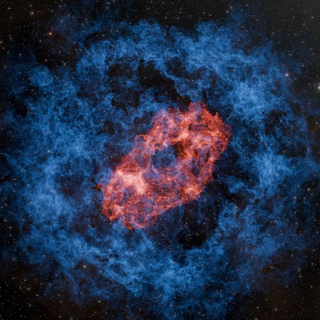
In this episode, we dive into a groundbreaking discovery that may have revealed a brand-new category of cosmic explosion: the Superkilonova. On August 18, 2025, gravitational-wave detectors picked up a signal, S250818k, indicating a merger between two neutron stars—but with a twist. The estimated "chirp mass" was surprisingly low, suggesting that at least one of the objects was below the mass of our Sun, a finding that challenges standard models of stellar evolution.


The Optical Mystery:

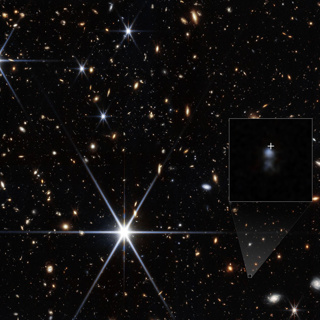
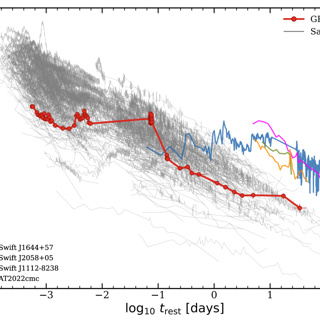
The Zwicky Transient Facility (ZTF) quickly identified a matching optical transient, AT2025ulz, in the same region. While its first week of behavior looked like a classic "kilonova" (the expected glow from a neutron star merger), it soon evolved into something much more complex. Spectroscopic and photometric data eventually showed it was most similar to a Type IIb stripped-envelope supernova, which is the explosion of a massive star that has lost most of its outer hydrogen.


The Superkilonova Theory:

How can an event be both a neutron star merger and a supernova? The researchers explore a fascinating theoretical model known as a Superkilonova. In this scenario, a rapidly spinning massive star collapses, and its core either fissions into two pieces or its surrounding disk fragments into subsolar-mass neutron stars. These fragments then merge almost immediately inside the supernova explosion.


Key Highlights:

  • A "Veritable Symphony": The potential for a single event to produce gravitational waves from a merger while simultaneously displaying the light of a core-collapse supernova.
  • New Stellar Pathways: If confirmed, this proves that neutron stars can form via accretion-disk fragmentation, or it might even be evidence of primordial black holes.
  • Multimessenger Challenges: Why scientists need more than just light to solve these puzzles, relying instead on a "panchromatic dataset" including X-rays, radio waves, and gravitational strain.


Article Reference

Kasliwal, M. M., et al. (2025). "ZTF25abjmnps (AT2025ulz) and S250818k: A Candidate Superkilonova from a Subthreshold Subsolar Gravitational-wave Trigger." The Astrophysical Journal Letters, 995:L59 (18pp).


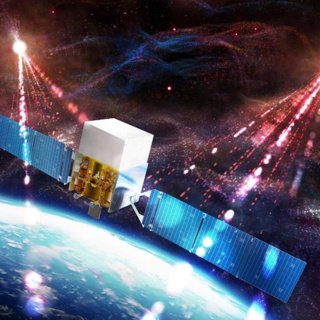
Acknowledements: Podcast prepared with Google/NotebookLM. Illustration credits: Caltech/K. Miller and R. Hurt (IPAC)

Tämä jakso on lisätty Podme-palveluun avoimen RSS-syötteen kautta eikä se ole Podmen omaa tuotantoa. Siksi jakso saattaa sisältää mainontaa.

Jaksot(101)

Record-Breaker: Catching Gamma Rays from the Distant Quasar OP 313

Record-Breaker: Catching Gamma Rays from the Distant Quasar OP 313

In this episode, we dive into a groundbreaking astronomical discovery: the detection of very-high-energy (VHE) gamma rays from the quasar OP 313. Located at a redshift of $z = 0.997$, OP 313 has shatt...

1 Kesä 20min

Ripples in Spacetime: Unpacking the GWTC-5.0 Catalog

Ripples in Spacetime: Unpacking the GWTC-5.0 Catalog

In this episode, we dive into the monumental release of the Gravitational-Wave Transient Catalog version 5.0 (GWTC-5.0) and the open data from the second part of the fourth observing run (O4b) by the ...

29 Touko 21min

SN 2017egm : Fermi-LAT's Breakthrough Gamma-Ray Detection

SN 2017egm : Fermi-LAT's Breakthrough Gamma-Ray Detection

In today’s episode, we dive into the mystery of superluminous supernovae (SLSNe)—rare, extreme astronomical events that shine 10 to 100 times brighter than standard core-collapse supernovae. For years...

22 Touko 23min

Supernovae on the RISE: Why Dead Stars Wake Up Decades Later

Supernovae on the RISE: Why Dead Stars Wake Up Decades Later

In this episode, we explore the fascinating phenomenon of core-collapse supernovae that refuse to fade away quietly. Years, or even decades, after their initial explosion, some of these stellar deaths...

20 Touko 17min

The SVOM Satellite: A New Era in Multi-Messenger Astronomy

The SVOM Satellite: A New Era in Multi-Messenger Astronomy

In this episode, we dive into the fascinating world of gamma-ray bursts (GRBs) and high-energy transients through the lens of the SVOM (Space-based Multi-band Variable Object Monitor) mission. Launche...

29 Huhti 24min

Chasing the Flash: Hunting Neutron Star Mergers with CTAO

Chasing the Flash: Hunting Neutron Star Mergers with CTAO

In this episode, we dive into the thrilling world of multi-messenger astronomy! Ever since the historic detection of GW170817, scientists have known that binary neutron star (BNS) mergers can produce ...

14 Huhti 19min

Tiling the Sky: A New Strategy for Finding Elusive GRBs

Tiling the Sky: A New Strategy for Finding Elusive GRBs

In this episode, we dive into the intense and fast-paced world of **Gamma-ray bursts (GRBs)—the most luminous and rapidly evolving transients in the Universe**. While space-based instruments like the ...

13 Huhti 19min

Fast Radio Bursts & Magnetar X-Rays: A Peculiar Discovery

Fast Radio Bursts & Magnetar X-Rays: A Peculiar Discovery

In this episode, we dive into the deep cosmos to explore a recent astronomical breakthrough linking Fast Radio Bursts (FRBs)—enigmatic, millisecond-long cosmic transients—to extreme stellar objects kn...

7 Huhti 22min

Suosittua kategoriassa Tiede

rss-mita-tulisi-tietaa
rss-hereilla
utelias-mieli
rss-duodecim-lehti
rss-totuuden-liepeilla
tiedekulma-podcast
rss-radplus
docemilia
filocast-filosofian-perusteet
rss-laakaripodi
rss-tiedetta-vai-tarinaa
university-of-eastern-finland
sotataidon-ytimessa
radio-antro
rss-bios-podcast
rss-poliisin-mieli
rss-ilmasto-kriisissa
rss-ylistys-elaimille
rss-kasvikutsut