E149:  Is the USA giving up on SARs?
The Laundry15 Tammi

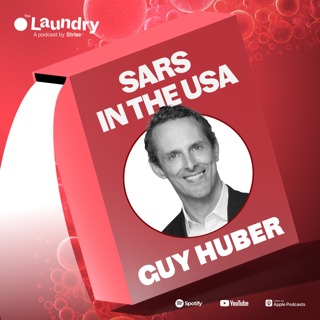
E149: Is the USA giving up on SARs?

America remains the ultimate trend setter – and that goes for regulation and law enforcement.


Which is why you should not be ignoring FinCEN’s new guidance on SARs that is stripping back and relaxing some of the box ticking exercises in favour of a risk-based approach.


Our expert host, Robin Lycka, is joined by Guy Huber, Principal at FS Vector, to ask: Is the USA giving up on SARs?


The pair discuss: What these SARs changes mean in practice for compliance teams, how this fits into wider AML regulation changes from the US, and whether the rest of the world will follow America's example.


Producer: Matthew Dunne-Miles

Editor: Dominic Delargy


____________________________________


The Laundry podcast explores the complex world of financial crime, anti-money laundering (AML), compliance, sanctions, and global financial regulation.


Hosted by Marit Rødevand, Fredrik Riiser, and Robin Lycka, each episode features in-depth conversations with leading experts from banking, fintech, regulatory bodies, and investigative journalism.


Tune in as we dissect headline news, unpack regulatory trends, and examine the real-world consequences of non-compliance — all through a uniquely compliance-focused lens.


The Laundry is proudly produced by Strise.


Get in touch at: laundry@strise.ai


Subscribe to our newsletter, Fresh Laundry, here.


Hosted on Acast. See acast.com/privacy for more information.

Tämä jakso on lisätty Podme-palveluun avoimen RSS-syötteen kautta eikä se ole Podmen omaa tuotantoa. Siksi jakso saattaa sisältää mainontaa.

Jaksot(203)

E173: Can we train AI to THINK like a fincrime investigator?

E173: Can we train AI to THINK like a fincrime investigator?

70% of us have already let AI loose on our day-to-day tasks — summarising documents, knocking out images, the usual.Turning it loose on a financial crime investigation is a different question entirely...

10 Syys 24min
E172: Is this the end of beneficial ownership data?

E172: Is this the end of beneficial ownership data?

In August 2026, FinCEN made it official: US companies no longer have to disclose who actually owns them.Five years after the Corporate Transparency Act was signed into law as America's "toughest anti-...

3 Syys 26min
E171: How do we put the "human" back into AI processes in fincrime?

E171: How do we put the "human" back into AI processes in fincrime?

You've seen the stories: a big company makes staff redundant, replaces them with a shiny AI feature, then quietly hires them back once it all goes wrong.Why does this keep happening? Swapping human ex...

27 Elo 28min
E170: What does the board need to know about AML?

E170: What does the board need to know about AML?

"AML is a board-level topic." – but is this true in practice?Is this more a provocative challenge than a current statement of fact? Under the EU's incoming AMLR, that may be set to change, but are mos...

6 Elo 34min

Re-Spin: How do we stop MLRO burnout?

Re-Spin: How do we stop MLRO burnout?

MLROs are vital to financial services - a crucial link between companies, the risks they face, and the authorities.The UK’s Financial Conduct Authority have previously sent a warning to hundreds of c...

30 Heinä 30min
Re-Spin: Did Wirecard's collapse shape the future of whistleblowing?

Re-Spin: Did Wirecard's collapse shape the future of whistleblowing?

The Wirecard scandal has become the stuff of legend.A German payments company, worth tens of billions of euros, collapsed following the exposure of massive accounting fraud and financial misconduct. I...

23 Heinä 26min
E169: Is AMLA *really* on track?

E169: Is AMLA *really* on track?

No one said building a regulator from the ground up would be easy.But when the organisation chair, Bruna Szego, describes it as like ‘flying a plane while building it’ – you have to wonder how things ...

16 Heinä 38min
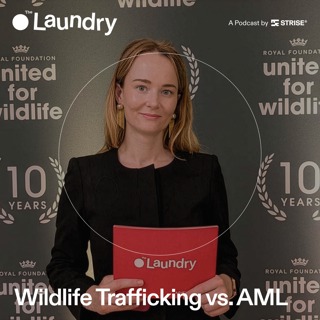
E168: Can following the money disrupt the illegal wildlife trade?

E168: Can following the money disrupt the illegal wildlife trade?

The illegal wildlife trade is the fourth-biggest criminal market on the planet — behind only narcotics, counterfeiting, and human trafficking. And like any criminal trade of that scale, there's a huge...

9 Heinä 31min

Suosittua kategoriassa Liike-elämä ja talous

sijotuskasti
vallattomat
mimmit-sijoittaa
psykopodiaa-podcast
rss-rahapodi
rss-oivalluksia-rahasta-elamasta
ostan-asuntoja-podcast
hyva-paha-johtaminen
lakicast
rss-rahamania
rss-paasipodi
rss-sami-miettinen-neuvottelija
rss-pinnan-alle
rss-inderes
rss-karon-grilli
oppimisen-psykologia
pomojen-suusta
rss-alanvaihtajat
rss-lentopaivakirjat
rss-porssipuhetta