How Qigong Can Calm Your Mind and Body

How Qigong Can Calm Your Mind and Body

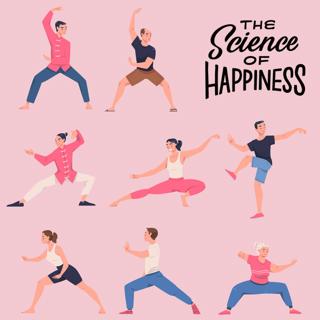
Studies show qigong can strengthen your body and mind, and reduce cortisol levels. We explore this Chinese meditative movement practice that dates back over 4,000 years.

Summary: After a period of intense stress, loss, and physical disconnection, one guest turns to qigong—a gentle, meditative movement practice rooted in traditional Chinese medicine—to reconnect with their body and calm their nervous system. This episode of The Science of Happiness explores the growing scientific evidence behind qigong, revealing how mindful movement can support both physical health and psychological well-being.

We want to hear from you! Take our 5-minute survey to enter a drawing to win a copy of The Science of Happiness Workbook: 10 Practices for a Meaningful Life. Tell us what you love, what you want more of, and how we can make the show even more inspiring and useful. Click the survey link in the show notes wherever you’re listening, or go directly to: https://tinyurl.com/happyhappysurvey. Thank you for helping us make the podcast even better!

One Way To Do This Practice:

  1. Stand and settle: Stand with your feet hip-width apart, knees soft, arms relaxed by your sides. Take a moment to feel the ground beneath your feet and let your body arrive.
  2. Ground through your feet: Gently rock or sway in small circles, slowly shifting your weight to notice different parts of your feet making contact with the floor. Let your balance find its own rhythm.
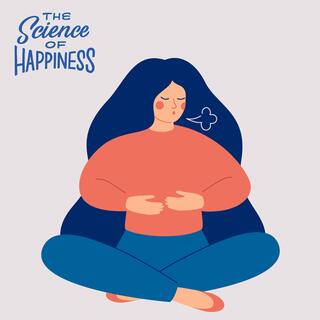
  3. Breathe slowly and naturally: Inhale through your nose and exhale through your mouth, allowing your breath to deepen without forcing it. Imagine your breath moving through your whole body, not just your chest.
  4. Begin gentle, flowing movements: Move your arms and torso in smooth, continuous motions—circling, swaying, or softly lifting and lowering your hands. Keep your movements relaxed and fluid rather than stiff or controlled.
  5. Soften your body and attention: Release unnecessary tension in your jaw, shoulders, and hands. Place your attention on how the movements feel from head to toe, letting your mind stay with sensation rather than thoughts.
  6. Close with stillness: After 10–15 minutes, return to standing quietly. Notice any changes in your energy, mood, or sense of grounding before stepping back into your day.

Scroll down for a transcription of this episode.

Today’s Guests:

ACE BORAL is an Oakland-based chef.

PETER WAYNE is an Associate Professor of Medicine, and serves as the Director for the Osher Center for Integrative Medicine, jointly based at Harvard Medical School and Brigham and Women’s Hospital.

Learn more about Peter’s work: https://tinyurl.com/342xndna

Related The Science of Happiness episodes:

Breathe Away Anxiety (Cyclic Sighing): https://tinyurl.com/3u7vsrr5

The Science of Synchronized Movement: https://tinyurl.com/n4bcrb5j

Tell us about your experience with this practice. Email us at happinesspod@berkeley.edu or follow on Instagram @HappinessPod.

Help us share The Science of Happiness! Leave us a 5-star review on Apple Podcasts and share this link with someone who might like the show: https://tinyurl.com/2p9h5aap

Transcription: https://tinyurl.com/yyxnsfy9

Tämä jakso on lisätty Podme-palveluun avoimen RSS-syötteen kautta eikä se ole Podmen omaa tuotantoa. Siksi jakso saattaa sisältää mainontaa.

Jaksot(348)

Where To Look For Joy

Where To Look For Joy

How can we feel more moments of joy? Explore how joy is rooted in connection, gratitude, and paying attention to the people and moments that bring meaning to our lives.Summary: Did you know that joy i...

13 Elo 15min

Happiness Break: A Body Scan for Calm and Ease

Happiness Break: A Body Scan for Calm and Ease

Meditation teacher Spring Washam guides us in a practice of embodied awareness, helping us use the body as an anchor during stressful or overwhelming moments.How To Do This Practice: Find a comfortab...

6 Elo 10min

Ear Hustle Podcast: Corny-Ass Episode

Ear Hustle Podcast: Corny-Ass Episode

Scroll down for a transcription of this episode.Nigel says no matter where you are, everyone has a story to tell about a hug: good, bad, or awkward. Earlonne isn’t buying it. Ear Hustle is a proud mem...

5 Elo 43min

Why You Can’t Do It Alone

Why You Can’t Do It Alone

Can anyone truly succeed alone? We explore how role models, mentors, and strong social support make upward mobility far more possible than grit alone.Summary: What role do the people around us play in...

30 Heinä 20min

Happiness Break: Holding Truth With Compassion

Happiness Break: Holding Truth With Compassion

Take a moment to connect with your body and make space for difficult emotions with compassion and care. This embodiment practice is guided by Lyla June Johnston, a Diné musician, scholar of Indigenous...

23 Heinä 10min

Why Revenge Feels So Good—and Why It Hurts Us

Why Revenge Feels So Good—and Why It Hurts Us

Neuroscience reveals revenge can become a powerful habit—and that forgiveness may be one of the most effective ways to break the cycle.Summary: After years of bullying led him to almost committing an ...

16 Heinä 23min

Happiness Break: A Meditation to Move Through Anger

Happiness Break: A Meditation to Move Through Anger

Try a practice in accepting difficult feelings like anger or irritation to help keep your cool, feel better overall, and find calm with contemplative social scientist Eve Ekman. How To Do This Practic...

9 Heinä 7min

How Joy Helps Save the Planet

How Joy Helps Save the Planet

Choosing joy over guilt and shame can make climate-friendly habits easier to sustain while improving your own well-being along the way.Summary: Fear may grab our attention, but research suggests joy i...

2 Heinä 22min

Suosittua kategoriassa Tiede

rss-poliisin-mieli
rss-mita-tulisi-tietaa
tiedekulma-podcast
rss-tiedetta-vai-tarinaa
docemilia
rss-duodecim-lehti
rss-lapsuuden-rakentajat-podcast
hippokrateen-vastaanotolla
rss-hereilla
rss-ranskaa-raakana
rss-bios-podcast
utelias-mieli
filocast-filosofian-perusteet
radio-antro