
E180: Attraction & Disgust: Evolutionary Psychology Explained (Dr. Deb Lieberman)
El Podcast20 Tammi

E180: Attraction & Disgust: Evolutionary Psychology Explained (Dr. Deb Lieberman)

Evolutionary psychologist Debra Lieberman explains how “disgust” and other built-in mental programs shape attraction, kinship, morality, and even law—while modern technology and social media scramble the cues those systems evolved to track.

Guest bio:

Dr. Debra Lieberman is a professor of psychology at the University of Miami and an evolutionary psychologist who studies how evolved “mental apps” shape social life—kinship, cooperation, morality, sexuality, and emotions. She’s the co-author of Objection: Disgust, Morality, and the Law.

Topics discussed:
  • What makes someone “hot”: symmetry, hormonal cues, and universal vs learned templates
  • Male vs female mate preferences (fertility cues; resource/provisioning cues; kindness/safety)
  • Disgust as an evolved system for pathogen avoidance (food, touch/contact, sex)
  • Incest avoidance, the Westermarck effect, kibbutzim and “minor marriages” evidence
  • Sexual reproduction, pathogens, and why “mixing the gene pool” matters
  • How disgust bleeds into moral judgment and law; coalitions and social leverage
  • Why modernity/tech changes the payoff of ancient intuitions
  • Gratitude as a “sleeper” universal emotion that jumpstarts friendship
  • Her evolutionary psychology textbook + MediaByte project
Main points:
  • Attraction isn’t “simple”—it’s output. Your brain runs hidden machinery that converts cues into a gut-level “hot/not.”
  • Symmetry functions like a health certificate. It’s hard to build a symmetric body; disruption from disease/mutations makes symmetry informative.
  • Men’s and women’s preferences differ on average, but share a template. Men track fertility-linked cues; women track resource acquisition/investment cues—plus kindness/safety as a major predictor.
  • Disgust is a multi-purpose regulator. It steers eating, contact, sex, and social avoidance by tracking contamination risk and other fitness costs.
  • Incest avoidance relies on cues, not DNA tests. Early co-residence can trigger “this is kin” psychology even when people aren’t related (Westermarck effect).
  • Modern abundance doesn’t erase ancient wiring. People calibrate to local “baselines” and still compete relative to that baseline.
  • Moral disgust can be weaponized. Disgust language can rally coalitions (“those people are disgusting/bad”) and support punishment, including via law.
  • Gratitude is an underappreciated social engine. It flags “this person values me more than expected,” helping form alliances beyond kin.
Top quotes:
  • Beauty is in the adaptation of the beholder.
  • “We’re not frogs… we have a very specific human operating system that guides us toward certain features and away from others.”
  • Symmetry is hard to build—it can act like a kind of health certificate.”
  • “Women track resource acquisition… but one of the most critical traits is kindness—it signals safety.”
  • “You smell something off and you don’t eat it—you’re not thinking ‘pathogens’… you’re thinking ‘ew’.”
  • “There’s no one-size-fits-all disgust; it depends on what you were calibrated to as ‘normal.’”
  • “If morality were just cooperation… why wouldn’t heterosexual men celebrate gay men for reducing competition?”
  • “Gratitude is triggered when someone shows they value you more than you expected—it jumpstarts friendship.”

🎙 The Pod is hosted by Jesse Wright
💬 For guest suggestions, questions, or media inquiries, reach out at https://elpodcast.media/
📬 Never miss an episode – subscribe and follow wherever you get your podcasts.
⭐️ If you enjoyed this episode, please rate and review the show. It helps others find us.

Thanks for listening!

Jaksot(195)

E179: Breaking the Gerontocracy: How Amanda Litman Is Getting Young People into Office

E179: Breaking the Gerontocracy: How Amanda Litman Is Getting Young People into Office

Amanda Litman argues U.S. leadership is too old, local races are dangerously uncontested, and the fastest fix is getting more young people to run—backed by better pay and campaign-finance reform.Guest...

16 Tammi 50min

E178: Social Media Isn’t Toxic: Here’s What the Data Says - Dr. Jeff Hall

E178: Social Media Isn’t Toxic: Here’s What the Data Says - Dr. Jeff Hall

Social media isn’t “crack for your brain” for most people—Jeffrey Hall argues the best evidence shows tiny average effects on wellbeing, lots of measurement mess, and a bigger story about relationship...

13 Tammi 59min

E177: Why Bankers Got Paid and Europe Recovered: The London Debt Agreement Explained

E177: Why Bankers Got Paid and Europe Recovered: The London Debt Agreement Explained

Economic historian Tobias Straumann breaks down how Germany’s debt meltdown in 1931 crashed the global economy—and how a surprisingly generous 1953 debt deal helped spark the German economic miracle b...

9 Tammi 54min
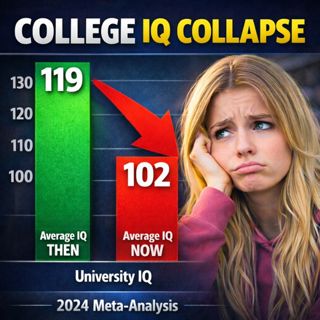
E176: College Student IQ Has Collapsed: Researcher Breaks Down His New Meta-Analysis - Dr. Bob Uttl

E176: College Student IQ Has Collapsed: Researcher Breaks Down His New Meta-Analysis - Dr. Bob Uttl

A cognitive psychologist explains why college student IQ now averages about 102, why that shift is mathematically inevitable as enrollment expands, and how outdated testing norms and student-evals can...

6 Tammi 1h 15min
E175: Roads Are Bankrupt: New Car Fees Are Coming - Jeff Davis

E175: Roads Are Bankrupt: New Car Fees Are Coming - Jeff Davis

Jeff Davis breaks down why the Highway Trust Fund has been insolvent since 2008 and what fixes (and tradeoffs) are realistic as EVs grow.GUEST BIOJeff Davis is a Senior Fellow at the Eno Center for Tr...

30 Joulu 20251h
E174: Acquired Broke Every Podcast Rule: Harvard Business School Professor Explains Why

E174: Acquired Broke Every Podcast Rule: Harvard Business School Professor Explains Why

Harvard’s Shane Greenstein explains why Acquired wins by treating each episode like an audiobook—high-signal, audience-first, and built for durable value.GUEST BIO: Dr. Shane M. Greenstein is a Profes...

23 Joulu 20251h 4min
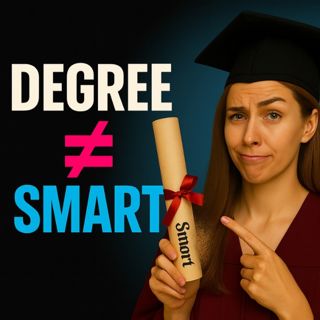
E173: Broke. Woke. Stroke. A tenured prof explains why college is failing

E173: Broke. Woke. Stroke. A tenured prof explains why college is failing

Tenured sociology professor Mark Horowitz explains why falling preparedness, grade inflation, and perverse incentives are eroding college standards—and why “broke, woke, stroke” helps describe the pat...

17 Joulu 20251h 7min
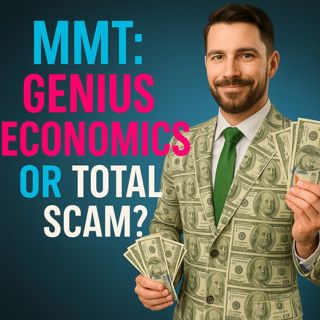
E172: MMT Is Going Mainstream - Right as the AI Bubble Is About to Pop: Explained by Dr. Maggiori

E172: MMT Is Going Mainstream - Right as the AI Bubble Is About to Pop: Explained by Dr. Maggiori

A wide-ranging conversation with economist and AI consultant Dr. Emmanuel Maggiori on why Modern Monetary Theory overpromises a “free lunch,” what really causes inflation, how Bitcoin and AI are misun...

9 Joulu 20251h 44min

Suosittua kategoriassa Liike-elämä ja talous

sijotuskasti
mimmit-sijoittaa
rss-rahapodi
psykopodiaa-podcast
hyva-paha-johtaminen
rss-rahamania
inderespodi
rss-lahtijat
rss-oivalluksia-rahasta-elamasta
ostan-asuntoja-podcast
rahapuhetta
oppimisen-psykologia
rss-bisnesta-bebeja
rss-sisalto-kuntoon
herrasmieshakkerit
leadcast
lakicast
rss-startup-ministerio
rss-rikasta-elamaa
rss-inderes