
How to Keep Your Humanity

How to Keep Your Humanity

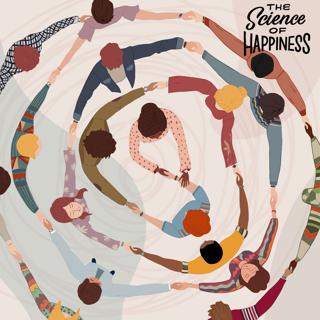
Discover what happens to our well-being when we respond to suffering with compassion, collective action, and why choosing to care can help us hold on to our shared humanity.

Summary: In the face of widespread suffering, many of us struggle with how to respond without becoming overwhelmed or numb. Drawing on research and real-world experience, this episode of The Science of Happiness examines the psychological impact of bearing witness, acting in alignment with our values, and showing up for others—even when it’s hard. We look at how compassion, agency, and a sense of common humanity can both strengthen resilience and carry real emotional costs, and why people continue to act anyway.

Take our 5-minute survey https://tinyurl.com/happyhappysurvey. Thank you for helping us make the podcast even better!

How To Do This Practice:

  1. Pause and name what’s happening: Take a moment to notice what you’re feeling as you witness suffering or injustice—anger, grief, numbness, confusion. Naming the emotion helps calm the stress response and keeps you from shutting down or looking away.
  2. Reconnect with common humanity: Remind yourself: there are no “good people” and “bad people”—there are people.
  3. Clarify your values on paper: Write down one to three values that matter most to you right now (for example: compassion, integrity, dignity, justice). Studies show that writing values down lowers stress and makes it more likely you’ll act in alignment with them.
  4. Gently ask yourself: “What does a person like me—with these values—do in a situation like this?” Consider what access, safety, or influence you may have, and what constraints you face. Acting with integrity looks different for everyone, and this step helps you choose a response that is both values-aligned and realistic.
  5. Choose a safe, doable action: Action doesn’t have to be loud or risky. It might be writing, speaking up in a meeting, supporting someone directly, or adding your voice to a collective effort. Even small actions strengthen agency and social connection.
  6. Reflect and reconnect: After you act, check in with yourself. Notice any sense of alignment, relief, meaning, grief, or fear. Acting with integrity won’t erase pain, but it helps protect mental health and shapes who we become over time.

Scroll down for a transcription of this episode.

Today’s Guests:

DR. FEROZE SIDHWA is a trauma, and critical care surgeon in California. He has also worked as a physician in Haiti, Ukraine and Palestine.

Learn more about Dr. Feroze Sidhwa here: https://www.ferozesidhwa.org/

DR. AKIVA LEBOWITZ is a physician and critical care specialist.

Learn more about Dr. Akiva Lebowitz here: https://akivaforbrookline.com/

DR. SUNITA SAH is a social scientist, author, and psychologist.

Learn more about Dr. Sunita Sah here: https://www.sunitasah.com/

Tell us about your experience with this practice. Email us at happinesspod@berkeley.edu or follow on Instagram @HappinessPod.

Help us share The Science of Happiness! Leave us a 5-star review on Apple Podcasts and share this link with someone who might like the show: https://tinyurl.com/2p9h5aap

Transcription: https://tinyurl.com/48wz2vru

Tämä jakso on lisätty Podme-palveluun avoimen RSS-syötteen kautta eikä se ole Podmen omaa tuotantoa. Siksi jakso saattaa sisältää mainontaa.

Jaksot(356)

Happiness Break: A Breathing Technique to Help You Relax

Happiness Break: A Breathing Technique to Help You Relax

Dr. David Spiegel leads us in a practice of cyclic sighing, a simple breathing technique that uses slow, extended exhales to calm your nervous system, ease stress and anxiety, and help you feel more r...

15 Loka 8min

How to Breathe Away Anxiety

How to Breathe Away Anxiety

Explore how cyclic sighing, a simple controlled breathing technique, can help reduce anxiety, promote relaxation, and bring greater calm to everyday stressful moments.Summary: In this episode of The S...

8 Loka 24min

Happiness Break: A Practice In Appreciating Your Friends

Happiness Break: A Practice In Appreciating Your Friends

Take a moment to appreciate the friends who know you, support you, and make your life richer with their presence, with author Alex Elle.How To Do This Practice: Take a few deep breaths: Inhale throug...

1 Loka 9min

How Smell Shapes Memory

How Smell Shapes Memory

Discover how our sense of smell can transport us back to meaningful memories, shape our emotions, and influence the brain systems involved in memory and mood.Summary: Smell is one of our most powerful...

24 Syys 26min

Happiness Break: A Meditation on the Uniqueness of Your Voice

Happiness Break: A Meditation on the Uniqueness of Your Voice

In celebration of Latinx Heritage Month, embrace the beauty of your accent in this self-compassion meditation. Mindfulness and meditation teacher Criss Cuervo invites you to reflect on your history, h...

17 Syys 8min

How to Protect Your Brain as You Age

How to Protect Your Brain as You Age

What if getting older doesn’t have to mean losing your memory? Learn how neuroplasticity, healthy habits, and simple memory exercises can help keep your brain strong at any age.Summary: We often assum...

10 Syys 25min

Happiness Break: Tap into the Joy That Surrounds You

Happiness Break: Tap into the Joy That Surrounds You

Buddhist meditation teacher, Anushka Fernandopulle, guides us through a practice of Mudita, or appreciative joy, to help us share in the happiness of others.How To Do This Practice: Get comfortable a...

3 Syys 4min

Talk To A Stranger—It’s Good For You

Talk To A Stranger—It’s Good For You

We often underestimate how much small talk can impact our wellbeing. Research shows that even brief conversations with strangers can boost our happiness and sense of connection, but fear and anxiety o...

27 Elo 24min

Suosittua kategoriassa Tiede

tiedekulma-podcast
utelias-mieli
rss-mita-tulisi-tietaa
rss-duodecim-lehti
rss-hereilla
docemilia
rss-kasvikutsut
rss-vaasan-yliopiston-podcastit
rss-poliisin-mieli
rss-kasvatuspsykologiaa-kaikille







