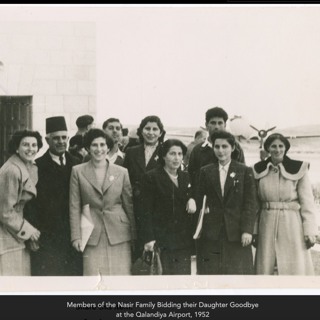
Nakba #56 - Samia Nasir Khury
Överlevarna1 Helmi

Nakba #56 - Samia Nasir Khury

“My father worked as a governor for the British government, and the rest of the family followed him. He was later transferred to Safad. There we had good relations with our Jewish neighbors. That was normal. Women exchanged baked goods with one another during different holidays and celebrations. In 1946 it finally became clear to him what the British were doing—that they were preparing the way for the Jews to take over. His job became impossible, and he decided to resign. He went to the King David Hotel to submit his letter of resignation. As he stepped over the threshold of the hotel, he looked at his watch and realized he was early. He decided to visit a friend in Mamilla in the meantime. Shortly after he left the hotel, it was blown to pieces. The man my father was going to visit was not as lucky. He had gone to the hotel and was killed by the bomb. This was in 1946. Irgun was responsible for the attack, but the various Zionist organizations constantly blamed one another. This was only the beginning. Then came the bombing of the Semiramis Hotel and the massacre in Dayr Yasin. That was when people began to feel real fear. After my father resigned, he began teaching physics. We remained in al-Quds. I was a happy teenager. I went to parties, and my aunts and cousins lived there. It was a wonderful time. We used to go to the YMCA, where we were members. They had leadership courses, tennis courts, a gym, and a swimming pool. It was a fantastic place. In 1948, the family moved to Birzeit, where my father taught and where I attended a boarding school—it felt like my second home. Suddenly, rumors spread that something was wrong. People began pouring in from al-Ramla and Lydda. They were fleeing and had been walking for two or three days. I will never forget that sight. Everything was so sad; people were utterly exhausted. Someone told us they had lost a son. One man was confused and rambling; he did not understand what was happening. I especially remember a woman who had lost all her belongings. Despite that, she was grateful to have survived. She said: “Furniture can be replaced, but not people.” My aunt told my cousins and me to cook food for the refugees. We boiled eggs and potatoes, sliced tomatoes and cucumbers—everything we could get hold of. My aunt also helped prepare a school building where some of the refugees could find shelter. My aunts and cousins had come to Birzeit to escape the unrest in al-Quds. Everyone believed this would be over in a few weeks, and that we would be able to return. But in October, we began to understand that this was no picnic. After the war in 1967, East al-Quds was annexed by Jordan. It then became possible again for my mother and me to visit our house. The house had become a daycare center, so it was easy to enter. My mother began explaining to a woman sitting in the office that it had once been her bedroom. It was painful to see our house again. I had hoped, for as long as possible, that we would be allowed to return. We never went back again. The Nakba is still ongoing; the displacement is still ongoing. Everything here is so hard to predict under the Israeli occupation. When you get up in the morning and put your right foot down, you do not know whether your left foot will follow. In 1993, during the first intifada, my son produced a song and made cassette copies of it. He was arrested by the police and taken for interrogation at Moscobiyeh in al-Quds. He was accused of spreading music that glorified the intifada. He was imprisoned for six months. First he was held in Ayalon prison in al-Ramla. He went through hell there. We were allowed to visit him, but I was not allowed to touch him. He sat behind a net. Later he was transferred to Prison Six, outside Atlit. The time in prison made my son more enthusiastic and determined than before. He continues to make music.

Tämä jakso on lisätty Podme-palveluun avoimen RSS-syötteen kautta eikä se ole Podmen omaa tuotantoa. Siksi jakso saattaa sisältää mainontaa.

Jaksot(323)

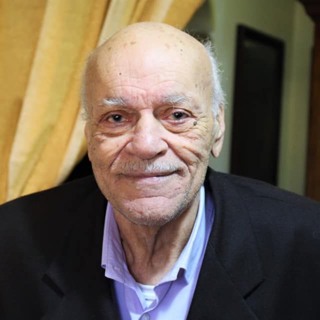
Nakba #3 - Akram Muhammad ‘Abdalrazzaq ‘Ayyash

Nakba #3 - Akram Muhammad ‘Abdalrazzaq ‘Ayyash

“Falastin is like the blood in my body. Haifa is like the air I breathe. They live within me”,

28 Joulu 202516min

Nakba #2 - Mohammed Hourani

Nakba #2 - Mohammed Hourani

”The jews started shooting. My dad took us to a cave in southern Safad. In the Jewish quarters there was a high building. They were shooting with a single shot rifle. Me and my cousin was laying flat ...

28 Joulu 20251h 8min
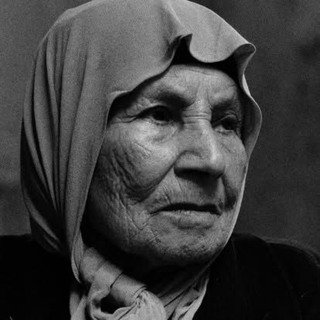
Nakba #1 - Amena Hassan

Nakba #1 - Amena Hassan

Is there anything you’re wondering about before we begin?” “Where are my four boys?” (points to four photographs on the wall). “Aziz was 30 years old when he disappeared, Ibrahim was 25, Mansur was 22...

28 Joulu 20251h 9min
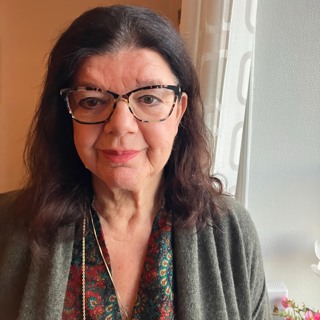
Det judiska Högalid #23 - Sylvia Kalischer

Det judiska Högalid #23 - Sylvia Kalischer

- Pappa överlevde Auschwitz, men fick TBC. De opererade bort halva ena lungan och några revben, som han sparade i garderoben. Det var äckligt, säger Sylvia Kalischer. Såg du hans ärr? - Freig nisht. J...

25 Joulu 20251h 23min
Överlevarna #119 del 2- Lasse Dencik

Överlevarna #119 del 2- Lasse Dencik

Betraktar du dg som överlevare? - Jag föddes 1941 och hade under andra omständigheter kunnat ha mördats, som många i min familj. På det sätter är jag nog en överlevande och hör hemma i de överlevandes...

19 Joulu 202540min
Överlevarna #119 del 1 - Lasse Dencik

Överlevarna #119 del 1 - Lasse Dencik

- En gång bjöd mamma de svenska grannarna på ett kaffekalas. Hon bakade centraleuropeiska kakor, fyllda med vallmo. Men det blev ett väldigt fiasko. Hennes kakor, som hon hade arbetat så mycket med, l...

19 Joulu 20252h 4min
Det judiska Högalid #22 - Lennart Mankowitz

Det judiska Högalid #22 - Lennart Mankowitz

- 1957 blev det skilsmässa. Min mor och jag och bror Paul, kallas Palle, flyttade till Långholmsgatan 24. Min mor gick bort alldeles för ung, jag var bara 17 år. Palle och jag bodde kvar i lägenheten ...

12 Joulu 20251h 53min
Det judiska Högalid #21 - Gun Lieberman

Det judiska Högalid #21 - Gun Lieberman

- Jag tror inte mamma kände sig helt accepterad av pappas judiska familj. Min farmor och mina fastrar tyckte att mamma var lite fin av sig. Kommentaren var att ´innan hon gick ner till tvättstugan, så...

5 Joulu 20251h 26min

Suosittua kategoriassa Koulutus

rss-murhan-anatomia
psykopodiaa-podcast
voi-hyvin-meditaatiot-2
adhd-podi
rss-rahamania
rss-valo-minussa-2
rss-narsisti
kesken
rss-liian-kuuma-peruna
rss-luonnollinen-synnytys-podcast
rss-tietoinen-yhteys-podcast-2
rahapuhetta
filocast-filosofian-perusteet
rss-niinku-asia-on
ihminen-tavattavissa-tommy-hellsten-instituutti
rss-vapaudu-voimaasi
rss-arkea-ja-aurinkoa-podcast-espanjasta
aamukahvilla
jari-sarasvuo-podcast
rss-elamankoulu