Zemlinsky: The Mermaid

Zemlinsky: The Mermaid

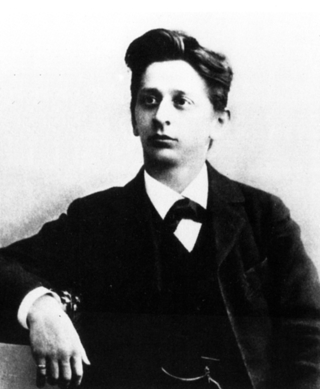
The story of Alexander von Zemlinsky's The Mermaid begins with a passionate love affair and ends in heartbreak of the most unabashedly big-R Romantic kind. In 1900, the young, fabulously talented, and famously beautiful Alma Schindler came to Zemlinsky's home to study composition. Wildly passionate feelings soon developed between them, and Alma wrote the following in her diary: "I would gladly be pregnant for him, gladly bear his children. His blood and mine, commingled: my beauty with his intellect. I would gladly serve him in his professional life, live for him and his kith and kin, breathe [for him], attend to his every happiness, serve him with a gentle hand. God give me the strength and the willpower to do so."

The relationship lasted a little over a year, until one night when Schindler attended a party that happened to be frequented by a brilliant conductor and composer twenty years her senior: Gustav Mahler. The rest is history.

Zemlinsky was devastated and poured his energies into a tone poem based on Hans Christian Andersen's The Little Mermaid. The source may seem surprising, but as we'll see later on, it proved to be the perfect vehicle for Zemlinsky to exorcise the tortured memories of this turbulent relationship. For a long time, however, the score was lost. It wasn't until the 1980s that the full work was reconstructed, and it has since become one of Zemlinsky's most frequently performed pieces.

And it's not hard to see why. The Mermaid is a forty-minute tone poem that, from start to finish, overflows with fin-de-siècle romanticism, very much in the vein of Schoenberg's Verklärte Nacht (Transfigured Night). It is a work of irresistible beauty and passion, and it is being played more and more as Zemlinsky's name begins to take its rightful place in the standard canon of composers.

Today on the show, I'll tell you a bit more about Zemlinsky in case you're not familiar with him, read more of the unbearably passionate letters and diary entries from both Zemlinsky and Alma Schindler, and, of course, walk you through the heartbreakingly beautiful music of The Mermaid, showing how Zemlinsky balances narrative and abstract form, and how he created this opulent, lush, and profoundly moving score. Join us!

Tämä jakso on lisätty Podme-palveluun avoimen RSS-syötteen kautta eikä se ole Podmen omaa tuotantoa. Siksi jakso saattaa sisältää mainontaa.

Jaksot(296)

Grieg: Peer Gynt

Grieg: Peer Gynt

Grieg's Peer Gynt suites are among the best-known and best-loved works of classical music in the world. They are practically embedded into popular culture, being used in a dizzying number of cartoons,...

3 Syys 1h 7min
Mozart Clarinet Concerto

Mozart Clarinet Concerto

When it comes to a piece like the Mozart Clarinet Concerto, a few words or phrases regularly come up: the concerto is described as "mellow" or Mozart's "swan song," but most often it is described as "...

20 Elo 51min
Bohuslav Martinu Symphony No. 1

Bohuslav Martinu Symphony No. 1

It took a lot to make the composer and critic Virgil Thomson happy. He was famous for savaging new works he didn't like, and the truth is, he didn't like very many new works at all. One exception was ...

6 Elo 1h 1min
Scriabin Poem of Ecstasy

Scriabin Poem of Ecstasy

Thence the universe resounds
 With a joyful cry  I AM. These are the final lines of Alexander Scriabin's epic Poem of Ecstasy, a 300-line poem that takes nearly 10 minutes to read aloud and is one of ...

23 Heinä 51min
Sibelius Tapiola

Sibelius Tapiola

Ancient, mysterious, brooding savage dreams; Within them dwells the Forest's mighty God, And wood-sprites in the gloom weave magic secrets. These lines are affixed to the first page of Sibelius' tone...

10 Heinä 47min
Arthur Honneger, Symphony No. 3, "Liturgique"

Arthur Honneger, Symphony No. 3, "Liturgique"

In the aftermath of World War II, the Swiss composer Arthur Honegger, who had been living in occupied Paris throughout the war, wrote a new symphony entitled "Liturgical." He wrote an extended comment...

25 Kesä 53min
Dvorak Piano Quintet, Op. 81

Dvorak Piano Quintet, Op. 81

In 1872, at the age of 31, Dvořák wrote a Piano Quintet designated as Opus 5. Dvořák was not a prodigy like some other famous composers; instead, his development as a composer was slow and steady. Lat...

11 Kesä 49min
Mozart String Quartet, K. 465, "Dissonance"

Mozart String Quartet, K. 465, "Dissonance"

You might be wondering: why on earth would I choose a piece that is literally called "Dissonance" when I was looking for something a bit simpler or cleaner to talk about on the show today? Actually, M...

28 Touko 49min

Suosittua kategoriassa Viihde

aamuvuoro
anni-jaajo
grekovit
tuplakaak
hei-baby-3
hupiklubi
terveisia-perheesta
dear-shirly
antin-palautepalvelu
seitseman
ellen-jari-tamakin-viela
bella-table
everypodi
the-harlin-show
antin-elokuvakerho
nonsensepodi
tahtitehdas
trippileiri
verhon-takaa
dear-shirly-ja-arttu