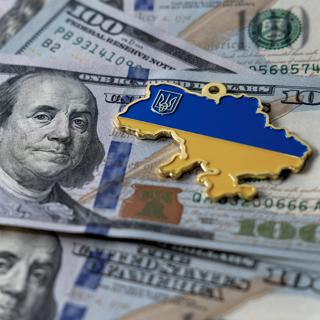

S9 Ep14: What’s next for Ukraine: Investment

S9 Ep14: What’s next for Ukraine: Investment

Ukraine will emerge from this war with enormous debt. The conventional wisdom treats that as an obstacle: investors weigh it before committing capital, and the burden slows the recovery before it starts. Yuriy Gorodnichenko and Maurice Obstfeld of UC Berkeley argue the opposite. A thorough restructuring of Ukraine's war debts – including, for sufficiently large obligations, outright forgiveness – is not just politically defensible but economically essential for attracting private investment.

The bill for rebuilding and growing Ukraine, Gorodnichenko estimates, is $40 billion a year: $20 billion to replace destroyed capital, $10 billion to stop Ukraine falling behind its Eastern European peers, and $10 billion to start closing the gap. Put that figure next to what Poland absorbed in FDI during its post-communist transition, or the €200 billion of Russian state assets currently immobilised in Euroclear, or the budgetary support Ukraine has been receiving since 2022 – and it looks achievable. The harder challenge, they argue, is not raising $40 billion. It is directing it: towards investment rather than consumption. Ukraine didn’t grow in the post-Soviet era at the rate that its neighbours achieved. EU accession momentum and secure borders can be a signal to investors that this time the trajectory will be different.

The research behind this episode:

Gorodnichenko, Yuriy, and Maurice Obstfeld. 2026. "You Only Live Twice: Financial Inflows and Growth in a Westward-Facing Ukraine." Economic Policy: Papers on European and Global Issues, special issue: "What's Next for Ukraine?"

To cite this episode:

Phillips, Tim. 2025. "You Only Live Twice: Financial Inflows and Growth in a Westward-Facing Ukraine." Economic Policy: Papers on European and Global Issues (podcast).

Assign this as extra listening — the citation above is formatted and ready for a reading list or VLE.

About the guests

Yuriy Gorodnichenko is a CEPR Research Fellow and Professor of Economics at the University of California, Berkeley, where he leads CEPR's Ukraine Initiative. His research spans monetary policy, fiscal policy, and the macroeconomics of growth and business cycles.

Maurice Obstfeld is a CEPR Distinguished Fellow and Class of 1958 Professor of Economics at the University of California, Berkeley. He served as Chief Economist of the International Monetary Fund from 2015 to 2018, and as a member of the Council of Economic Advisers under President Obama from 2014 to 2015. He is also a Fellow of the Econometric Society and the American Academy of Arts and Sciences.

Research cited in this episode

The discussion of debt overhang draws on a body of work from the 1980s developing-country debt crises, notably the insight that for sufficiently indebted countries, debt reduction can increase the expected value of what creditors recover. Gorodnichenko and Obstfeld apply this framework directly to Ukraine's war debts, arguing that deep restructuring – supported by bilateral official creditors, many of whom are European – is a prerequisite for private investment to follow.

The €200 billion figure for immobilised Russian central bank assets held at Euroclear is the basis for Obstfeld's proposal of a reparations loan that would give Ukraine immediate access to large-scale resources, with repayment contingent on Russian reparations. This is discussed in more detail in the related reading below.

More in the "What's Next for Ukraine?" series

This episode is the first in a three-part series based on papers presented at the inaugural Economic Policy winter conference, Paris, December 2025. Episodes 2 and 3, on rebuilding and the labour market, are forthcoming.

Related reading on VoxEU

You only live twice: A growth strategy for Ukraine — Gorodnichenko and Obstfeld's own VoxEU column summarising the key arguments in this paper: why $40 billion a year is achievable, what the policy levers are, and why the window matters.

Euroclear and the geopolitics of immobilised Russian assets — The legal and financial context behind the €200 billion of Russian central bank assets frozen at Euroclear, and what it would take to use them for a reparations loan to Ukraine.

Using the returns of frozen Russian assets to finance the victory of Ukraine — A VoxEU proposal for channelling the interest income generated by frozen Russian assets to finance Ukraine's needs, without requiring the more politically contested step of confiscating the assets themselves.

Ukraine's recovery challenge — An earlier VoxEU overview of the reconstruction task: the scale of damage, the role of EU accession, and the two-phase approach to restoring growth.

Tämä jakso on lisätty Podme-palveluun avoimen RSS-syötteen kautta eikä se ole Podmen omaa tuotantoa. Siksi jakso saattaa sisältää mainontaa.

Jaksot(461)

S9 Ep34: Making defence spending pay

S9 Ep34: Making defence spending pay

Defence spending is rising whether voters like it or not. The UK has committed to 2.5% of national income and aims for nearer 3.5% over the next decade, £30bn a year for each percentage point. What do...

19 Kesä 26min

S9 Ep33: Did the Sewing Machine Liberate Women?

S9 Ep33: Did the Sewing Machine Liberate Women?

In January 1860 the New York Times gave its blessing to a new machine: the sewing machine. These "iron needle-women", it wrote, were the only invention that could be claimed “chiefly for women's benef...

12 Kesä 19min

S9 Ep32: The digital money supply

S9 Ep32: The digital money supply

Every day, billions of transactions settle between strangers who have no idea which bank the other uses. That lack of friction is not automatic. Nine-tenths of the money in daily circulation has been ...

5 Kesä 27min

S9 Ep31: How well does patent screening work?

S9 Ep31: How well does patent screening work?

Someone once held a patent on the swing. A piece of wood. Two ropes. The US Patent Office granted it. How often does that actually happen, and what does it cost when the system gets it wrong? Or, how ...

29 Touko 32min

S9 Ep30: Redefining the monetary standard

S9 Ep30: Redefining the monetary standard

The fiat money system has survived the Great Inflation, the global financial crisis, and a pandemic. But can it survive digital currencies?Bitcoin and the blockchain solved a genuine problem in comput...

22 Touko 26min

S9 Ep29: Guns and Butter

S9 Ep29: Guns and Butter

Europe's NATO members have pledged 3.5% of GDP to rearmament. The political argument is already about which social programmes will be sacrificed to pay for this, when the government chooses guns inste...

15 Touko 21min

S9 Ep28: Immigration and integration in Europe

S9 Ep28: Immigration and integration in Europe

More than one in eight people living in the EU today was born in another country. In fourteen of the bloc's largest economies, it is closer to one in six. For ten years, the same team of researchers h...

8 Touko 25min

S9 Ep27: The right to choose to die

S9 Ep27: The right to choose to die

Content note: this episode discusses assisted dying, end-of-life choices, and suicide. Some listeners may find the content distressing.In April 2024, Daniel Kahneman — one of the most influential psyc...

1 Touko 23min

Suosittua kategoriassa Liike-elämä ja talous

sijotuskasti
psykopodiaa-podcast
rss-rahapodi
mimmit-sijoittaa
rss-oivalluksia-rahasta-elamasta
leadcast
herrasmieshakkerit
vapauta-supervoimasi-podcast
rss-rahamania
rss-inderes-femme
rss-viisas-raha-podi
hyva-paha-johtaminen
rss-porssipuhetta
asuntoasiaa-paivakirjat
ostan-asuntoja-podcast
pomojen-suusta
rss-paasipodi
rss-inderes
rss-yritys-ja-erehdys
rss-set-for-life-sijoita-ja-vaurastu